

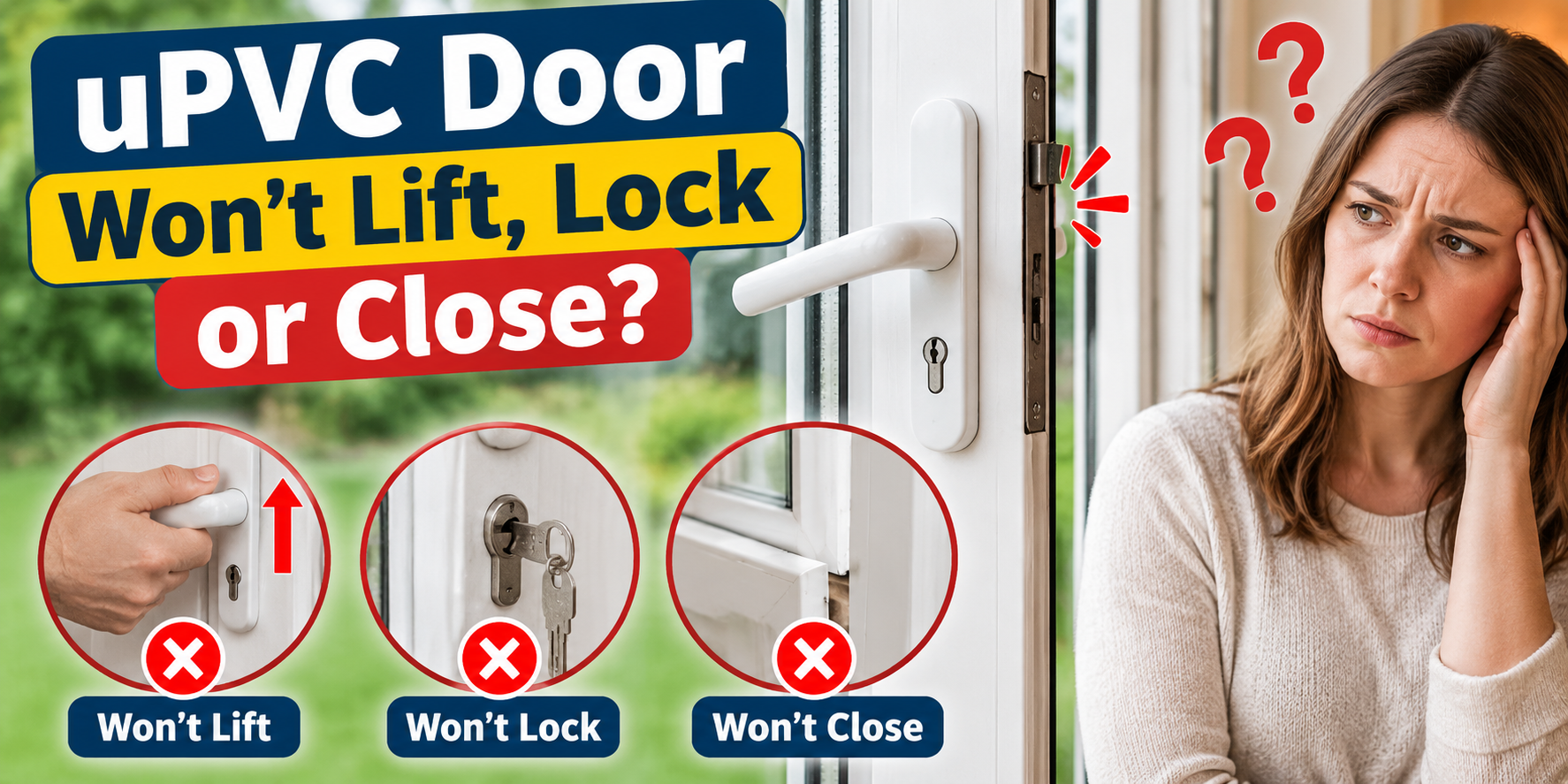
A uPVC door that won’t lift, lock, or close properly is one of the most common issues homeowners face. Whether the handle becomes stiff, the key refuses to turn, or the door no longer aligns with the frame, the problem is usually linked to the multipoint locking system rather than the entire door.
Many people assume they need a brand-new door, but in most cases, the issue can be resolved by repairing or replacing a single component such as the gearbox, euro cylinder, hinges, or locking strip. Understanding the cause of the fault can save you hundreds of pounds and prevent the problem from becoming a complete lockout.
This guide explains why uPVC doors fail, how to identify the fault, the repair options available, and when it’s time to call a professional locksmith.
What Causes a uPVC Door to Stop Lifting, Locking, or Closing?
Modern uPVC and composite doors use a multipoint locking mechanism, which secures the door at several points instead of just one.
The locking system usually includes:
- Multipoint locking strip
- Central gearbox
- Door handle
- Euro cylinder
- Rollers
- Hooks or deadbolts
- Hinges
- Frame keeps
Since every part works together, even a slight misalignment can prevent the entire mechanism from functioning correctly.
Common causes include:
- Door dropping over time
- Worn gearbox
- Damaged euro cylinder
- Misaligned keeps
- Loose hinges
- Broken handle spring
- Warped frame caused by temperature changes
Understanding How a Multipoint Lock Works
Unlike a traditional single lock, a multipoint system secures the door in several locations along its edge.
When you lift the handle:
- Rollers engage.
- Hooks lock into the frame.
- Deadbolts extend.
- The gearbox drives the entire mechanism.
- The euro cylinder locks everything in place.
If any one of these components fails, the entire locking system may stop working correctly.
Signs Your uPVC Door Needs Repair
Watch for these warning signs before the problem becomes worse.
Common symptoms include:
- Handle won’t lift
- Door won’t close completely
- Key becomes difficult to turn
- Lock works only when the door is open
- Door rubs against the frame
- Handle feels loose
- Lock sticks halfway
- Door requires lifting before locking
- Grinding noises when operating the handle
Ignoring these signs often leads to more expensive repairs.
Perform the Open Door Test
One of the easiest ways to identify the problem is the open door test.
If the lock works smoothly while the door is open
The mechanism is probably fine.
The issue is likely:
- Door alignment
- Dropped hinges
- Frame movement
- Misaligned keeps
If the handle is still stiff while open
The internal locking mechanism may be damaged.
Possible faults include:
- Broken gearbox
- Failed locking strip
- Worn internal components
If the handle lifts but the key won’t turn
The euro cylinder is often the cause.
Common Reasons a uPVC Door Won’t Lock
Door Has Dropped
Over time, heavy doors naturally settle.
When this happens:
- Hooks no longer align.
- Rollers miss the keeps.
- The handle becomes difficult to lift.
Fortunately, this usually requires hinge adjustment rather than replacement.
Worn Gearbox
The gearbox is the heart of the multipoint locking system.
A worn gearbox may cause:
- Loose handle
- Handle lifting without locking
- Lock failing suddenly
- Internal grinding noises
Replacing only the gearbox is often enough.
Faulty Euro Cylinder
The cylinder controls the key operation.
Signs include:
- Key won’t insert smoothly
- Key turns only halfway
- Key spins
- Key jams inside the lock
Cylinder replacement is usually quick and inexpensive.
Damaged Locking Strip
The locking strip contains the rollers, hooks, and bolts.
Damage may include:
- Bent hooks
- Broken rollers
- Worn locking points
- Internal wear
Some locking strips can be repaired, while others require replacement.
Misaligned Keeps
Keeps are fitted inside the frame.
If they move slightly:
- Lock won’t engage.
- Door feels tight.
- Handle becomes stiff.
Simple adjustments often solve the issue
Checks to Make Before Calling a Locksmith
Before arranging a repair, perform a few basic checks.
- Test the door open and closed.
- Stop forcing the handle.
- Check for rubbing around the frame.
- Look for loose hinges.
- Notice whether the key only turns after lifting the handle.
- Inspect visible gaps around the door.
Providing this information helps the locksmith diagnose the problem faster.
How Professional Locksmiths Diagnose the Problem
Experienced locksmiths rarely replace parts without first identifying the fault.
A proper inspection includes:
- Testing the lock open and closed
- Checking hinge alignment
- Inspecting the gearbox
- Examining the euro cylinder
- Testing the locking strip
- Inspecting keeps
- Measuring frame movement
Only after diagnosis should replacement parts be fitted.
Common Repairs for uPVC Doors
Depending on the fault, repairs may include:
Hinge Adjustment
Suitable when:
- Door has dropped
- Lock works while open
- Handle is difficult only when closed
Gearbox Replacement
Recommended if:
- Handle lifts without locking
- Internal mechanism has failed
- Lock jams repeatedly
Euro Cylinder Replacement
Ideal when:
- Key sticks
- Lock won’t turn
- Security upgrade is required
Many homeowners also choose anti-snap cylinders for improved protection.
Handle Replacement
Replace damaged handles if:
- Springs fail
- Handle becomes loose
- Handle no longer returns properly
Locking Strip Replacement
Necessary when:
- Multiple locking points fail
- Strip is bent
- Components are worn beyond repair
Repair vs Replacement: Which Is Better?
Many homeowners are told they need a completely new door.
However, this is often unnecessary.
Repair is usually possible when:
- Door frame is intact
- Locking mechanism is repairable
- Hinges only require adjustment
- Gearbox can be replaced
- Cylinder is worn
A full door replacement is generally only required when the frame is severely damaged, warped beyond repair, or the door itself has structural defects.
Benefits of Repairing Instead of Replacing
Professional repairs offer several advantages.
- Lower overall cost
- Faster completion
- Less disruption
- Maintains existing door
- Improves security
- Restores smooth operation
- Extends the door’s lifespan
Replacing one failed component is almost always more economical than installing an entirely new door.
Questions to Ask Before Hiring a Locksmith
Before work begins, ask:
- Can the fault be diagnosed before replacing parts?
- Is repair possible?
- What component has actually failed?
- Will the price be confirmed before work starts?
- Are replacement parts guaranteed?
- Will the lock be tested thoroughly after repair?
A trustworthy locksmith will explain the diagnosis clearly and avoid unnecessary replacements.
Mistakes to Avoid
Avoid these common errors:
- Forcing the handle
- Ignoring alignment issues
- Replacing the cylinder without diagnosis
- Waiting until the door becomes completely stuck
- Accepting vague pricing
- Assuming a new door is always necessary
Early repairs usually prevent larger, more expensive problems.
How to Choose a Qualified Locksmith
Since locksmithing standards vary, look for professionals who offer:
- Formal locksmith training
- DBS/background checks (where applicable)
- Public liability insurance
- Transparent pricing
- Positive customer reviews
- Experience with multipoint locking systems
- High-quality replacement parts
- Clear explanations of the repair process
A reliable locksmith focuses on repairing the existing system whenever possible rather than recommending unnecessary replacements.
Frequently Asked Questions
Why does my uPVC door lock when open but not when closed?
The door has likely dropped, causing the locking points to miss the frame keeps.
Can a multipoint lock be repaired?
Yes. In many cases, only the gearbox, cylinder, hinges, or locking strip needs attention rather than replacing the complete door.
What is the gearbox?
The gearbox is the central mechanism inside the multipoint lock that transfers movement from the handle to the locking points.
Can old multipoint locks still be repaired?
In most cases, yes. Even discontinued mechanisms often have compatible replacement gearboxes or locking strips available.
Is it cheaper to repair than replace a uPVC door?
Almost always. Replacing individual components is usually far more affordable than fitting a completely new door.
Final Thoughts
A uPVC door that won’t lift, lock, or close properly doesn’t automatically mean you need a new door. Most issues are caused by worn components, dropped hinges, or minor alignment problems that can be repaired quickly and cost-effectively.
The key is early diagnosis. Test how the door behaves when open and closed, avoid forcing the handle, and seek professional assistance before the mechanism fails completely. With the right repair, your multipoint locking system can be restored to smooth, secure operation, extending the life of your door and saving you the expense of a full replacement.
 molyatkinsan