

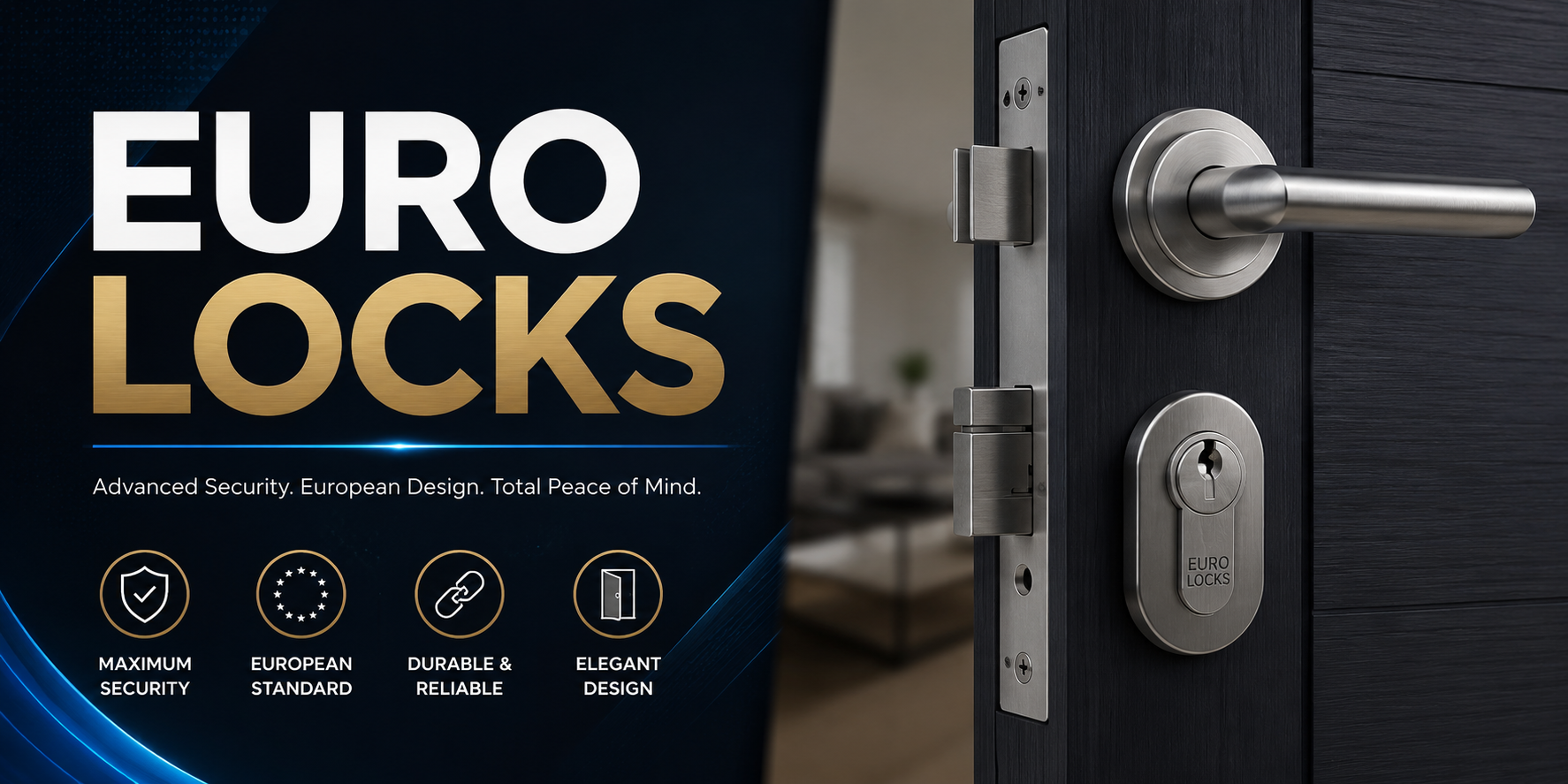
Euro locks are among the most common locking systems used on uPVC, composite, aluminium, and many timber doors across the UK and Europe. Whether you’re replacing a worn-out lock, upgrading your home’s security, or fitting a new cylinder after moving into a property, understanding how euro locks work can help you avoid costly mistakes. Before replacing the cylinder, it’s worth reading uPVC Door Won’t Lift, Lock or Close? A Guide to Multipoint Lock Problems, as many locking issues are caused by misaligned doors or faulty multipoint mechanisms rather than the euro cylinder itself.
Many homeowners assume that all euro cylinders are the same size, but that’s rarely true. Choosing the wrong cylinder can lead to poor security, difficult installation, or a lock that simply doesn’t fit. This guide explains everything you need to know about euro locks, including how they work, how to measure them correctly, and what features to look for when improving door security.
What Are Euro Locks?
A Euro lock, also called a Euro cylinder lock, is a removable cylinder that operates the locking mechanism inside many external doors. It is secured by a single retaining screw through the edge of the door and can usually be replaced without changing the entire locking system.
Euro cylinders are commonly installed on:
- uPVC doors
- Composite doors
- Aluminium entrance doors
- Some timber front and back doors
- Commercial entrance doors
Unlike traditional mortice locks, euro cylinders are designed for easy replacement, making them a popular choice for homeowners and locksmiths.
Why Choose Euro Locks?
Euro locks have become the standard for modern external doors because they offer several advantages:
- Easy to replace without changing the full lock case
- Available in various security levels
- Compatible with multipoint locking systems
- Suitable for keyed-alike systems
- Available with thumbturn options for easier internal locking
They are also available with advanced security features that provide greater protection against modern burglary methods.
Types of Euro Cylinder Locks
Choosing the right cylinder starts with understanding the different types available.
Double Cylinder
A double cylinder requires a key from both inside and outside.
Best for:
- Main entrance doors
- Commercial properties
- Maximum security
Thumbturn Cylinder
A thumbturn cylinder has a key outside and a rotating thumbturn inside.
Benefits include:
- Faster emergency exit
- Convenient locking
- Ideal for family homes
Single Cylinder
A single cylinder is operated with a key on one side only.
These are commonly fitted to:
- Garage doors
- Internal security doors
- Certain storage rooms
How Euro Locks Work
The cylinder contains a series of precision pins that align when the correct key is inserted. Once aligned, the cylinder rotates, moving a cam located in the centre.
That cam operates the multipoint locking gearbox inside the door.
When functioning correctly:
- The key turns smoothly.
- The handle lifts easily.
- The locking bolts engage without resistance.
- The door closes securely.
If any part becomes worn or misaligned, locking problems often appear.
Understanding Euro Lock Measurements
One of the biggest mistakes homeowners make is ordering the wrong size cylinder.
Euro cylinders are measured from the centre fixing screw.
Instead of one overall measurement, there are two separate dimensions:
- Inside length
- Outside length
For example:
- 35/45 mm
- 40/40 mm
- 45/55 mm
The total cylinder length equals both measurements combined.
Example
A cylinder measuring:
35 mm inside + 45 mm outside = 80 mm overall
Many composite doors use unequal measurements because of thicker external furniture.
How to Measure a Euro Lock Correctly
Before ordering a replacement, measure carefully.
Step 1
Open the door.
Locate the fixing screw on the edge of the door.
Step 2
Measure from the centre of that screw to the inside end of the cylinder.
Step 3
Measure from the same screw to the outside end.
Step 4
Record both dimensions separately.
Never guess or round measurements.
Why Unequal Sizes Are Common
Many people expect a cylinder to be perfectly centred.
In reality:
- Composite doors often have thicker outer panels.
- Security handles increase outside depth.
- Decorative furniture changes the cylinder position.
Because of this, unequal cylinders are perfectly normal.
Common Euro Lock Problems
Several issues can develop over time.
The Key Is Difficult to Turn
Possible causes include:
- Worn cylinder
- Dirt inside the lock
- Door alignment problems
- Pressure from the multipoint mechanism
The Door Locks When Open but Not Closed
This usually indicates:
- Misaligned keeps
- Dropped hinges
- Door movement
- Frame expansion
Replacing the cylinder alone may not solve the problem.
The Cylinder Feels Loose
A loose cylinder may result from:
- Incorrect retaining screw
- Damaged handle
- Worn fixing holes
The Key Has Snapped
Never force a broken key.
Instead:
- Remove visible fragments carefully.
- Avoid turning the lock with tools.
- Replace the cylinder if necessary.
Security Features Worth Considering
Not every euro cylinder provides the same level of protection.
Look for features such as:
Anti-Snap Protection
Protects against one of the most common burglary techniques used on older euro cylinders.
Anti-Drill Protection
Hardened steel pins resist drilling attacks.
Anti-Pick Pins
Designed to prevent traditional lock-picking methods.
Anti-Bump Technology
Protects against lock bumping using specially modified keys.
TS007 Rated Cylinders
Many UK homeowners choose TS007-rated cylinders for improved resistance against forced entry.
Should the Cylinder Stick Out?
No.
A correctly fitted euro cylinder should sit almost flush with the door furniture.
Experts generally recommend that it should protrude no more than 3 mm beyond the handle.
An exposed cylinder can become easier to grip or attack.
Signs It’s Time to Replace Your Euro Lock
Consider replacing the cylinder if:
- Keys frequently stick
- The lock feels rough
- You’ve recently moved home
- Keys have been lost
- The cylinder is damaged
- You want better security
- Your current lock lacks anti-snap protection
Common Buying Mistakes
Avoid these common errors:
- Ordering by overall length only
- Forgetting to measure both sides
- Ignoring cylinder projection
- Buying the cheapest option without security features
- Replacing only the cylinder when the gearbox is actually faulty
Maintenance Tips
Proper maintenance extends the life of your lock.
Good habits include:
- Keep the key clean.
- Avoid oil-based lubricants.
- Use graphite powder or lock lubricant if recommended.
- Tighten loose handles.
- Check door alignment regularly.
- Never force a stiff key.
Routine maintenance helps prevent expensive repairs later.
Choosing the Right Euro Lock
When selecting a replacement, consider:
- Accurate measurements
- Door thickness
- Security rating
- Internal thumbturn or keyed operation
- Frequency of use
- Weather exposure
- Compatibility with existing handles
A quality cylinder that fits properly will always outperform an expensive cylinder installed incorrectly.
Final Thoughts
Euro locks play a vital role in protecting modern homes, but choosing the right one involves more than simply matching its appearance. Accurate measurements, proper installation, and selecting the right security features all contribute to a safer and more reliable door.
Before buying a replacement, measure from the centre fixing screw to both ends of the cylinder, check how far the lock projects beyond the handles, and inspect the surrounding hardware for signs of wear. Taking a few extra minutes to assess the entire door system—not just the cylinder—can help you avoid compatibility issues, improve everyday operation, and significantly enhance your home’s security.
 molyatkinsan