

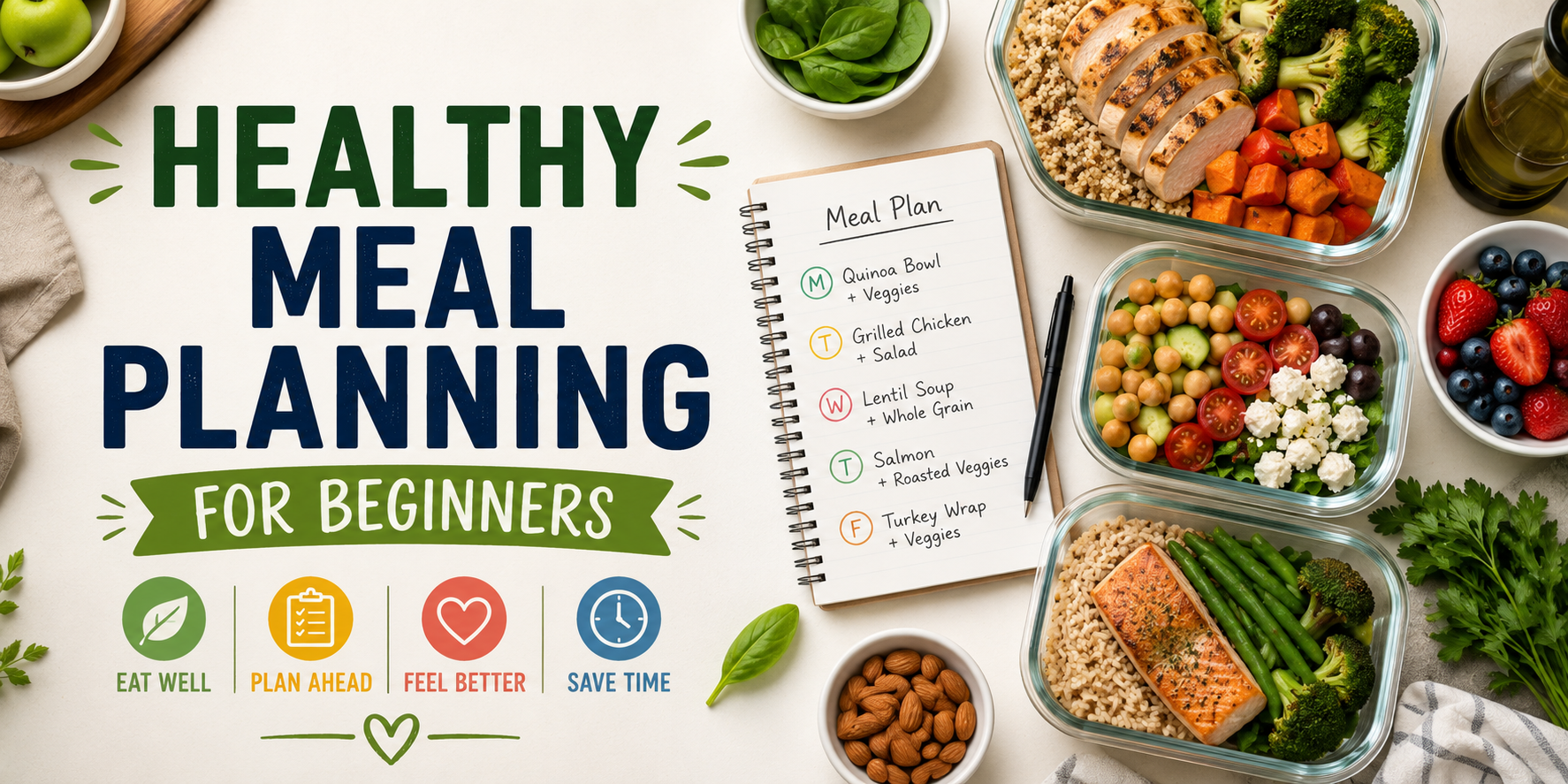
Healthy eating doesn’t have to be complicated, expensive, or time-consuming. For many people, the biggest challenge isn’t knowing which foods are healthy—it’s deciding what to eat each day and finding the time to prepare it. That’s where healthy meal planning for beginners can make a significant difference. By organizing your meals in advance and focusing on natural, nutrient-rich ingredients, you can simplify your daily routine while building healthier eating habits that last.
Meal planning is more than just creating a weekly menu. It involves choosing balanced meals, making a grocery list, shopping for wholesome ingredients, and preparing food ahead of time whenever possible. This simple habit helps reduce the stress of last-minute meal decisions, minimizes food waste, and makes it easier to avoid unhealthy fast food or processed convenience meals. Even spending a short time planning each week can save hours in the kitchen and help you stay consistent with your nutrition goals.
A healthy meal plan should include a variety of natural foods from all major food groups. Fresh vegetables and fruits provide essential vitamins, minerals, antioxidants, and fiber that support overall health and strengthen the immune system. Whole grains such as oats, brown rice, quinoa, and whole-wheat bread supply long-lasting energy, while lean proteins like chicken, fish, eggs, beans, lentils, and tofu help build and repair body tissues. Healthy fats from avocados, nuts, seeds, and olive oil contribute to heart health and help your body absorb important nutrients.
One of the greatest benefits of meal planning is that it encourages portion control and balanced nutrition. Instead of relying on processed snacks or oversized restaurant meals, you can prepare home-cooked dishes with the right balance of carbohydrates, protein, healthy fats, and vegetables. This not only supports healthy weight management but also helps maintain stable energy levels throughout the day. Having nutritious meals ready to eat makes it much easier to resist unhealthy cravings and stick to your health goals.
Meal planning is also an excellent way to save money. Planning your meals before grocery shopping helps you buy only what you need, reducing impulse purchases and food waste. Buying seasonal produce, whole grains, beans, and other pantry staples in bulk can further lower grocery costs while providing plenty of healthy meal options. Preparing meals at home is often much more affordable than eating out regularly, and it gives you complete control over the quality and freshness of your ingredients.
For beginners, it’s important to keep meal planning simple. Start by choosing a few easy recipes that use familiar ingredients and require minimal cooking time. Prepare extra portions for leftovers, batch-cook grains or proteins, and wash and chop vegetables in advance to make weekday cooking faster and more convenient. As you become more comfortable, you can gradually add new recipes and experiment with different flavors while maintaining a balanced diet.
Healthy meal planning is not about following strict diets or eliminating your favorite foods. Instead, it focuses on creating a sustainable routine that supports your lifestyle and nutritional needs. By making small, consistent improvements and choosing natural, whole foods whenever possible, you can enjoy delicious meals, improve your overall health, and develop lifelong habits that make healthy eating both practical and enjoyable. Whether your goal is to increase your energy, manage your weight, or simply eat more nutritious meals, a well-planned approach is one of the most effective ways to achieve lasting success.
READ MORE: Sugar-Free Snack Ideas at Home: Natural and Delicious Treats for Healthy Living.
 molyatkinsan