

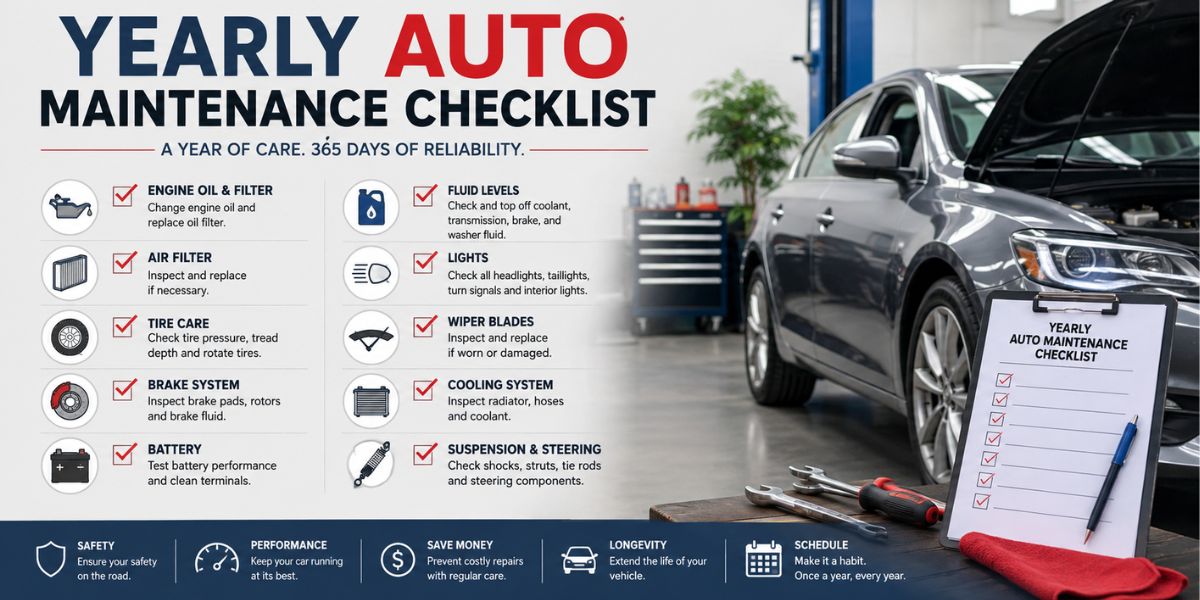
Regular car care does not always have to be complicated or expensive. A simple yearly auto maintenance checklist can help you catch small problems before they become costly repairs. Along with professional servicing when needed, natural cleaning and careful driving habits can help keep your vehicle comfortable, reliable, and efficient throughout the year.
Your car’s maintenance needs depend on its age, mileage, model, driving conditions, and the manufacturer’s recommendations. Use this yearly checklist as a practical guide, while always checking your owner’s manual for vehicle-specific service intervals.
Why Yearly Auto Maintenance Matters
A vehicle contains many parts that experience regular wear. Engine oil becomes contaminated, tires lose pressure, fluids gradually become dirty, and batteries can weaken over time.
Annual maintenance gives you an opportunity to inspect these areas before they develop into bigger problems. It can also help you notice unusual sounds, leaks, warning lights, or changes in how the vehicle drives.
A yearly check is especially useful if you frequently drive in heavy traffic, dusty areas, extreme temperatures, or on rough roads.
Yearly Auto Maintenance Checklist
1. Check and Change the Engine Oil
Engine oil helps lubricate moving engine components and reduce friction. Check the oil level regularly and follow your owner’s manual for the recommended oil type and replacement interval.
During your yearly inspection:
- Check the oil level.
- Look for unusually dark or contaminated oil.
- Inspect around the engine for possible leaks.
- Replace the oil and filter according to the manufacturer’s schedule.
Never delay an oil change simply because the vehicle has not traveled many miles. Some manufacturers recommend service based on both mileage and time.
2. Inspect the Tires Naturally
Tires are essential for safe handling and braking. Check their pressure when the tires are cold and compare it with the pressure recommended by the vehicle manufacturer.
Also inspect:
- Tire tread depth
- Uneven wear
- Cracks or bulges
- Visible damage
- Spare tire condition
Keeping tires properly inflated can also help support fuel efficiency and comfortable driving.
3. Check the Brakes
Brake pads, discs, drums, and other braking components should be inspected regularly. If you hear grinding or squealing, feel unusual vibration, or notice that the vehicle takes longer to stop, arrange a professional inspection.
Do not rely on natural cleaning methods to repair worn brake components. Safety-related repairs should always be handled appropriately.
4. Inspect and Replace Air Filters
A dirty engine air filter can restrict airflow to the engine. Check the filter during your annual maintenance routine and replace it when required.
You can also inspect the cabin air filter. A clean cabin filter can help reduce dust and improve the air quality inside the vehicle.
5. Check Essential Fluids
Your yearly maintenance routine should include checking the major vehicle fluids.
These may include:
- Coolant
- Brake fluid
- Transmission fluid
- Power steering fluid, if applicable
- Windshield washer fluid
Use only the fluids specified by your vehicle manufacturer. Natural alternatives are not appropriate substitutes for engineered automotive fluids.
6. Inspect the Battery
A weak battery can leave you stranded unexpectedly. Look for corrosion around the terminals, damaged cables, swelling, or other visible problems.
Clean minor terminal corrosion carefully if appropriate, but avoid touching electrical components unnecessarily. If the battery is several years old or repeatedly struggles to start the vehicle, have it professionally tested.
7. Replace Windshield Wipers
Wiper blades gradually become hard and less effective because of sunlight, heat, and regular use. Replace them when they leave streaks, skip across the glass, or make excessive noise.
For natural cleaning, you can wipe the windshield and rubber blade surfaces with a clean damp microfiber cloth. Avoid harsh household chemicals that could damage rubber or vehicle surfaces.
8. Clean the Car Naturally
Natural car cleaning can be part of your annual maintenance routine. Remove dirt, dust, leaves, and debris from the exterior and interior.
Simple habits include:
- Use clean microfiber cloths for delicate surfaces.
- Remove leaves from areas around the windshield and hood.
- Vacuum dirt from carpets and seats.
- Clean the dashboard with a suitable automotive-safe cleaner.
- Wash road grime from the exterior regularly.
- Keep drains and openings free from accumulated debris.
Avoid using abrasive household products on automotive paint, plastic, leather, or screens.
9. Inspect Belts and Hoses
Under the hood, look for visible cracking, fraying, swelling, or unusual wear on accessible belts and hoses.
Do not attempt to replace a timing belt or other critical component without the appropriate knowledge and tools. Follow the manufacturer’s replacement schedule because some components require replacement based on age or mileage rather than visible condition.
10. Check Lights and Electrical Equipment
Walk around your vehicle and check:
- Headlights
- Brake lights
- Turn signals
- Hazard lights
- Reverse lights
- Fog lights, if equipped
- Interior lights
Replace defective bulbs or have electrical problems diagnosed promptly. Working lights are important for visibility and communication with other drivers.
Seasonal Maintenance to Include Each Year
Although this is a yearly checklist, seasonal inspections can make vehicle ownership easier.
Before summer, check the cooling system, air conditioning performance, tire pressure, and battery condition. Before colder weather, inspect the battery, wipers, tires, lights, and fluids.
If you live in an area with heavy dust or extreme heat, you may need to inspect certain components more frequently than once a year.
Check Your Alignment and Suspension
If your vehicle pulls to one side, the steering wheel is off-center, or the tires are wearing unevenly, have the alignment checked.
Suspension components should also be inspected if you notice unusual bouncing, knocking sounds, or changes in handling. These systems can affect both comfort and vehicle control.
Inspect Under the Vehicle
Look underneath the vehicle for signs of fluid leaks, damaged components, loose parts, or excessive rust.
A small spot on the driveway can sometimes indicate a developing problem. If you notice an unknown fluid leak, have the vehicle inspected instead of simply cleaning the area and ignoring it.
Review Your Service Records
At the end of your annual maintenance routine, update your service records. Write down:
- Date of service
- Current mileage
- Oil and filter changes
- Tire rotations
- Brake inspections
- Fluid services
- Parts replaced
- Repairs completed
- Upcoming maintenance
Keeping accurate records makes it easier to remember future service and can be useful when selling the vehicle.
A Simple Yearly Auto Maintenance Schedule
Every Month
- Check tire pressure.
- Inspect tires visually.
- Check engine oil level when appropriate.
- Check exterior lights.
- Look for obvious leaks or damage.
Every 3–6 Months
- Inspect wipers.
- Check battery condition.
- Examine air filters.
- Check fluid levels.
- Clean the interior and exterior.
- Rotate tires if recommended by the manufacturer.
Once a Year
- Complete a professional vehicle inspection.
- Change oil and filters according to the service schedule.
- Inspect brakes.
- Check belts and hoses.
- Inspect suspension and steering components.
- Check wheel alignment when necessary.
- Test the battery.
- Review all major fluids.
- Replace worn wipers and filters.
- Update your maintenance records.
Natural Car Care Tips That Save Money
Natural maintenance is mainly about keeping your vehicle clean and preventing unnecessary wear. Simple habits such as removing dirt promptly, keeping the interior dry, checking tire pressure, driving smoothly, and addressing small problems early can support long-term vehicle care.
However, “natural” does not mean replacing automotive products with household ingredients. Engine oil, coolant, brake fluid, transmission fluid, and other specialized products should always meet the specifications provided by the vehicle manufacturer.
Final Thoughts
Following a yearly auto maintenance checklist can make car ownership more predictable and help you identify problems before they become expensive. Combine regular inspections with natural cleaning habits, careful driving, proper tire care, and manufacturer-recommended servicing.
The most important rule is simple: do not wait for a warning light or major breakdown before checking your vehicle. A little maintenance throughout the year can go a long way toward keeping your car safe, clean, reliable, and ready for the road.