

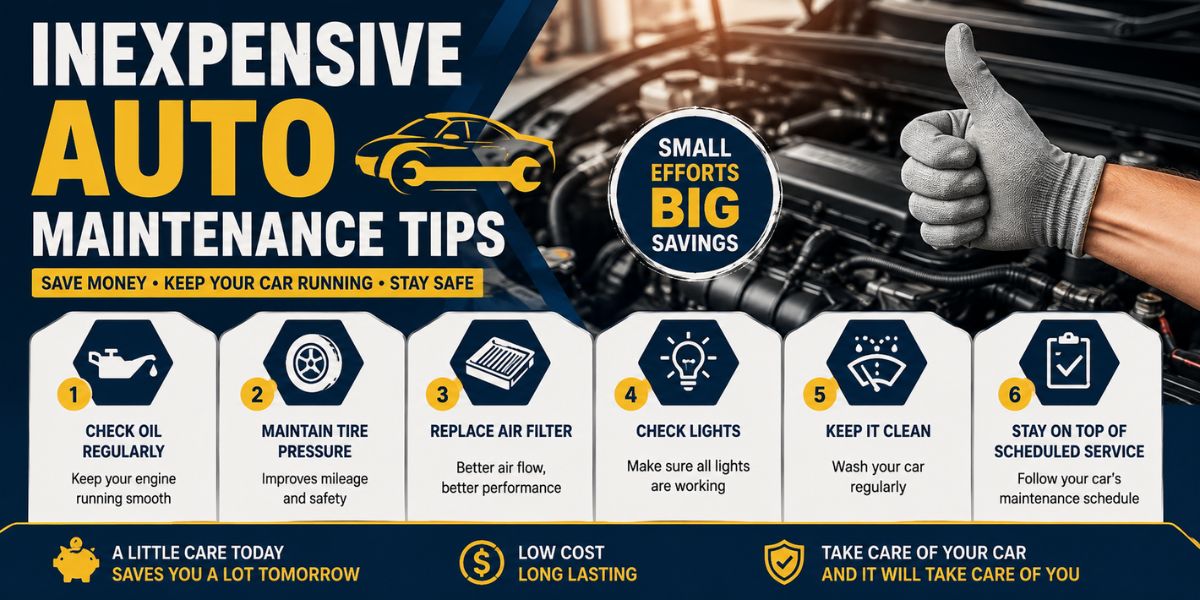
Keeping your car in good condition does not always require expensive repairs or frequent trips to a mechanic. With a little time, attention, and a few simple habits, you can handle many basic maintenance tasks yourself. Regular maintenance can also help prevent small problems from turning into costly repairs.
Here are some inexpensive auto maintenance tips that are easy to follow and practical for everyday drivers.
1. Check Your Engine Oil Regularly
Engine oil keeps the moving parts of your engine lubricated and helps reduce friction. Checking the oil level regularly is one of the simplest ways to protect your engine.
Park the car on level ground, let the engine cool, and use the dipstick to check the oil level. If it is low, add the correct type of oil recommended in your owner’s manual.
Changing the oil on schedule is also important because old or dirty oil can reduce engine performance.
2. Keep Your Tires Properly Inflated
Correct tire pressure can improve fuel economy, handling, and tire life. Underinflated tires can wear unevenly and may increase fuel consumption.
Check your tire pressure at least once a month and before long trips. Use the pressure recommended by your vehicle manufacturer rather than the maximum pressure printed on the tire.
A basic tire-pressure gauge is inexpensive and can save you money over time.
3. Inspect Your Tires for Wear
You do not need special equipment to perform a quick tire inspection. Look for uneven tread wear, cracks, bulges, or objects stuck in the tire.
If the tread is getting very low or you notice unusual damage, have the tire inspected by a professional. Finding a problem early may help you avoid a more expensive repair later.
4. Replace the Air Filter When Needed
A dirty engine air filter can restrict airflow and may affect engine performance and fuel efficiency.
Air filters are often relatively inexpensive and, depending on the vehicle, can be replaced at home with basic tools. Check your owner’s manual for the recommended inspection and replacement interval.
5. Check Your Battery
A weak battery can leave you stranded unexpectedly. Inspect the battery for visible corrosion around the terminals and make sure the connections are secure.
If your battery is several years old, consider having it tested before extreme weather or a long road trip. Cleaning minor terminal corrosion can also help maintain a good electrical connection.
Always follow proper safety precautions when working around a car battery.
6. Replace Windshield Wipers Yourself
Worn wiper blades can leave streaks and make driving in rain more difficult. Fortunately, replacing them is usually quick and inexpensive.
If your wipers leave large streaks, skip areas of the windshield, or make unusual noises, it may be time for a replacement.
7. Keep Your Car Clean
Regular washing is not just about appearance. Dirt, road salt, mud, and other contaminants can contribute to corrosion over time.
Wash the exterior regularly, especially after driving through areas where roads are treated with salt or other chemicals. Cleaning the interior also helps protect seats, carpets, and dashboard materials.
8. Check Your Lights
Walk around your vehicle occasionally and check the headlights, brake lights, turn signals, and other exterior lights.
Replacing a burned-out bulb is often much cheaper than ignoring the problem. Working lights also help other drivers see your vehicle and understand your intentions on the road.
9. Monitor Fluid Levels
Your car relies on several fluids to operate properly. Depending on the vehicle, these may include coolant, brake fluid, windshield washer fluid, and transmission fluid.
Check the owner’s manual to learn which fluids you can safely inspect yourself and how often they should be checked. Never open a hot cooling system because hot coolant can cause serious burns.
10. Pay Attention to Warning Signs
Unusual sounds, vibrations, smells, leaks, or changes in handling should not be ignored.
A small problem can sometimes be inexpensive to fix when discovered early. Continuing to drive with a warning sign may allow the problem to become more serious and expensive.
11. Follow the Maintenance Schedule
Your owner’s manual is one of the best free resources for inexpensive car maintenance. It tells you when important services should be performed and which fluids, filters, and parts are appropriate for your vehicle.
Following the recommended schedule can help you avoid unnecessary maintenance while ensuring important services are not forgotten.
12. Learn Basic DIY Maintenance
You do not need to become a professional mechanic to save money on car care. Learning simple tasks such as checking tire pressure, changing wiper blades, inspecting lights, and replacing an air filter can reduce basic maintenance costs.
For complicated repairs involving brakes, steering, suspension, airbags, or other safety-critical systems, it is better to use a qualified professional.
13. Keep a Maintenance Record
Write down the date and mileage whenever you perform maintenance or have repairs completed. You can use a notebook, spreadsheet, or phone app.
A simple record helps you remember when the oil was changed, tires were rotated, filters were replaced, or other services were completed. It can also make it easier to identify recurring problems.
14. Avoid Unnecessary Repairs
Saving money does not mean skipping important maintenance. Instead, focus on necessary services and avoid paying for repairs or upgrades that your vehicle does not actually need.
Ask the mechanic to explain the problem, why the repair is necessary, and what could happen if it is delayed. For expensive repairs, getting a second opinion can sometimes help you make a better decision.
15. Drive Smoothly
Your driving habits can affect how quickly certain vehicle components wear out. Gentle acceleration, smooth braking, and avoiding unnecessary hard driving can help reduce wear on tires, brakes, and other components.
Smooth driving can also help improve fuel economy, making everyday car ownership a little less expensive.
Final Thoughts
Inexpensive auto maintenance is mostly about consistency rather than spending a lot of money. Checking your oil, maintaining proper tire pressure, inspecting lights and fluids, replacing worn wipers, and following the manufacturer’s maintenance schedule can help keep your vehicle reliable.
The key is to deal with small problems early. A few minutes of regular care can potentially save you from larger repair bills later and help your car stay safe and dependable for years to come.