

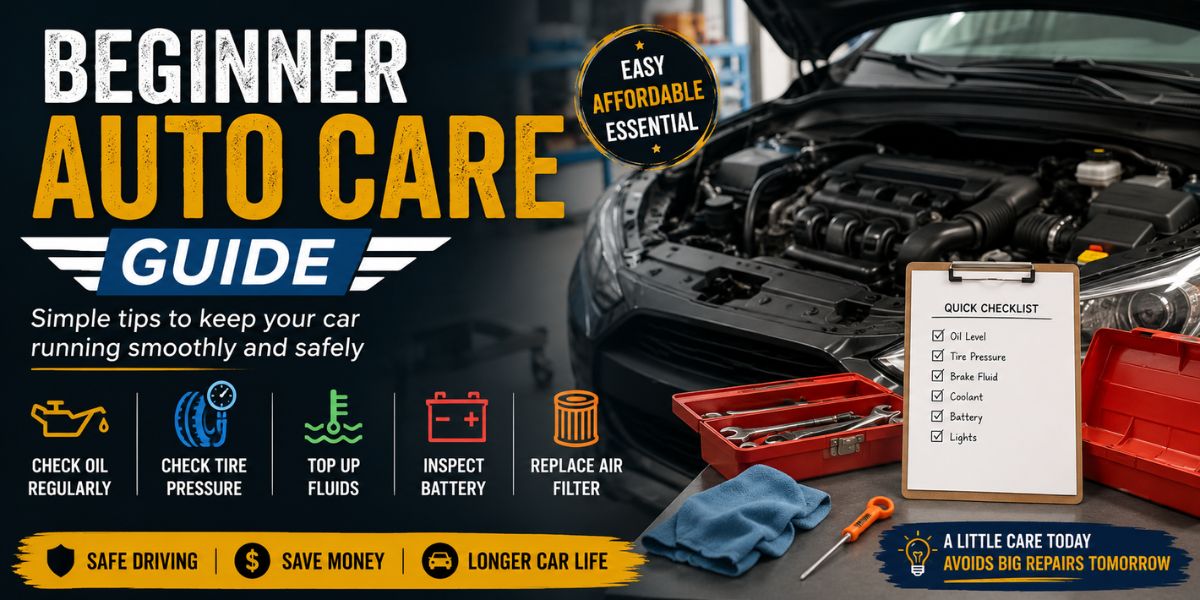
Taking care of a car does not always require expensive tools or professional experience. With a few simple habits, beginners can keep their vehicles cleaner, safer, and in better condition. Regular attention to important areas such as tires, brakes, lights, mirrors, and other safety systems can help you notice problems before they become bigger issues.
Why Basic Auto Care Matters
Good vehicle care is about more than keeping a car looking nice. Automotive safety includes vehicle design, equipment, and practices intended to reduce the risk and consequences of crashes.
For beginners, the best approach is to start with simple checks and follow the vehicle manufacturer’s maintenance recommendations.
1. Check Your Tires Regularly
Tires are one of the most important parts of your car because they maintain contact with the road. Check the tire pressure regularly and look for visible cracks, cuts, bulges, or uneven wear.
A tire that looks damaged should not be ignored. If you are unsure about its condition, have it inspected by a qualified professional.
2. Keep an Eye on the Brakes
Pay attention to unusual noises, vibrations, or changes in how the brake pedal feels. Brakes are a key part of crash avoidance, along with steering and suspension systems.
Never delay professional inspection if your brakes feel abnormal.
3. Check Your Car’s Lights
Walk around your vehicle occasionally and make sure the headlights, brake lights, turn signals, reverse lights, and other exterior lights work properly.
Vehicle lights and reflectors help communicate the car’s position and the driver’s intentions to other road users.
4. Keep Mirrors and Windows Clean
Clean mirrors and windows can make it easier to see surrounding traffic. Wipe away dust, dirt, and anything that blocks your view.
Before driving, make sure your mirrors are adjusted correctly and that your windshield provides a clear view.
5. Check Fluids According to the Owner’s Manual
Beginners should become familiar with the locations of basic fluid reservoirs under the hood. Depending on the vehicle, these may include engine oil, coolant, brake fluid, and windshield washer fluid.
Do not add a fluid simply because you think it belongs there. Check the owner’s manual for the correct fluid type and checking procedure.
6. Keep Safety Equipment in Good Condition
Seat belts and airbags are important passive safety features. Seat belts help restrain occupants and work together with airbags to provide protection during a crash.
Make sure seat belts are not damaged and never ignore an airbag or safety-system warning light.
7. Use Natural Cleaning Methods
For everyday cleaning, you can keep things simple. Use clean water, a soft microfiber cloth, and a mild car-safe cleaning product. Avoid harsh household chemicals that may damage paint, plastic, rubber, or interior surfaces.
A regular gentle cleaning routine can help prevent dirt from building up and makes it easier to notice scratches, leaks, or other visible problems.
8. Learn Your Warning Signs
Get familiar with your dashboard warning lights. A warning light can indicate that a system needs attention.
Instead of guessing what a warning means, check your owner’s manual or ask a qualified mechanic. Ignoring warning signs can allow a small problem to become more expensive.
9. Follow a Simple Maintenance Routine
You do not need to become a mechanic to care for your car. Create a simple routine:
- Check tires regularly.
- Inspect lights and mirrors.
- Pay attention to unusual sounds or smells.
- Check fluids according to the owner’s manual.
- Keep the interior and exterior reasonably clean.
- Follow scheduled maintenance.
- Have serious problems inspected by a qualified professional.
Final Thoughts
A beginner auto care routine is really about consistency. Small checks performed regularly can help you understand your vehicle and recognize changes early. Focus on basic safety items such as tires, brakes, lights, mirrors, seat belts, and warning indicators, and always follow the instructions specific to your vehicle.
Natural and simple car-care habits can make vehicle ownership less stressful while helping you keep your car clean, organized, and ready for everyday driving.