

Introduction
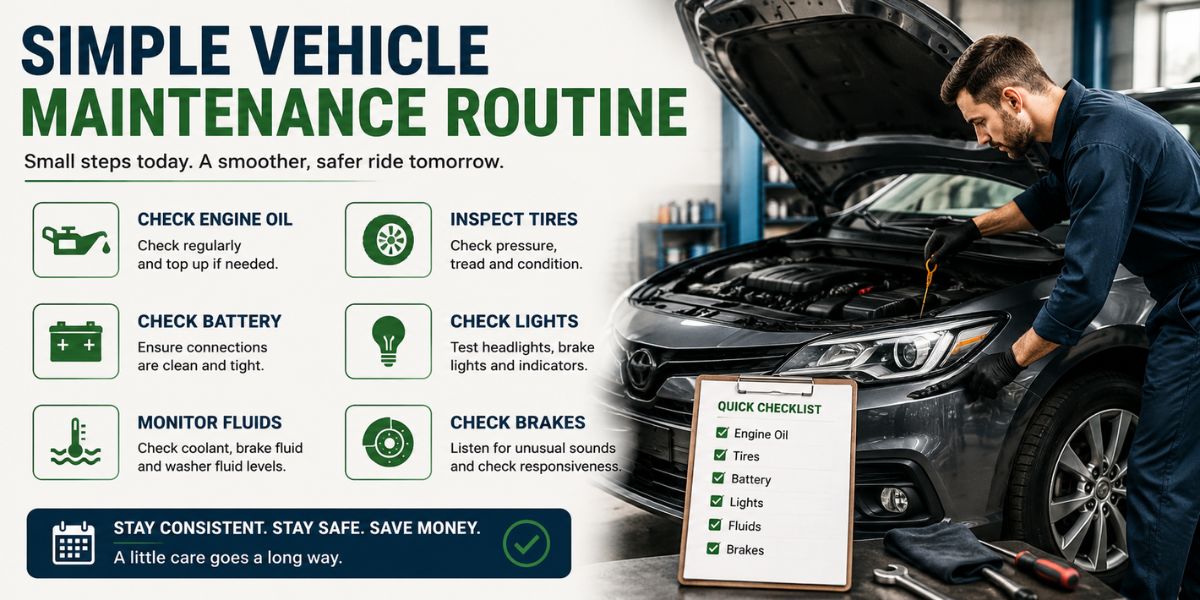
A simple vehicle maintenance routine can help keep your car reliable, safe, and comfortable to drive. You do not always need complicated tools or expensive repairs to care for your vehicle. Many basic maintenance tasks involve regular inspections, keeping fluids at the correct levels, checking tires, and noticing small problems before they become major issues.
A natural approach to vehicle care means developing simple habits, using gentle cleaning methods where appropriate, and following the vehicle manufacturer’s recommended service schedule.
1. Check Your Engine Oil Regularly
Engine oil helps lubricate important engine components and reduces friction. Check the oil level according to your owner’s manual and look for signs of leaks or unusually dark or contaminated oil.
Change the oil and oil filter according to the manufacturer’s recommended interval rather than relying on a universal schedule.
2. Keep Tires Properly Inflated
Check tire pressure regularly, especially before long trips. Proper inflation can improve handling, tire wear, and fuel efficiency.
Also inspect the tires for:
- Uneven tread wear
- Cracks or visible damage
- Objects stuck in the tread
- Low tread depth
Rotate the tires when recommended for your vehicle.
3. Check Essential Fluids
Regularly inspect fluid levels, including coolant, brake fluid, windshield washer fluid, and transmission fluid when applicable. Always use the correct fluid specified for your vehicle.
If you notice a fluid level dropping repeatedly, have the vehicle checked for a possible leak.
4. Clean Your Vehicle Naturally
Regular cleaning can help protect the interior and exterior from dirt and buildup. Use mild automotive soap, clean water, and soft microfiber cloths for routine cleaning.
Avoid harsh household chemicals that may damage paint, plastic, rubber, or interior surfaces.
5. Inspect the Battery
Look at the battery for corrosion, damaged terminals, swelling, or other visible problems. Keep connections clean and secure when appropriate.
If your vehicle becomes difficult to start or the battery repeatedly loses power, professional testing may be necessary.
6. Check Lights and Wipers
Walk around your vehicle periodically to make sure headlights, brake lights, turn signals, and other exterior lights work properly.
Inspect windshield wipers for cracking or poor performance and replace them when they no longer clear the windshield effectively.
7. Pay Attention to Warning Signs
Your vehicle often gives clues when something needs attention. Unusual noises, vibrations, warning lights, fluid spots, burning smells, or changes in braking and steering should not be ignored.
Addressing a small problem early can sometimes prevent a more expensive repair later.
8. Follow the Manufacturer’s Service Schedule
A simple routine should complement—not replace—the maintenance schedule provided by your vehicle manufacturer. Service intervals vary by vehicle, mileage, age, driving conditions, and model.
Keep receipts and maintenance records so you can track completed work and make future servicing easier.
Simple Vehicle Maintenance Routine
Weekly or as needed:
- Check tires visually.
- Look for fluid leaks.
- Check lights and windshield visibility.
- Remove dirt and debris from the vehicle.
Monthly:
- Check tire pressure.
- Inspect tire condition.
- Check important fluid levels.
- Inspect wipers and exterior lights.
- Look over the battery and visible engine components.
At scheduled service intervals:
- Change oil and filters as specified.
- Inspect brakes and suspension.
- Check belts, hoses, and other wear components.
- Rotate tires when recommended.
- Complete manufacturer-recommended inspections.
Final Thoughts
A simple vehicle maintenance routine does not have to be complicated. Regular checks, natural cleaning methods, careful driving, and timely professional servicing can help maintain your vehicle’s condition. The most important habit is consistency: small checks performed regularly can help you notice problems early and keep your vehicle ready for everyday driving.