

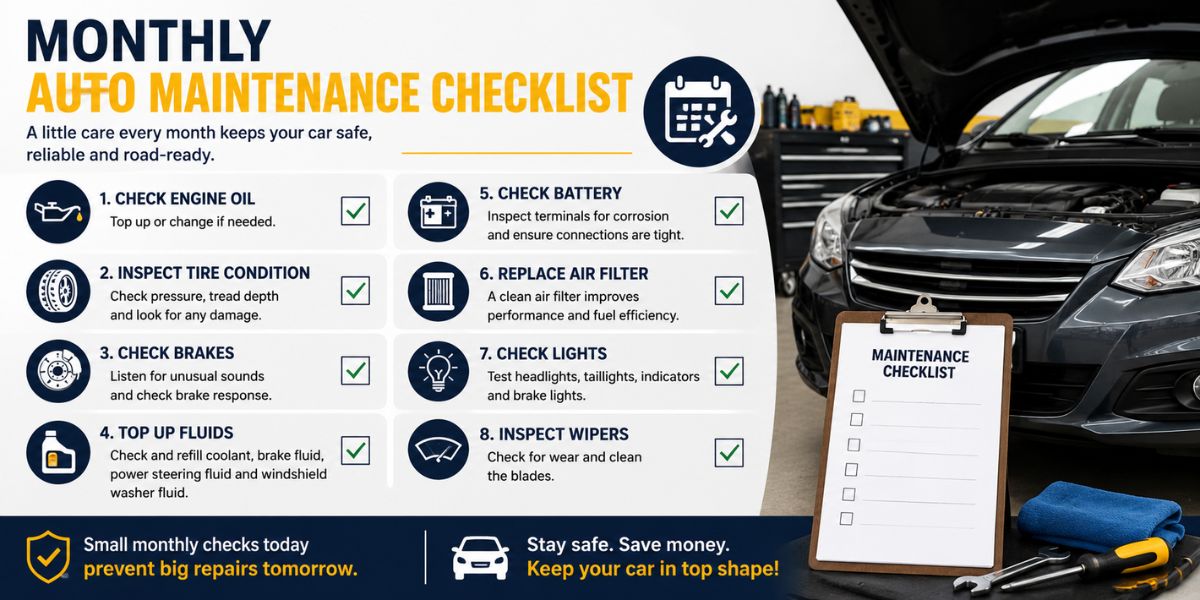
Regular car maintenance can help prevent unexpected breakdowns, improve safety, and extend the life of your vehicle. A simple monthly auto maintenance checklist makes it easier to catch small problems before they become expensive repairs. While some maintenance tasks should follow your vehicle manufacturer’s schedule, several basic checks can be done naturally and routinely at home.
Monthly Auto Maintenance Checklist
1. Check Engine Oil
Check the engine oil level when the car is parked on level ground and the engine has cooled. Low or dirty oil can affect engine performance and increase wear. Top up or change the oil according to your vehicle manufacturer’s recommendations.
2. Inspect Tire Pressure
Check the pressure of all four tires, including the spare if your vehicle has one. Properly inflated tires can improve handling, fuel efficiency, and tire life. Always follow the pressure listed in your vehicle’s owner’s manual or door-jamb label.
3. Examine Tire Condition
Look for uneven tread wear, cracks, bulges, or objects stuck in the tires. Uneven wear can indicate alignment, suspension, or tire-pressure problems that may require professional attention.
4. Check Coolant Levels
Inspect the coolant reservoir and make sure the level is within the recommended range. Never remove a radiator cap while the engine is hot. If you frequently need to add coolant, have the system checked for possible leaks.
5. Inspect the Battery
Look for corrosion, damaged cables, loose connections, or signs of leakage around the battery. Keeping connections clean and secure can help maintain reliable starting performance.
6. Test Lights and Signals
Check your headlights, brake lights, turn signals, hazard lights, and reverse lights. Replace failed bulbs promptly so you can see clearly and remain visible to other drivers.
7. Check Windshield Wipers
Inspect the wiper blades for cracking, splitting, or streaking. Replace worn blades when they no longer clear the windshield properly. Keep the windshield washer reservoir filled with appropriate washer fluid.
8. Look for Fluid Leaks
After parking, look underneath the vehicle for unusual spots or puddles. Oil, coolant, brake fluid, transmission fluid, or other leaks can indicate a problem that should be inspected.
9. Listen for Unusual Noises
Pay attention to new squealing, grinding, knocking, rattling, or clicking sounds. Changes in sound can sometimes provide an early warning of worn or damaged components.
10. Check Brakes
Pay attention to changes in braking performance, vibrations, squealing, or grinding. Brake components require professional inspection when there are signs of excessive wear or reduced braking performance.
11. Inspect Belts and Hoses
Look for visible cracks, fraying, swelling, or loose components. Belts and hoses can deteriorate over time, particularly in vehicles exposed to extreme temperatures.
12. Check the Air Filter
A visibly dirty or clogged engine air filter may restrict airflow. Check it according to the manufacturer’s recommended maintenance interval and replace it when necessary.
Natural Habits That Support Car Maintenance
Along with mechanical inspections, simple driving habits can help protect your vehicle. Avoid unnecessary aggressive acceleration and hard braking, keep your tires properly inflated, remove unnecessary weight from the car, and address warning lights promptly.
Regularly washing the exterior can also help remove dirt, road salt, and other contaminants that may contribute to corrosion. Cleaning the interior and keeping the dashboard and windows clear can improve comfort and visibility.
When to Schedule Professional Service
A monthly checklist does not replace scheduled professional maintenance. Oil changes, filter replacements, brake inspections, fluid changes, tire rotations, spark-plug replacement, timing-belt service, and other repairs should be performed according to your vehicle manufacturer’s recommendations.
Driving conditions also matter. Frequent short trips, heavy traffic, towing, dusty roads, mountainous driving, and very hot or cold weather may require more frequent maintenance.
Final Thoughts
A monthly auto maintenance checklist is a simple way to stay aware of your vehicle’s condition. Checking oil, tires, fluids, lights, brakes, battery, wipers, belts, and possible leaks can help you identify problems early. Combine these natural maintenance habits with your manufacturer’s service schedule to keep your car safer, more reliable, and ready for the road.