

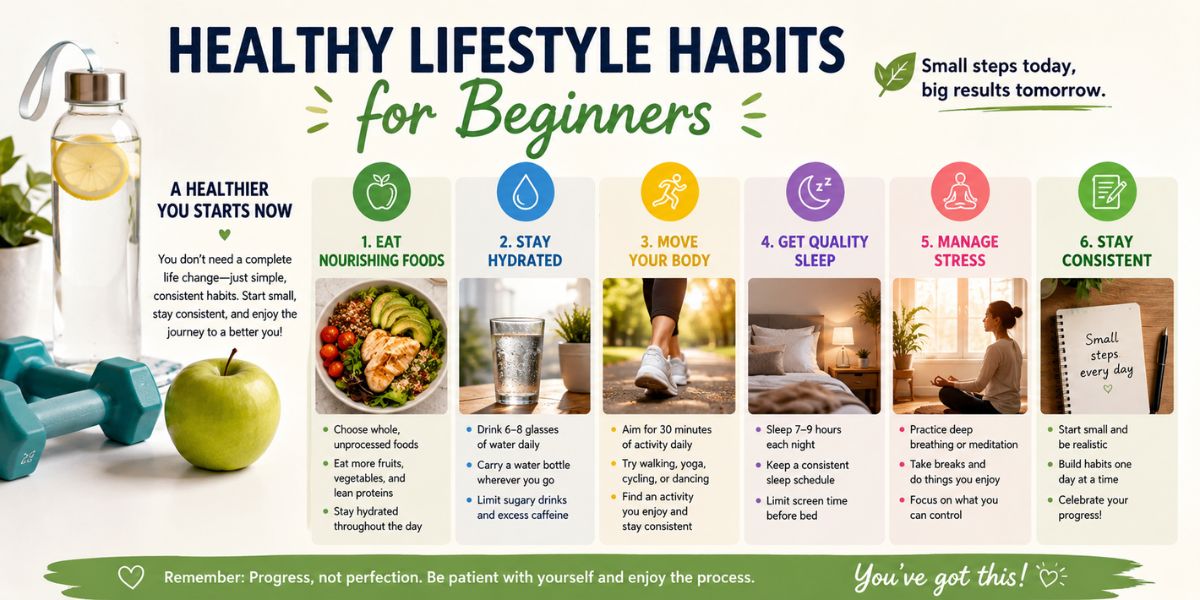
Living a healthy lifestyle doesn’t require drastic changes or expensive programs. The key to long-term wellness is building small, consistent habits that improve your physical, mental, and emotional well-being over time. Whether you’re just starting your health journey or looking to develop better daily routines, adopting healthy lifestyle habits can help you feel more energetic, reduce the risk of chronic diseases, and improve your overall quality of life.
In this comprehensive guide, you’ll learn the best healthy lifestyle habits for beginners, practical tips to stay motivated, and natural ways to create lasting habits for a healthier future.
What Is a Healthy Lifestyle?
A healthy lifestyle is a way of living that supports your overall health and well-being. It involves making positive choices every day, such as eating nutritious foods, staying physically active, getting enough sleep, managing stress, and avoiding harmful habits.
A healthy lifestyle is not about perfection or strict diets. Instead, it focuses on balance, consistency, and making choices that help your body and mind function at their best.
Why Healthy Habits Matter
Healthy habits can provide many long-term benefits, including:
- Increased energy levels
- Better physical fitness
- Improved mental health
- Stronger immune system
- Healthier body weight
- Better sleep quality
- Reduced stress
- Lower risk of heart disease, diabetes, and other chronic conditions
- Improved confidence and self-esteem
Even small lifestyle improvements can make a significant difference over time.
1. Start with Small, Sustainable Changes
One of the biggest mistakes beginners make is trying to change everything at once. Instead, focus on one or two habits at a time.
For example:
- Drink an extra glass of water daily.
- Walk for 20 minutes after dinner.
- Eat one serving of vegetables with each meal.
Small improvements are easier to maintain and often lead to lasting success.
2. Eat a Balanced and Nutritious Diet Naturally
Healthy eating provides your body with the nutrients it needs to function properly.
Aim to include:
- Fresh fruits
- Vegetables
- Whole grains
- Lean proteins
- Healthy fats
- Low-fat dairy or dairy alternatives
Try to limit highly processed foods, sugary snacks, and excessive salt.
Healthy Eating Tips
- Cook more meals at home.
- Choose whole foods whenever possible.
- Eat slowly and mindfully.
- Control portion sizes.
- Include colorful vegetables in every meal.
3. Drink Plenty of Water
Water plays an essential role in digestion, circulation, temperature regulation, and overall health.
General tips include:
- Drink water throughout the day.
- Carry a reusable water bottle.
- Drink a glass of water before meals.
- Increase your water intake during hot weather or exercise.
Proper hydration can also improve skin health and energy levels.
4. Stay Physically Active
Regular exercise strengthens your heart, muscles, and bones while improving mood and reducing stress.
Beginner-friendly activities include:
- Walking
- Cycling
- Swimming
- Yoga
- Stretching
- Dancing
- Bodyweight exercises
Aim for at least 150 minutes of moderate physical activity each week.
5. Prioritize Quality Sleep
Good sleep is essential for recovery, brain function, and immune health.
Healthy sleep habits include:
- Going to bed at the same time each night.
- Limiting screen time before bed.
- Keeping your bedroom cool and quiet.
- Avoiding heavy meals late at night.
- Sleeping 7–9 hours per night.
6. Manage Stress Naturally
Long-term stress can affect both physical and mental health.
Natural ways to reduce stress include:
- Deep breathing exercises
- Meditation
- Spending time outdoors
- Listening to calming music
- Reading
- Practicing gratitude
- Talking with supportive friends or family
Even a few minutes of relaxation each day can help.
7. Practice Good Personal Hygiene
Good hygiene protects you from illness and supports overall health.
Daily hygiene habits include:
- Washing your hands regularly
- Brushing and flossing your teeth
- Showering regularly
- Wearing clean clothes
- Keeping your nails trimmed
These simple habits contribute to both health and confidence.
8. Spend More Time Outdoors
Fresh air and natural sunlight offer many benefits, including:
- Improved mood
- Better sleep patterns
- Vitamin D production
- Reduced stress
- Increased physical activity
Try to spend at least 20–30 minutes outdoors most days.
9. Reduce Processed Foods and Sugary Drinks
Highly processed foods often contain excess sugar, unhealthy fats, and sodium.
Instead, choose:
- Fresh fruit instead of candy
- Water instead of sugary drinks
- Homemade meals instead of fast food
- Nuts instead of chips
Small dietary swaps can have a big impact on your health.
10. Build Healthy Relationships
Positive relationships contribute to emotional well-being.
Make time to:
- Connect with family
- Spend time with supportive friends
- Join community groups
- Practice kindness and empathy
- Communicate openly
Strong social connections are linked to better mental and physical health.
11. Limit Screen Time
Too much time on phones, computers, or televisions can reduce physical activity and disrupt sleep.
Try these strategies:
- Take regular screen breaks.
- Avoid screens before bedtime.
- Spend more time on hobbies or outdoor activities.
12. Avoid Smoking and Excessive Alcohol
Smoking and excessive alcohol use can increase the risk of many health problems.
If you smoke, consider seeking support to quit. If you drink alcohol, do so in moderation according to health guidelines.
13. Create a Simple Daily Healthy Routine
A consistent routine makes healthy habits easier to maintain.
Example routine:
Morning
- Wake up at a regular time.
- Drink a glass of water.
- Stretch or take a short walk.
- Eat a healthy breakfast.
Afternoon
- Eat a balanced lunch.
- Stay hydrated.
- Take short movement breaks.
Evening
- Enjoy a nutritious dinner.
- Relax without excessive screen time.
- Prepare for a good night’s sleep.
Common Mistakes Beginners Should Avoid
Avoid these common pitfalls:
- Setting unrealistic goals
- Skipping meals
- Following extreme diets
- Comparing yourself to others
- Expecting immediate results
- Ignoring rest and recovery
Remember that lasting health comes from consistency, not perfection.
Tips for Staying Consistent
- Set realistic goals.
- Track your progress.
- Celebrate small achievements.
- Build one habit at a time.
- Stay patient.
- Focus on long-term health rather than quick results.
Healthy habits become easier as they become part of your daily routine.
Frequently Asked Questions
How do beginners start a healthy lifestyle?
Start with small changes, such as drinking more water, eating more fruits and vegetables, walking daily, and getting enough sleep.
How long does it take to build healthy habits?
Many people begin forming habits within a few weeks, but consistency over several months helps make them part of your routine.
Is exercise necessary every day?
Daily movement is beneficial, but your body also needs rest. Aim for regular physical activity while allowing time for recovery.
What’s the most important healthy habit?
There isn’t a single most important habit. Eating a balanced diet, staying active, sleeping well, managing stress, and staying hydrated all work together to support good health.
Can I improve my health without joining a gym?
Yes. Walking, cycling, home workouts, stretching, and other forms of physical activity can all improve your fitness and overall health.
Conclusion
Building healthy lifestyle habits for beginners doesn’t have to be difficult. By making small, natural changes—such as eating a balanced diet, staying active, drinking enough water, sleeping well, and managing stress—you can create a strong foundation for lifelong wellness. Focus on progress rather than perfection, stay consistent with your daily habits, and remember that every healthy choice you make today contributes to a healthier and happier future.
READ MORE: Natural Morning Routine for Better Health: Start Your Day the Healthy Way.
 molyatkinsan
  alona queen