

Introduction
Modern office jobs often require spending long hours sitting in front of a computer. While this work environment may seem comfortable, sitting for extended periods can lead to poor posture, stiff muscles, neck and back pain, reduced flexibility, eye strain, and lower energy levels. Over time, a lack of movement may also increase the risk of chronic health problems such as obesity, heart disease, and type 2 diabetes. To reduce these problems, adding easy daily wellness tips to your routine can help you stay healthier and more active every day.
The good news is that staying active at work doesn’t require a gym membership or expensive fitness equipment. By adding a few simple exercises and stretches to your daily routine, you can improve circulation, reduce muscle tension, boost productivity, and support your overall health. Even short movement breaks throughout the day can make a significant difference.
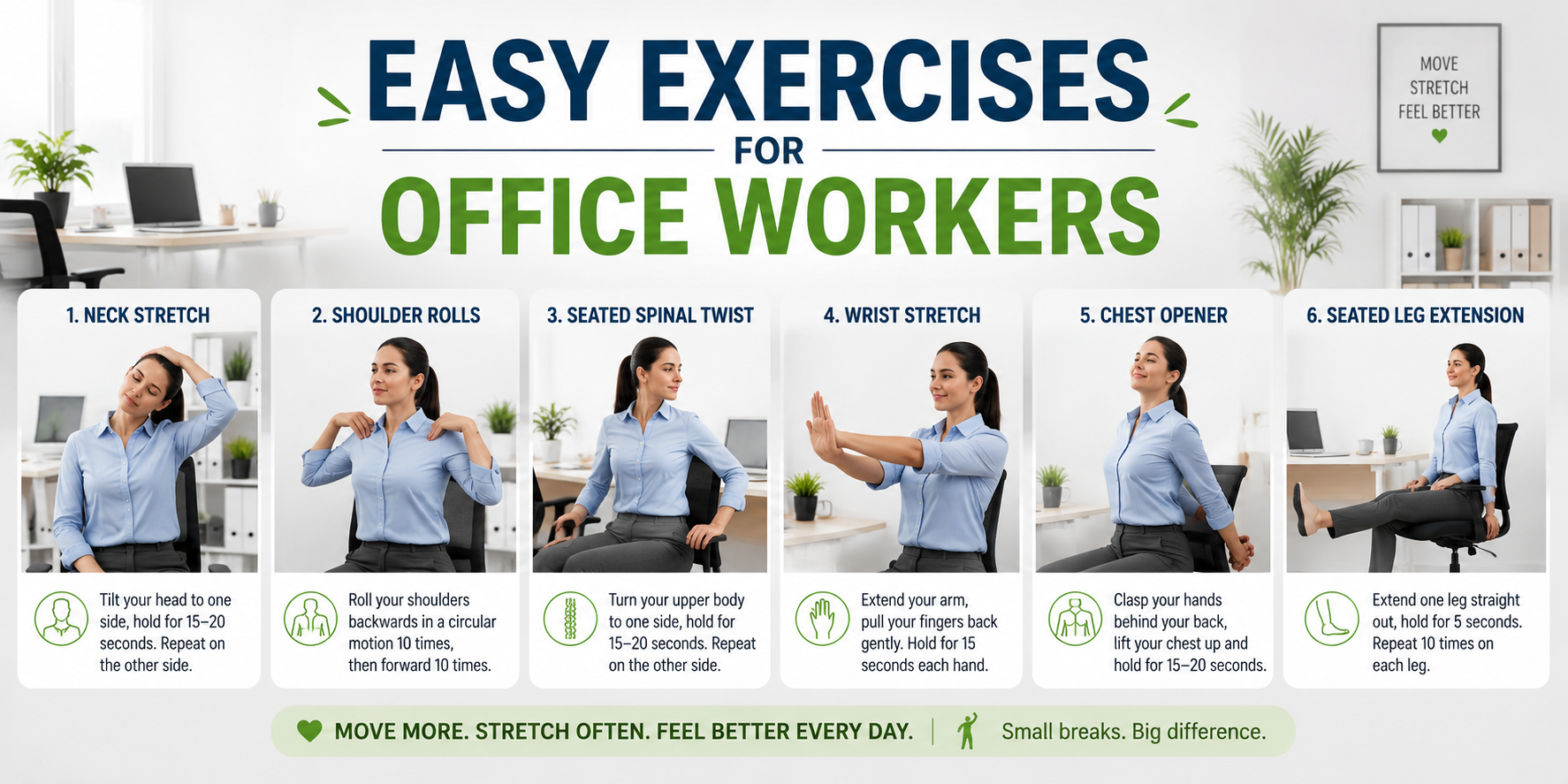
This guide covers easy exercises for office workers that can be performed at your desk or in a small office space. These beginner-friendly movements are designed to help you stay comfortable, improve posture, and keep your body active during the workday.
Why Office Workers Should Exercise During the Day
Sitting for long periods slows blood circulation and places extra pressure on your spine, shoulders, hips, and legs. Regular movement helps reduce these effects while improving both physical and mental well-being.
Benefits include:
- Reduces neck, shoulder, and back pain
- Improves posture
- Increases blood circulation
- Boosts energy levels
- Improves concentration and productivity
- Reduces stress and anxiety
- Prevents muscle stiffness
- Supports long-term heart health
Experts often recommend standing or moving for a few minutes every 30 to 60 minutes during the workday.
1. Neck Stretch
One of the most common complaints among office workers is neck stiffness caused by looking at computer screens for long periods.
How to do it:
- Sit up straight.
- Slowly tilt your head toward your right shoulder.
- Hold for 15–20 seconds.
- Repeat on the left side.
- Perform 2–3 times on each side.
Benefits
- Relieves neck tension
- Improves flexibility
- Reduces headaches caused by muscle tightness
2. Shoulder Rolls
Shoulder muscles often become tight after typing or using a mouse for several hours.
Instructions
- Roll both shoulders forward 10 times.
- Roll them backward 10 times.
- Keep movements slow and controlled.
Benefits
- Releases shoulder tension
- Improves posture
- Increases blood flow
3. Seated Spinal Twist
This exercise gently stretches your back and improves spinal mobility.
Steps
- Sit tall in your chair.
- Place your right hand on the back of the chair.
- Twist your upper body gently.
- Hold for 20 seconds.
- Repeat on the opposite side.
Benefits
- Reduces lower back stiffness
- Improves flexibility
- Supports healthy posture
4. Wrist and Finger Stretch
Typing throughout the day places stress on your wrists and fingers.
How to perform
- Extend one arm forward.
- Pull your fingers back gently with the opposite hand.
- Hold for 15 seconds.
- Switch hands.
Then:
- Open and close your fists 15–20 times.
Benefits
- Reduces wrist strain
- Helps prevent repetitive stress injuries
- Improves hand flexibility
5. Chair Squats
Chair squats strengthen your legs without requiring extra space.
Instructions
- Stand in front of your chair.
- Lower yourself until you almost touch the seat.
- Stand back up.
- Repeat 10–15 times.
Benefits
6. Calf Raise
This exercise helps increase circulation in your legs.
Steps
- Stand behind your chair.
- Lift your heels until you’re standing on your toes.
- Lower slowly.
- Repeat 15–20 times.
Benefits
- Strengthens calves
- Improves balance
- Reduces leg fatigue
7. Seated Leg Extensions
Perfect for improving blood flow while remaining seated.
Instructions
- Sit upright.
- Extend one leg until it’s straight.
- Hold for five seconds.
- Lower slowly.
- Repeat 10 times per leg.
Benefits
- Strengthens thigh muscles
- Improves knee mobility
- Encourages circulation
8. Standing Side Stretch
This stretch relieves tension throughout your upper body.
How to do it
- Stand tall.
- Raise one arm overhead.
- Lean gently to the opposite side.
- Hold for 20 seconds.
- Switch sides.
Benefits
- Improves flexibility
- Relieves side and back tightness
- Encourages better posture
9. March in Place
A quick cardio exercise that can be done almost anywhere.
Instructions
- Stand up.
- Lift your knees one at a time.
- Swing your arms naturally.
- Continue for 1–2 minutes.
Benefits
- Raises heart rate
- Improves circulation
- Increases energy
10. Eye Relaxation Exercise
Your eyes also need regular breaks.
Follow the 20-20-20 rule:
Every 20 minutes:
- Look at something 20 feet away.
- Focus for at least 20 seconds.
Benefits
- Reduces eye strain
- Helps prevent headaches
- Keeps eyes refreshed
Tips to Stay Active Throughout the Workday
Small habits can make a big difference.
Try to:
- Stand up every 30–60 minutes.
- Walk during phone calls.
- Take the stairs whenever possible.
- Drink enough water throughout the day.
- Stretch before starting work.
- Use a standing desk if available.
- Walk during lunch breaks.
- Set reminders to move regularly.
Common Mistakes to Avoid
Avoid these habits that contribute to discomfort and poor posture:
- Sitting continuously for hours
- Slouching while working
- Looking down at your laptop
- Ignoring muscle stiffness
- Skipping movement breaks
- Crossing your legs for long periods
- Working without proper chair support
Frequently Asked Questions (FAQs)
How often should office workers exercise?
Aim to stand, stretch, or move every 30 to 60 minutes. Even a few minutes of activity can help reduce stiffness and improve circulation.
Can desk exercises replace regular workouts?
No. Desk exercises help reduce the effects of prolonged sitting, but they should complement regular physical activity such as walking, strength training, or other forms of exercise.
Do I need equipment for office exercises?
Most office exercises require no equipment. A sturdy chair and a little space are enough for many stretches and movements.
How long should an office exercise break be?
A movement break of 2–5 minutes every hour is beneficial. Longer walks or exercise sessions during lunch or after work provide additional health benefits.
Are these exercises suitable for beginners?
Yes. These exercises are simple, low-impact, and appropriate for most beginners. If you have an injury or medical condition, consult a healthcare professional before starting a new exercise routine.
Conclusion
Staying active at your desk doesn’t have to be difficult or time-consuming. Incorporating a few easy exercises into your workday can help relieve muscle tension, improve posture, boost energy, and support your overall health. Consistency is more important than intensity—taking short movement breaks throughout the day can have a lasting positive impact on your well-being. By making these simple exercises part of your daily routine, you can stay healthier, more comfortable, and more productive, whether you work in an office or from home.
READ MORE: Morning Stretching Routine for Beginners: A Natural Way to Start Your Day.
 molyatkinsan