

Introduction
A healthy gut is the foundation of overall well-being. Your digestive system does much more than break down food—it absorbs essential nutrients, supports your immune system, and helps maintain a balanced community of beneficial bacteria known as the gut microbiome. Supporting your digestive system with a balanced diet and Healthy Meal Planning for Beginners can make it easier to choose foods that nourish your gut every day. When your gut is healthy, you’re more likely to experience comfortable digestion, steady energy levels, and better overall health. You can also strengthen your overall wellness by following Healthy Lifestyle Habits for Beginners and including foods improve gut health naturally in your daily diet.
Unfortunately, modern diets high in processed foods, added sugars, and unhealthy fats can disrupt the natural balance of the digestive system. This may lead to common digestive issues such as bloating, constipation, indigestion, gas, and irregular bowel movements. The good news is that making simple dietary changes can naturally support gut health and improve digestion.
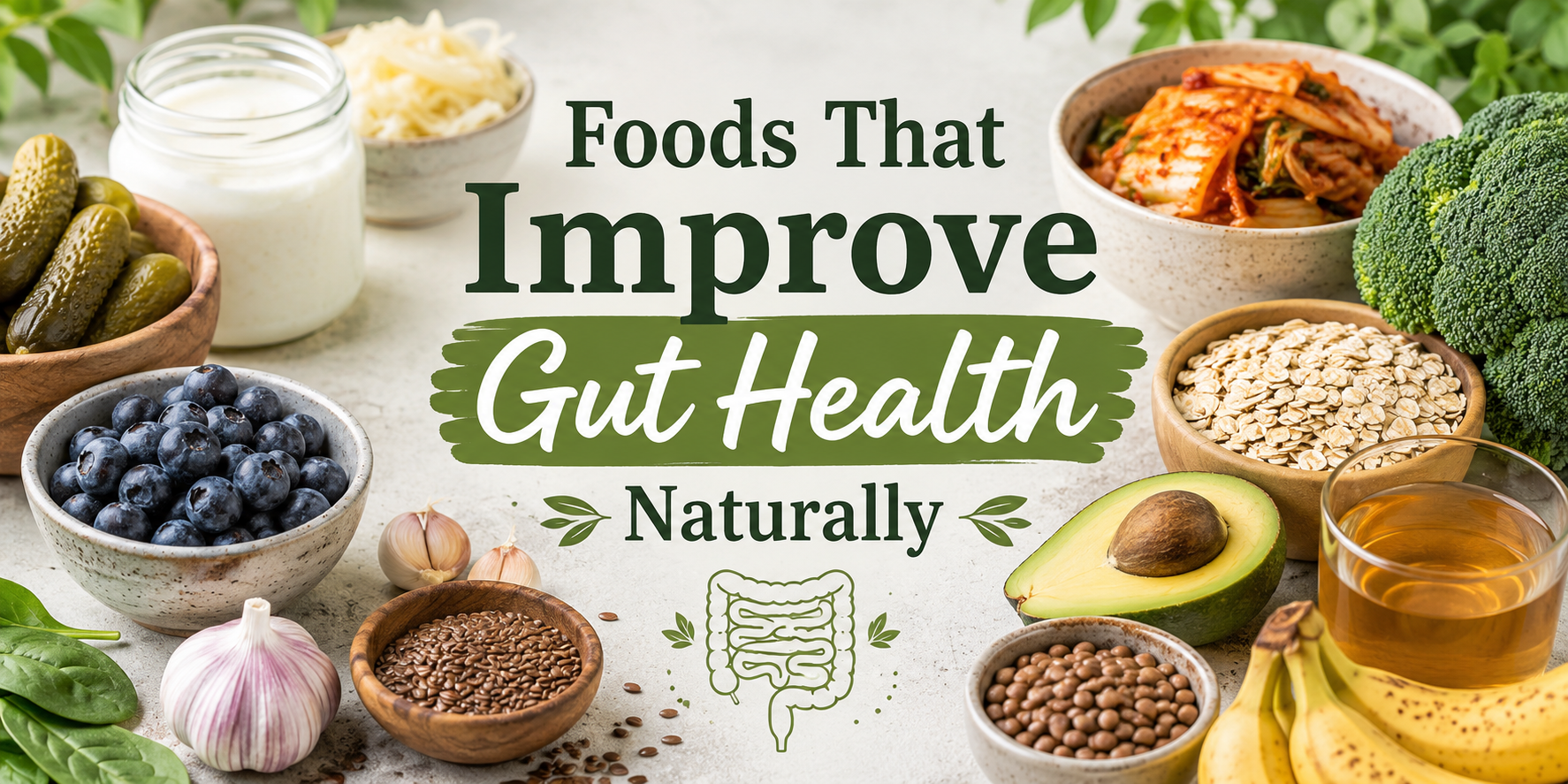
This guide explores the best foods that improve gut health naturally, including probiotic-rich fermented foods, fiber-packed fruits and vegetables, whole grains, and other nutrient-dense options. By adding these gut-friendly foods to your daily meals, you can nourish your digestive system, support a healthy microbiome, and enjoy better digestive wellness for years to come.
What Is Gut Health?
Gut health refers to the proper functioning of your digestive system and the balance of trillions of microorganisms living in your intestines. These bacteria, fungi, and other microbes—collectively called the gut microbiome—play a vital role in digestion, nutrient absorption, immune function, and even mental well-being.
A healthy gut allows your body to digest food efficiently, absorb vitamins and minerals, and eliminate waste without discomfort. It also helps maintain a strong intestinal barrier that protects against harmful bacteria and toxins.
Signs of good gut health often include:
- Regular bowel movements
- Minimal bloating or gas
- Comfortable digestion after meals
- Healthy energy levels
- Strong immune function
On the other hand, an unhealthy gut may contribute to digestive discomfort, constipation, diarrhea, frequent bloating, food sensitivities, and other health concerns. Fortunately, eating a variety of whole, fiber-rich, and probiotic-containing foods can naturally support a healthier digestive system.
Why Diet Matters for Gut Health
The foods you eat directly influence the health of your digestive system and the balance of bacteria living in your gut. Every meal either nourishes beneficial gut bacteria or encourages the growth of less helpful microbes.
Foods rich in dietary fiber act as prebiotics, providing nourishment for beneficial bacteria. Fermented foods supply probiotics, which introduce helpful live microorganisms into the digestive tract. Together, prebiotics and probiotics work to maintain a balanced gut microbiome.
A gut-friendly diet may help:
- Support healthy digestion
- Promote regular bowel movements
- Reduce occasional bloating
- Improve nutrient absorption
- Strengthen immune function
- Support overall health and wellness
Rather than relying on supplements alone, building your meals around natural, nutrient-rich foods is one of the most effective ways to care for your digestive health.
READ MORE: Anti Inflammatory Foods List: Natural Foods That Help Fight Inflammation.