

Introduction
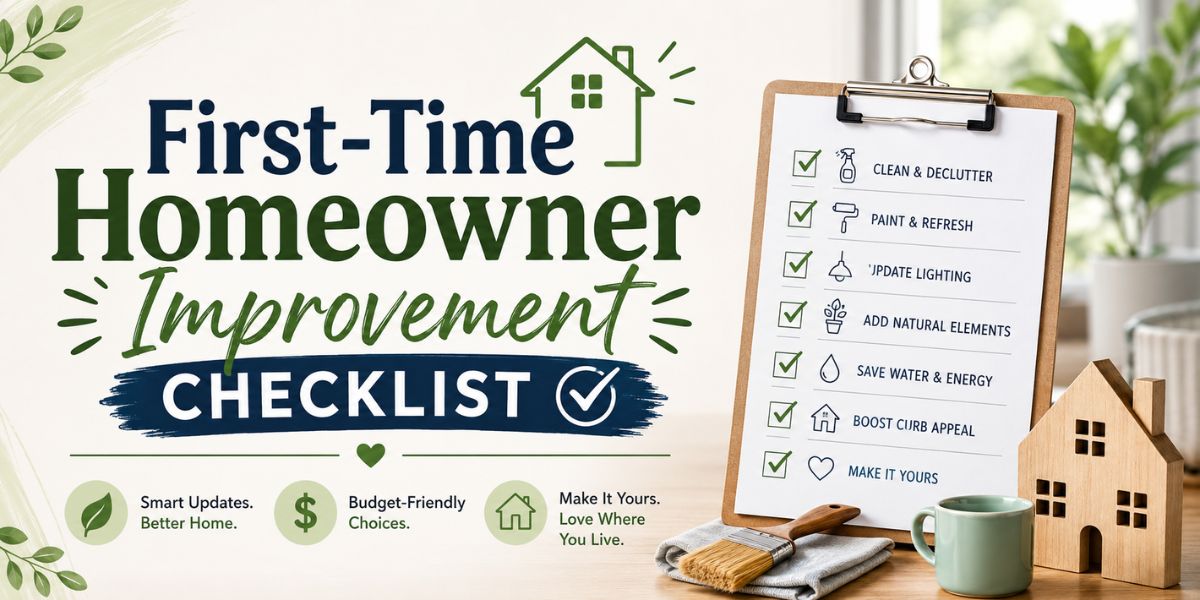
Becoming a homeowner for the first time is a major achievement and the beginning of an exciting journey. Along with the freedom to personalize your living space comes the responsibility of maintaining and improving your property. While the list of possible projects may seem endless, starting with a well-planned first-time homeowner improvement checklist can help you stay organized, avoid costly mistakes, and protect your investment from day one.
Before tackling larger renovations, it’s helpful to learn about home improvement on a budget that allow you to upgrade your home without overspending. Focusing on affordable and practical improvements ensures you build a solid foundation while keeping your finances on track.
Many new homeowners assume that improving a home requires a large budget or professional contractors. In reality, some of the most valuable upgrades are simple, affordable, and easy to complete yourself. By focusing on natural, eco-friendly, and budget-conscious improvements, you can enhance your home’s appearance, increase energy efficiency, improve indoor air quality, and reduce future maintenance costs without spending thousands of dollars.
Whether you’ve purchased a newly built house or an older property, every home benefits from regular inspections and thoughtful upgrades. Small improvements such as sealing air leaks, replacing worn weatherstripping, updating lighting with energy-efficient LED bulbs, adding insulation, planting native landscaping, or using low-VOC paints can make your home healthier, more comfortable, and more valuable over time. These projects also help lower utility bills while reducing your environmental impact.
A first-time homeowner should also focus on safety and preventative maintenance before tackling cosmetic renovations. Testing smoke and carbon monoxide detectors, inspecting the roof and gutters, checking plumbing for leaks, servicing the HVAC system, and examining electrical outlets are all essential tasks that help prevent expensive repairs later. Building good maintenance habits early will save both time and money throughout your homeownership journey.
This comprehensive guide covers everything you need to know to confidently improve your first home. You’ll find practical DIY projects, seasonal maintenance checklists, energy-saving upgrades, natural home improvement ideas, essential tools for beginners, and budget-friendly renovation tips that deliver lasting results. Whether your goal is to increase property value, create a healthier living environment, or simply make your house feel more like home, this checklist provides a clear roadmap for success.
By following these simple yet effective recommendations, you’ll gain the confidence to care for your home, preserve its value, and create a beautiful, functional space that you and your family can enjoy for many years. No matter your budget or experience level, every small improvement brings you one step closer to building the home you’ve always envisioned.
For many first-time homeowners, deciding where to begin is often the biggest challenge. With countless home improvement ideas available online, it’s easy to become overwhelmed or spend money on projects that don’t provide lasting value. Instead of rushing into expensive renovations, it’s better to focus on improvements that make your home safer, more efficient, and easier to maintain. A structured checklist helps you prioritize essential upgrades before moving on to decorative enhancements.
Natural home improvement is becoming increasingly popular because it combines sustainability with long-term savings. Choosing environmentally friendly materials, reducing energy consumption, and using non-toxic products not only benefits the planet but also creates a healthier indoor environment for your family. From installing water-saving fixtures and composting systems to choosing bamboo flooring or reclaimed wood furniture, small eco-friendly decisions can significantly improve your home’s comfort and efficiency.
Budget-friendly improvements are equally important, especially for new homeowners who may already be managing mortgage payments, insurance, property taxes, and moving expenses. Fortunately, many affordable upgrades can dramatically improve both the appearance and functionality of your home. Replacing outdated cabinet hardware, adding fresh mulch to garden beds, installing smart thermostats, updating faucets, improving storage solutions, and repainting walls with neutral colors are all inexpensive projects that deliver noticeable results.
Another important aspect of homeownership is preventive maintenance. Many costly repairs occur because small problems go unnoticed for months or even years. A minor roof leak can eventually damage insulation, ceilings, and electrical systems, while a slow plumbing leak may lead to mold growth or structural damage. Regular inspections allow you to identify these issues early, helping you avoid unexpected repair bills and extending the lifespan of your home’s major systems.
Your home’s exterior deserves just as much attention as the interior. Maintaining your roof, gutters, siding, driveway, fencing, and landscaping not only protects your investment but also enhances curb appeal. A well-maintained exterior creates a positive first impression and can significantly increase your property’s market value if you decide to sell in the future. Simple outdoor projects like trimming trees, cleaning gutters, pressure washing walkways, or planting native flowers are affordable ways to keep your home looking its best throughout the year.
Indoor comfort is another priority for first-time homeowners. Proper insulation, energy-efficient windows, ceiling fans, and smart temperature control systems can lower monthly utility bills while making your home more comfortable in every season. Improving ventilation, controlling humidity, and adding air-purifying houseplants also contribute to healthier indoor air quality, reducing allergens and creating a fresher living environment.
Security should never be overlooked when moving into a new home. One of the first tasks on your improvement checklist should be replacing old locks, changing garage door access codes, testing outdoor lighting, and installing video doorbells or security cameras if needed. These upgrades provide peace of mind while helping protect your family and belongings.
As your confidence grows, you can gradually tackle larger DIY projects such as installing floating shelves, replacing light fixtures, updating bathroom vanities, refinishing hardwood floors, or creating outdoor living spaces. By completing projects one step at a time, you’ll develop valuable home improvement skills while spreading costs over several months or years.
Remember that homeownership is a long-term investment rather than a race to complete every renovation immediately. Every improvement—no matter how small—adds value, enhances comfort, and contributes to the overall condition of your home. With careful planning, consistent maintenance, and smart budgeting, you’ll create a beautiful, functional, and energy-efficient home that meets your family’s needs today while increasing its value for the future.
In the following sections, you’ll find a complete first-time homeowner improvement checklist organized by priority, budget, and season. Whether you’re looking for easy weekend DIY projects, natural upgrades that support sustainable living, or essential maintenance tasks that prevent costly repairs, this guide will help you confidently care for your new home and enjoy all the rewards of homeownership.
READ MORE: Low Cost Home Renovation Ideas: Budget-Friendly Ways to Transform Your Home Naturally.
 molyatkinsan
  alona queen