

Introduction
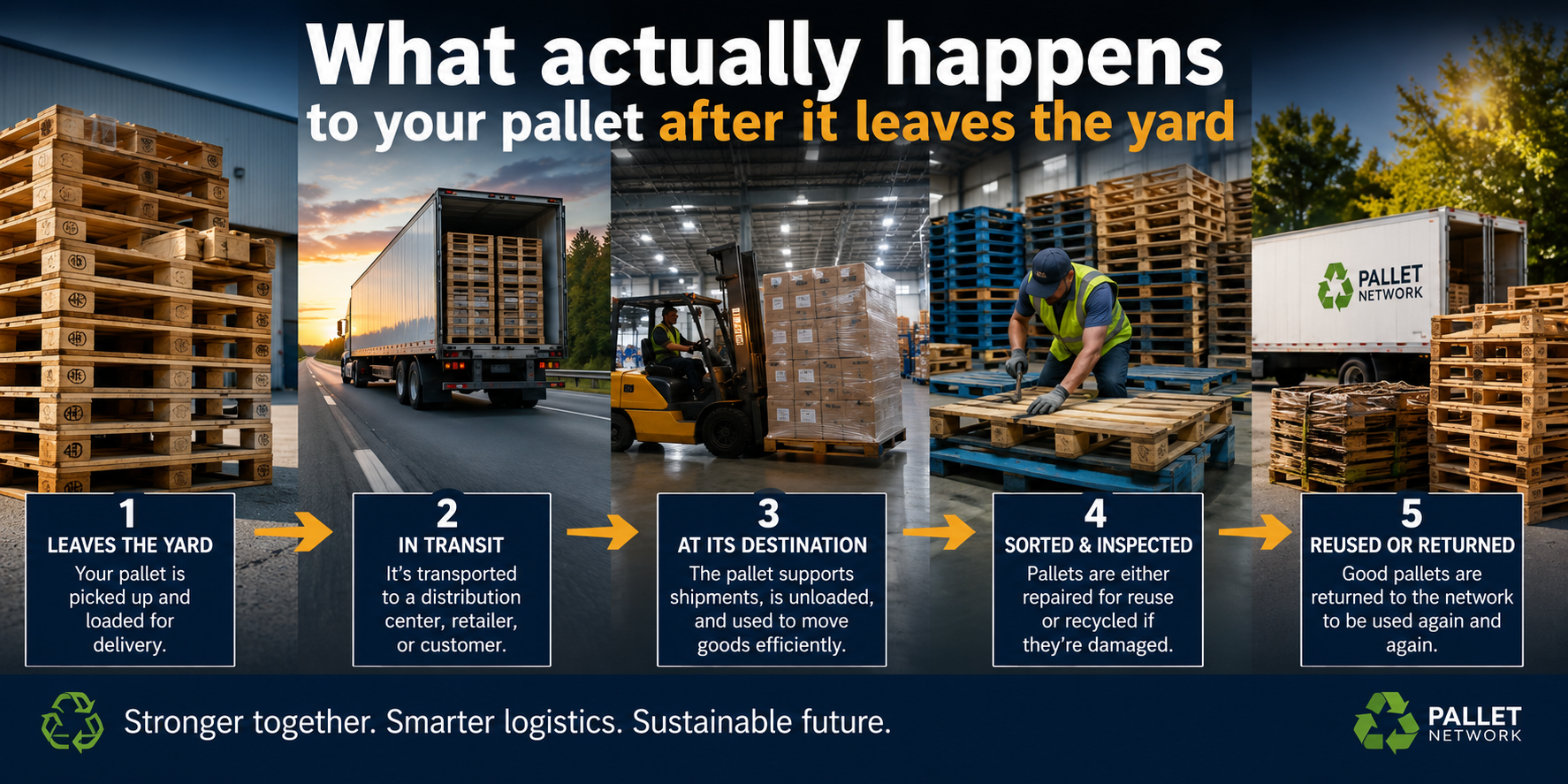
When a pallet leaves the yard, its journey is far from over. Whether it’s carrying retail products, industrial equipment, food, or construction materials, that pallet becomes part of a highly coordinated supply chain. Every stop—from transportation and warehousing to delivery and potential reuse—plays a crucial role in ensuring goods reach their destination safely and efficiently.
Many businesses focus on shipping costs and delivery times but rarely think about what happens to the pallet itself after pickup. Understanding this process can help companies improve logistics, reduce waste, and make smarter shipping decisions.
In this guide, we’ll walk through every stage of a pallet’s journey after it leaves the yard and explain why each step matters.
The First Step: Collection and Loading
Once a pallet is ready to leave the yard, it is loaded onto a truck using forklifts or pallet jacks. Before loading, workers inspect the pallet to ensure it can safely support the shipment and that the cargo is properly secured.
The pallet acts as a stable platform that allows goods to be moved efficiently by material-handling equipment such as forklifts and pallet jacks.
Proper loading includes:
- Weight distribution
- Stretch wrapping
- Protective corner boards
- Shipping labels
- Barcode scanning
These precautions help prevent damage during transportation.
Transportation to Distribution Centers
After leaving the yard, the shipment travels to a regional distribution center or warehouse.
During transportation:
- GPS systems monitor vehicle locations.
- Logistics software tracks shipment progress.
- Drivers follow optimized delivery routes.
- Delivery schedules are updated in real time.
Many pallets pass through several logistics hubs before reaching the final destination.
Arrival at the Warehouse
When the truck reaches the warehouse, workers unload the pallets using forklifts.
The pallets are then:
- Scanned into inventory
- Assigned warehouse locations
- Stored on pallet racks
- Prepared for future order fulfillment
Warehouses rely heavily on standardized pallets because they improve storage efficiency and speed up handling operations.
Inventory Management
Modern warehouses use Warehouse Management Systems (WMS) to keep track of every pallet.
Each pallet receives information such as:
- Product identification
- Quantity
- Storage location
- Arrival date
- Shipping destination
Barcode scanners and RFID technology allow businesses to locate pallets quickly, reducing delays and improving inventory accuracy.
Order Picking
When customers place orders, warehouse workers retrieve products from stored pallets.
Depending on the shipment, they may:
- Ship the entire pallet
- Remove individual cartons
- Combine products onto new pallets
- Re-wrap mixed loads
This stage is essential for retail stores, manufacturers, wholesalers, and e-commerce companies.
Quality Inspection
Before another shipment begins, many businesses inspect pallets for:
- Broken boards
- Loose nails
- Cracks
- Structural damage
- Load stability
Damaged pallets may be repaired, recycled, or replaced to maintain safe handling practices.
Transportation to the Customer
After preparation, pallets begin the next stage of transportation.
The shipment may travel by:
- Truck
- Rail
- Cargo ship
- Air freight
Throughout transit, logistics systems continue tracking the shipment until it reaches its destination.
Delivery at the Final Destination
Once delivered, forklifts unload the pallet and move it into:
- Retail stores
- Manufacturing plants
- Distribution centers
- Construction sites
- Commercial warehouses
The pallet has now completed its primary transportation mission.
What Happens After Delivery?
The story doesn’t necessarily end after delivery.
Depending on the business, pallets may be:
Reused
Many companies collect pallets and return them for future shipments.
Repaired
Minor damage is fixed so pallets can continue serving in the supply chain.
Recycled
Wooden pallets that cannot be repaired are often dismantled, and usable lumber is recovered for other purposes.
Repurposed
Some pallets become furniture, garden projects, shelving, or decorative items.
Wood pallets are designed for repeated use in many logistics systems, while lighter versions may be intended for single-use applications depending on operational needs.
Different Types of Pallets Have Different Journeys
Not every pallet follows the same path.
Common pallet materials include:
Wooden Pallets
The most widely used option due to affordability, repairability, and versatility.
Plastic Pallets
Ideal for food, pharmaceutical, and export industries because they resist moisture and are easy to sanitize.
Metal Pallets
Used for heavy industrial equipment and long-term storage where maximum durability is required.
Paper Pallets
Lightweight alternatives used for export and air freight applications.
Why Pallet Tracking Matters
Modern businesses invest in pallet tracking because it offers several benefits:
- Better inventory visibility
- Reduced pallet loss
- Improved customer service
- Faster deliveries
- Lower transportation costs
- More efficient warehouse operations
Tracking systems also help businesses identify delays and improve overall supply chain performance.
Sustainability in the Pallet Industry
Sustainability has become a major priority across logistics.
Many companies now focus on:
- Repairing damaged pallets
- Recycling old wood
- Using recycled plastic
- Reducing transportation waste
- Extending pallet life cycles
These practices help reduce environmental impact while lowering operational costs.
Common Challenges During a Pallet’s Journey
Even well-managed shipments can face challenges, including:
- Shipping delays
- Weather disruptions
- Damaged goods
- Lost pallets
- Incorrect inventory records
- Poor pallet quality
- Improper loading
Planning and quality control help minimize these risks.
Best Practices for Businesses
To ensure pallets complete their journey safely, businesses should:
- Use high-quality pallets
- Secure loads properly
- Inspect pallets before shipping
- Train warehouse staff
- Track shipments in real time
- Repair reusable pallets promptly
- Choose the right pallet material for each application
These simple practices improve safety, reduce costs, and enhance supply chain efficiency.
Conclusion
A pallet’s journey doesn’t end when it leaves the yard—it begins. From loading and transportation to warehousing, inventory management, delivery, and potential reuse, pallets are the backbone of modern logistics. Every movement is carefully coordinated to ensure products arrive safely, efficiently, and on time.
Understanding what happens after a pallet leaves the yard helps businesses optimize shipping operations, improve warehouse productivity, and embrace more sustainable logistics practices. Whether you’re shipping locally or managing a global supply chain, knowing the life cycle of a pallet can lead to smarter decisions and better operational performance.