

Keeping your car clean is about more than just appearance—it also helps protect the paint from dirt, road grime, bird droppings, tree sap, and other contaminants that can cause long-term damage. However, washing your car incorrectly can leave behind fine scratches, swirl marks, and dull paint, making your vehicle look older than it really is. If your vehicle already has minor paint damage, check out our DIY Car Scratch Repair at Home guide to learn simple and affordable ways to restore your car’s finish.
The good news is that learning how to wash a car without scratching the paint is easier than you might think. By using the right tools, following proper washing techniques, and avoiding common mistakes, you can safely clean your vehicle while preserving its glossy finish.
In this comprehensive guide, you’ll discover the best practices for a scratch-free car wash, from choosing the right supplies to drying your car safely and protecting the paint for lasting shine.
Why Proper Car Washing Matters
Your car’s paint is constantly exposed to:
- Dust
- Dirt
- Mud
- Road salt
- Bird droppings
- Tree sap
- UV rays
- Industrial fallout
If these contaminants aren’t removed correctly, they can damage the clear coat and eventually affect the paint underneath.
Regular, proper washing helps:
- Protect the paint finish
- Prevent swirl marks
- Improve resale value
- Reduce corrosion
- Keep your vehicle looking newer
What Causes Paint Scratches During Washing?
Many scratches happen because dirt is rubbed across the paint instead of being safely removed.
Common causes include:
- Using dirty sponges
- Washing with a single bucket
- Using household detergents
- Drying with rough towels
- Washing in direct sunlight
- Skipping the pre-rinse
- Applying excessive pressure
Fortunately, these mistakes are easy to avoid.
Car Washing Supplies You’ll Need
Gather these supplies before you begin:
- pH-balanced car wash soap
- Two buckets
- Grit guards (optional but recommended)
- Microfiber wash mitt
- Soft wheel brush
- Microfiber drying towels
- Hose or pressure washer
- Tire cleaner
- Wheel cleaner
Using quality tools significantly reduces the risk of scratching your car’s paint.Step 1: Wash Your Car in the Shade
Always wash your vehicle in a shaded area.
Direct sunlight causes water and soap to dry quickly, leaving behind:
- Water spots
- Soap stains
- Uneven cleaning
A cool surface makes washing easier and safer.
Step 2: Pre-Rinse the Vehicle
Before touching the paint, thoroughly rinse the entire car.
This removes:
- Loose dirt
- Dust
- Sand
- Small rocks
Removing debris first prevents it from scratching the paint during washing.
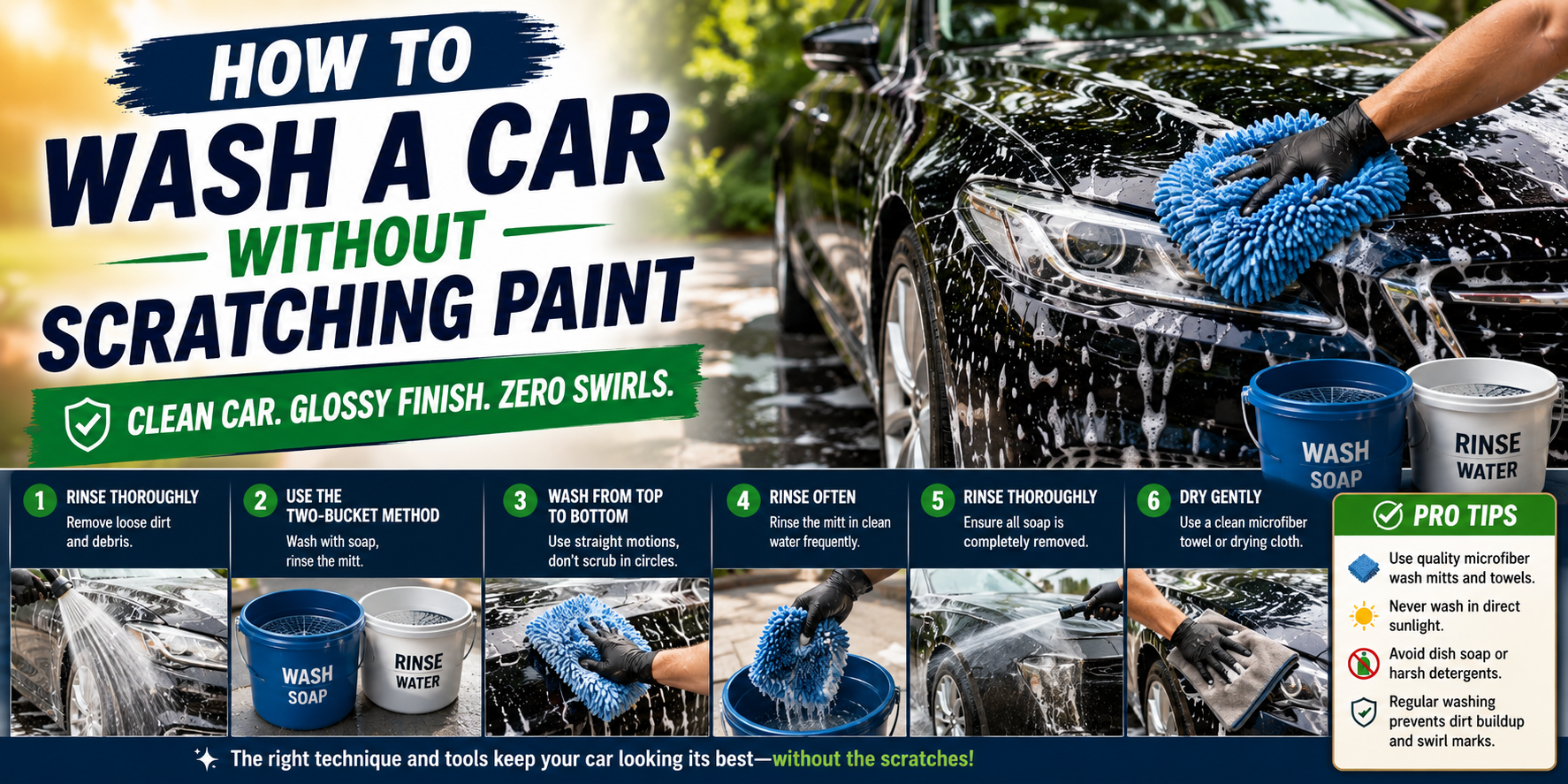
Step 3: Use the Two-Bucket Method
Professional detailers recommend the two-bucket method.
Bucket One
Contains:
- Clean water
- Car wash soap
Bucket Two
Contains:
- Clean rinse water
After washing one section, rinse your wash mitt in the second bucket before dipping it back into the soapy water.
This helps keep dirt away from your car’s paint.
Step 4: Use a Microfiber Wash Mitt
Avoid:
- Old sponges
- Rough cloths
- Household cleaning pads
A microfiber wash mitt lifts dirt away from the paint instead of dragging it across the surface.
Wash one panel at a time using straight-line motions rather than circles to reduce swirl marks.
Step 5: Wash from Top to Bottom
The upper sections of your vehicle are usually the cleanest.
Wash in this order:
- Roof
- Windows
- Hood
- Doors
- Rear panels
- Lower body panels
- Bumpers
Leave the dirtiest areas until last.
Step 6: Clean Wheels Separately
Brake dust contains metal particles that can scratch paint.
Always use:
- Separate bucket
- Separate brushes
- Separate towels
Never use the same wash mitt on your wheels and paint.
Step 7: Rinse Thoroughly
After washing, rinse every panel carefully.
Don’t allow soap to dry on the paint.
Remaining soap residue may leave streaks and reduce shine.
Step 8: Dry Your Car Properly
Drying incorrectly causes many swirl marks.
Use:
- Large microfiber drying towel
- Soft drying cloth
- Car dryer (optional)
Instead of rubbing aggressively, gently blot or glide the towel across the paint.
Apply Wax for Extra Protection
Wax creates a protective barrier against:
- UV rays
- Rain
- Dirt
- Bird droppings
- Tree sap
Apply a quality wax every three to six months for lasting paint protection and enhanced shine.
Common Car Washing Mistakes to Avoid
Avoid these common errors:
- Washing in direct sunlight
- Using dish soap
- Reusing dirty towels
- Skipping the pre-rinse
- Using circular scrubbing motions
- Allowing soap to dry
- Drying with bath towels
These mistakes often lead to swirl marks and fine scratches.
DIY Hand Wash vs. Automatic Car Wash
| DIY Hand Wash | Automatic Car Wash |
|---|---|
| Gentler on paint | Brushes may cause scratches |
| Better cleaning | Faster process |
| More control | Convenient |
| Lower risk of swirl marks | Higher risk with older brush systems |
Touchless automatic washes are generally safer than brush-style systems but may not clean as thoroughly as a careful hand wash.
Tips to Keep Your Car Cleaner Longer
Maintain your car’s finish with these habits:
- Wash every two to four weeks.
- Remove bird droppings immediately.
- Park in covered areas when possible.
- Apply wax regularly.
- Avoid driving through muddy roads whenever possible.
- Use a car cover for long-term outdoor parking.
Frequently Asked Questions
How often should I wash my car?
Most vehicles benefit from a wash every two to four weeks, depending on weather and driving conditions.
Can dish soap damage car paint?
Yes. Dish soap removes protective wax and may dry out your car’s finish. Always use a pH-balanced car wash soap.
Are microfiber towels better than cotton towels?
Yes. Microfiber towels trap dirt away from the paint and significantly reduce the risk of scratches.
Is hand washing safer than automatic car washes?
Generally, yes. A proper hand wash using the two-bucket method is the safest way to protect your car’s paint.
Final Thoughts
Learning how to wash a car without scratching the paint is one of the simplest ways to preserve your vehicle’s appearance and protect its finish for years to come. By using the right tools, following safe washing techniques, and avoiding common mistakes, you can keep your car looking clean, glossy, and free from swirl marks.
Regular washing, careful drying, and applying a quality wax are all key steps in maintaining your car’s paint. With a little extra care and attention, you can enjoy a spotless, scratch-free finish while reducing the need for costly paint correction or detailing in the future.
 alona queen