

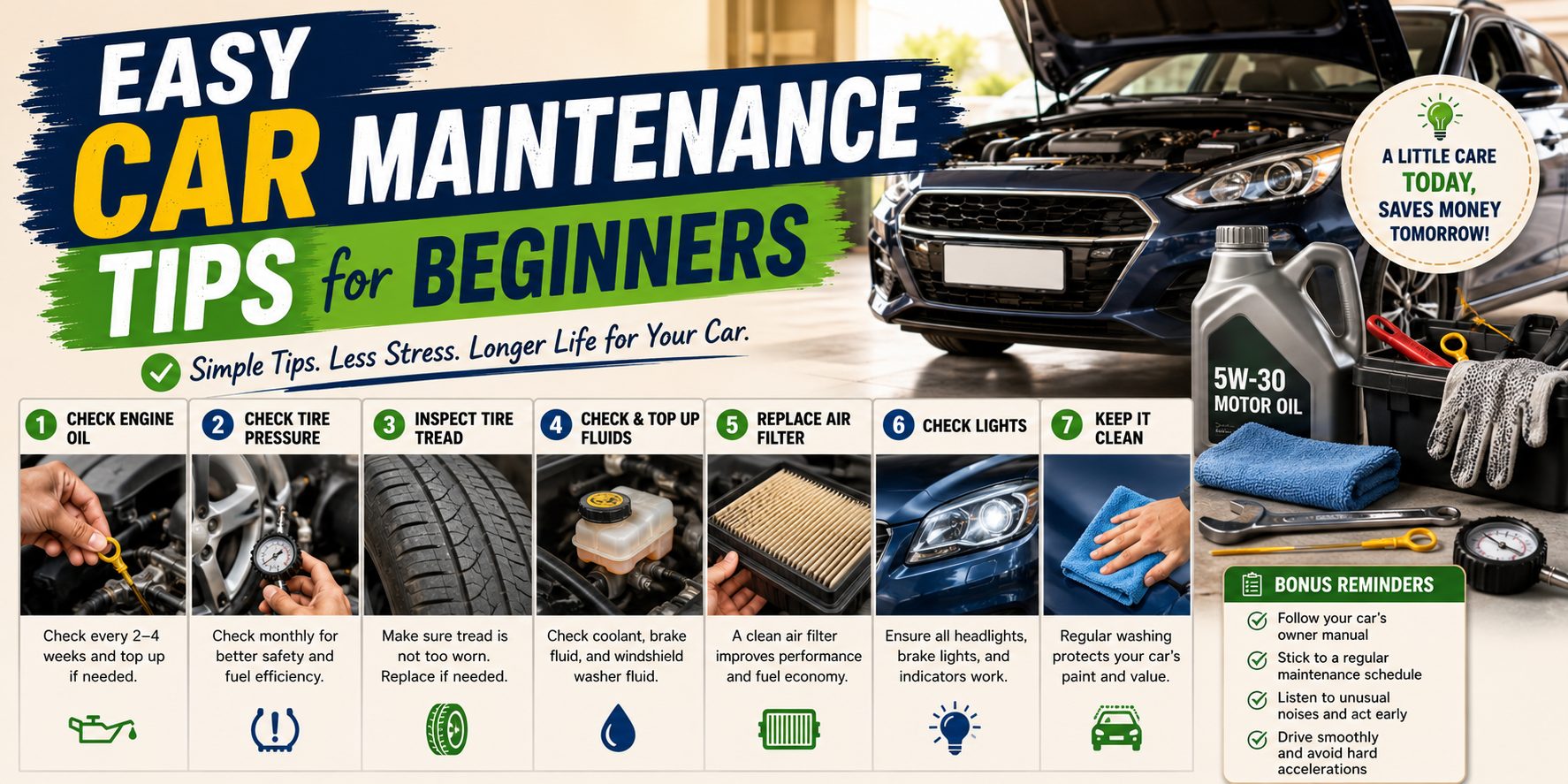
Owning a car comes with the responsibility of keeping it in good condition, but that doesn’t mean you need to be an experienced mechanic. Learning a few easy car maintenance tips can help you prevent costly repairs, improve your vehicle’s performance, and stay safer on the road. Even simple tasks like checking your engine oil, maintaining proper tire pressure, and inspecting fluid levels can make a significant difference in your car’s lifespan. For a complete monthly routine, explore our Affordable Car Maintenance Checklist to ensure you never miss an important maintenance task.
If you’re new to car ownership or want to become more confident in caring for your vehicle, this beginner-friendly guide will walk you through the basics. You’ll learn essential maintenance tasks, the tools you’ll need, and practical tips to keep your car running smoothly without spending a fortune.
Why Basic Car Maintenance Is Important
Routine maintenance helps prevent mechanical problems before they become expensive repairs. It also keeps your vehicle operating safely and efficiently.
Benefits of regular maintenance include:
- Improves engine performance
- Increases fuel efficiency
- Extends the life of your vehicle
- Reduces the risk of breakdowns
- Enhances driving safety
- Helps maintain your car’s resale value
A few minutes of maintenance each month can save you significant time and money in the long run.
Essential Car Maintenance Tools for Beginners
You don’t need a fully equipped garage to perform basic maintenance. Start with these affordable tools:
- Tire pressure gauge
- Microfiber cloths
- Car wash soap
- Flashlight
- Funnel
- Screwdriver set
- Socket wrench set
- Jumper cables
- Portable air compressor
- Work gloves
These tools are useful for many routine maintenance tasks and are a great investment for any car owner.
1. Check Your Engine Oil Regularly
Engine oil lubricates the moving parts of your engine and helps prevent excessive wear.
How to Check It
- Park on a level surface.
- Turn off the engine and allow it to cool.
- Remove the dipstick and wipe it clean.
- Insert it back into the engine.
- Remove it again and check the oil level.
If the oil is low or appears dark and dirty, it may be time for an oil change.
2. Inspect Tire Pressure
Driving with incorrect tire pressure can reduce fuel economy and increase tire wear.
Check tire pressure:
- At least once a month
- Before long trips
- When the tires are cold
Use the recommended pressure listed inside the driver’s door, not the maximum PSI printed on the tire.
3. Examine Tire Tread
Healthy tire tread improves traction and braking performance.
Look for:
- Uneven wear
- Cracks
- Low tread depth
- Embedded debris
Rotate your tires according to your vehicle manufacturer’s recommendations to promote even wear.
4. Check Essential Fluids
Several fluids are vital to your car’s performance.
Inspect:
- Engine oil
- Coolant
- Brake fluid
- Power steering fluid
- Transmission fluid
- Windshield washer fluid
Top up any low fluids using the correct type recommended in your owner’s manual.
5. Keep the Battery Clean
A dirty or corroded battery can cause starting problems.
Inspect for:
- Corrosion on the terminals
- Loose connections
- Cracks in the battery case
Clean the terminals carefully if corrosion develops.
6. Replace Worn Windshield Wipers
Wiper blades should provide a clear view during rain.
Replace them if they:
- Leave streaks
- Skip across the windshield
- Make squeaking noises
- Show signs of cracking
Most wiper blades should be replaced every six to twelve months.
7. Test All Exterior Lights
Check that all lights are working properly, including:
- Headlights
- Brake lights
- Turn signals
- Reverse lights
- Hazard lights
Working lights improve visibility and help keep you safe on the road.
8. Keep Your Headlights Clean
Cloudy headlights reduce visibility during nighttime driving.
Regular cleaning helps restore brightness and improve safety. Natural methods using toothpaste or baking soda can remove light oxidation, while a UV protectant helps keep the lenses clear.
9. Wash Your Car Properly
Keeping your car clean protects the paint from dirt, road salt, and environmental contaminants.
To avoid scratches:
- Use a pH-balanced car wash soap.
- Wash with a microfiber mitt.
- Follow the two-bucket method.
- Dry with a clean microfiber towel.
Proper washing helps preserve your vehicle’s finish.
10. Repair Minor Scratches Early
Small scratches can expose the paint to moisture, leading to rust over time.
Repairing minor scratches promptly helps maintain your car’s appearance and prevents more expensive repairs later.
11. Replace the Engine Air Filter
A clean air filter allows your engine to breathe properly.
A clogged filter can:
- Reduce fuel efficiency
- Lower engine performance
- Increase emissions
Inspect the air filter regularly and replace it as recommended by your vehicle manufacturer.
12. Listen for Unusual Sounds
Pay attention to any unusual noises while driving, such as:
- Grinding
- Squeaking
- Knocking
- Clicking
Early diagnosis of unusual sounds can prevent serious mechanical problems.
Common Beginner Mistakes to Avoid
Many new car owners make simple mistakes that can lead to unnecessary repairs.
Avoid:
- Ignoring dashboard warning lights
- Skipping oil changes
- Driving with underinflated tires
- Forgetting to check fluid levels
- Using the wrong engine oil
- Delaying small repairs
Routine inspections can prevent many of these issues.
When to Visit a Mechanic
While many maintenance tasks are beginner-friendly, some repairs require professional expertise.
Seek professional help if you notice:
- Engine warning lights
- Brake problems
- Transmission issues
- Coolant leaks
- Persistent overheating
- Electrical faults
Timely repairs help prevent more extensive damage.
Tips to Build Good Maintenance Habits
- Follow your owner’s manual maintenance schedule.
- Check your vehicle once a month.
- Keep a maintenance log.
- Wash your car regularly.
- Inspect tires before long trips.
- Address small issues before they become major problems.
Developing these habits will help keep your vehicle reliable and safe.
Frequently Asked Questions
How often should beginners check their car?
A basic inspection once a month is a good habit, while oil changes and servicing should follow the manufacturer’s recommended intervals.
What maintenance can beginners do themselves?
Beginners can safely check fluids, inspect tire pressure, replace windshield wipers, clean headlights, wash the car, and replace the engine air filter.
Do I need expensive tools?
No. Most basic maintenance tasks require only a few inexpensive tools, such as a tire pressure gauge, microfiber cloths, and a flashlight.
Can regular maintenance really save money?
Yes. Preventive maintenance reduces the risk of expensive repairs and helps your vehicle last longer.
Final Thoughts
Learning easy car maintenance tips for beginners is one of the best ways to become a more confident and responsible car owner. By performing simple tasks such as checking your engine oil, monitoring tire pressure, inspecting fluids, and keeping your car clean, you can improve safety, enhance performance, and avoid costly repairs.
You don’t need advanced mechanical skills to take good care of your vehicle. With a little time, the right tools, and a consistent maintenance routine, you can keep your car running smoothly and enjoy a safer, more reliable driving experience for years to come.
READ MORE: How to Wash a Car Without Scratching Paint: The Complete Guide to a Safe, Scratch-Free Car Wash.
 alona queen