

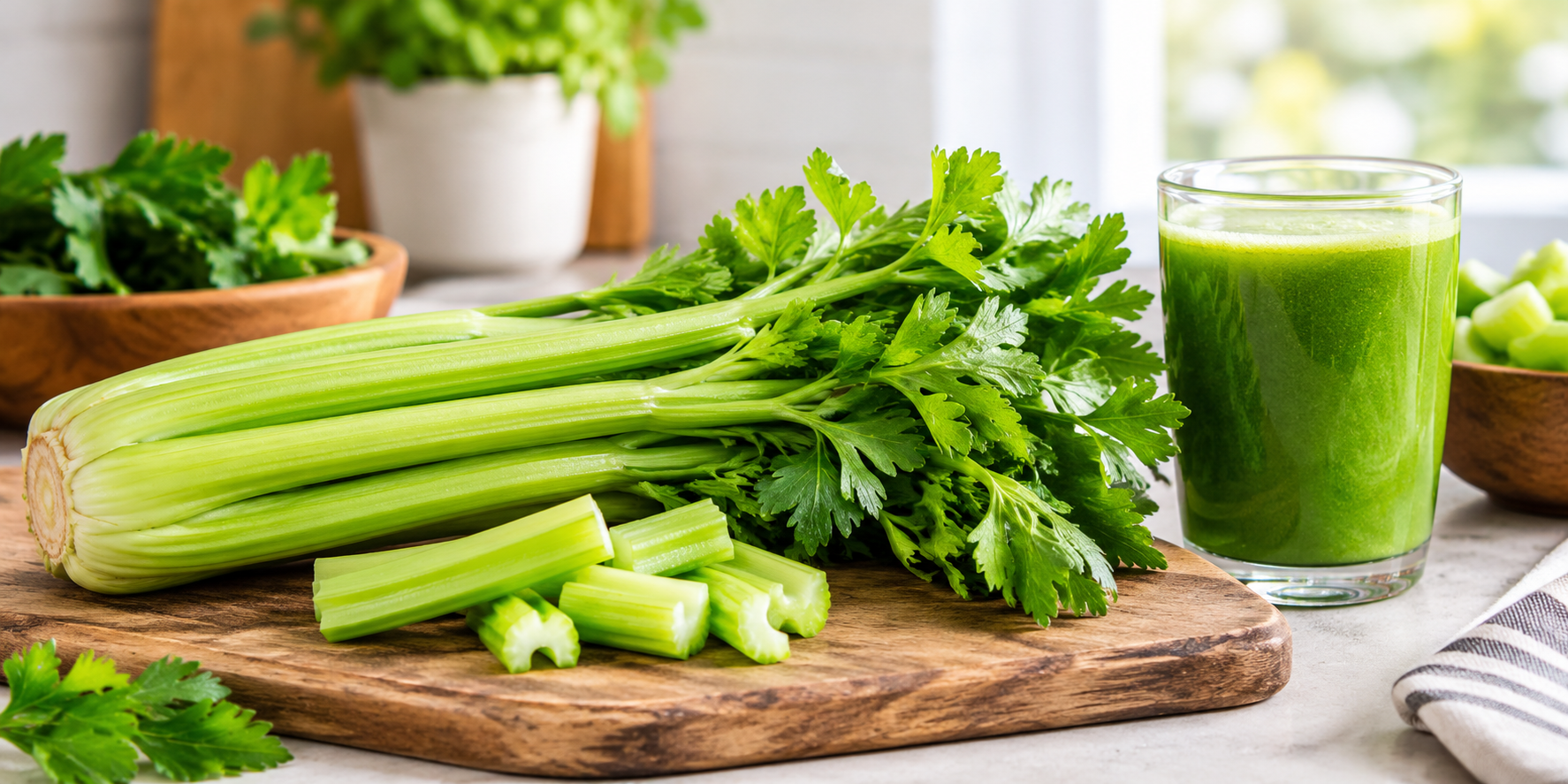
If your only experience of celery is the pale, trimmed stalks sold in supermarkets, you may never have tasted the real thing. In Serbia, Croatia, and Bosnia, cooks have long used a name for the traditional, full-flavored plant: pravi celer, or “true celery.”
What Does “Pravi Celer” Mean?
The term comes from South Slavic languages. Pravi means “true” or “real,” and celer means “celery.” It is not a separate species. It refers to the traditional, whole form of Apium graveolens, as opposed to the mild, mass-produced varieties bred for uniform stalks and long shelf life.
The name carries a bit of pride. It says that the celery you grew up with in the garden or at the village market was a different thing from what the supermarket now sells.
The Whole Plant, Not Just the Stalk
Modern celery is usually reduced to a single part: the crisp stalk. Pravi celer is about using everything:
- Leaves: Dark, aromatic, and strongly flavored. They are often thrown away in modern kitchens but are prized in traditional cooking.
- Stalks: Thicker and more fibrous than supermarket stalks, with a stronger taste.
- Seeds: Used as a spice and flavoring.
- Root: The knobby celeriac (Apium graveolens var. rapaceum), an earthy root vegetable that is a staple of winter cooking.
A Bolder Flavor
Pravi celer is more intense than its commercial cousin. Its flavor is earthy, musky, and slightly bitter, with a strong aroma that perfumes a whole pot of soup. Where supermarket celery is mostly crunch and water, traditional celery brings real character to a dish. That intensity is the reason cooks use it as a seasoning as much as a vegetable.
A Foundation of Balkan Cooking
In Balkan kitchens, celery root and leaves are a year-round aromatic base. They go into:
- Soups and broths, where celery leaves and root give depth
- Stews (variva), where celery sits alongside onion, carrot, and parsley
- Vegetable and meat dishes, as both flavoring and ingredient
- Winter preparations, since celeriac stores well
Cooks in this tradition rarely waste any part of the plant. Leaves go into the pot, roots are grated or cubed, and stalks add body.
Nutrition and Health
Celery in all its forms is a nutritious vegetable. It is about 95% water, which makes it hydrating and low in calories, and it provides:
- Vitamin K, important for blood clotting and bone health
- Vitamin C and vitamin A
- Potassium, which supports normal fluid balance and muscle function
- Folate
- Dietary fiber, which supports digestion
It also contains plant compounds such as apigenin and luteolin, which are studied for their anti-inflammatory properties. Traditional medicine has long associated celery with digestion, circulation, and kidney function. Some sources note that the leaves contain more antioxidants than the stalks, which is another reason not to throw them away.
These traditional uses are not proven medical treatments. Celery is a healthy food, not a cure. People on blood thinners such as warfarin should ask a doctor about eating large amounts of vitamin K-rich foods, and anyone with a kidney condition should check with a doctor before making celery a big part of their diet.
Growing Your Own
Celery is a biennial plant in the Apiaceae family, alongside carrots, parsley, and fennel. At maturity it can reach roughly 60-90 cm (2-3 feet). It does best with:
- Rich, moisture-retentive soil, because celery is thirsty and stresses easily when dry
- Consistent watering, which prevents bitterness and stringiness
- Cool to moderate temperatures, since extreme heat or cold causes problems
- Patience, as it is slow to germinate and takes a long season to mature
Growing it yourself is the easiest way to taste true celery, because the heirloom-style plant is rarely sold in shops.
Why It Matters
Pravi celer is more than a vegetable. It reflects an older way of cooking in which the whole plant is valued, flavor comes before uniformity, and a humble ingredient anchors a whole cuisine. Whether you grow it, buy it at a local market, or simply start using the leaves you used to discard, you can bring some of that tradition into your own kitchen.
Quick Tips for Using Pravi Celer
- Chop the leaves finely and add them to soups near the end of cooking.
- Use celeriac in roasts, mashes, and stews.
- Dry the leaves and seeds for year-round seasoning.
- Start with a small amount, since the flavor is much stronger than supermarket celery.
This is about 700 words. I can make it longer (for example 1,500-2,000 words), shorter, or in a different style such as a blog post, SEO article, or more formal piece. I can also put it in a file if you’d like.
 alona queen