

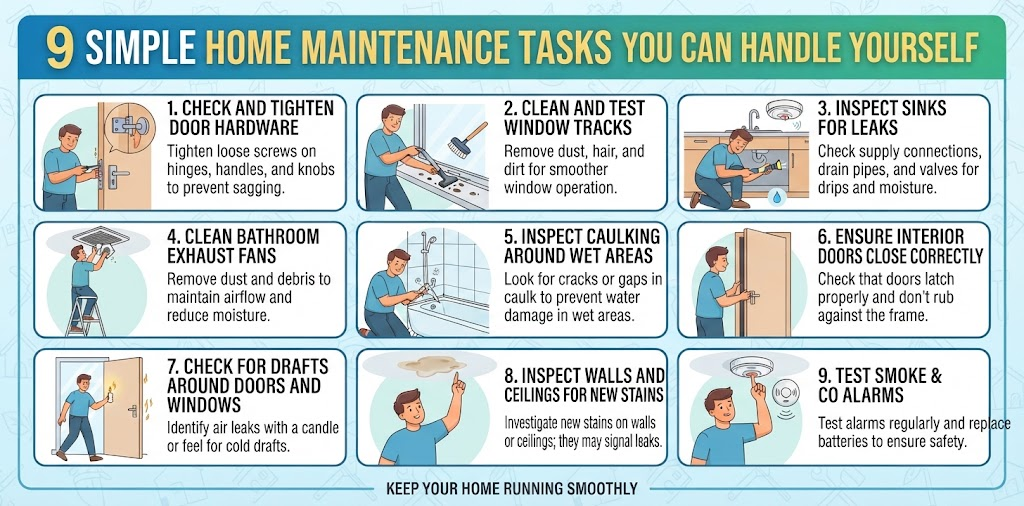
Home maintenance does not always mean calling a professional or spending a lot of money. Many of the small problems around a house can be inspected and, in suitable situations, handled with basic tools and a little patience.
The key is knowing which jobs are simple maintenance tasks and which ones require professional attention. Regular checks can also help you catch minor problems before they turn into expensive repairs.
Here are nine practical home maintenance tasks worth adding to your routine.
1. Check and Tighten Door Hardware
Doors are used constantly, so it is normal for screws and hardware to loosen over time.
Start by checking the hinges, handles, knobs, and visible screws. A loose hinge can cause a door to sag, rub against the frame, or stop closing properly.
Use the correct screwdriver and tighten loose screws without overtightening them. If a screw spins without becoming secure, the surrounding wood may need repair rather than simply another turn of the screwdriver.
For a more detailed guide, see this useful resource on how to adjust door hinges.
Taking care of small hinge problems early can prevent larger door alignment issues later.
2. Clean and Test Window Tracks
Dust, hair, dirt, and small debris can build up in window tracks and make the window harder to operate.
Open the window carefully and inspect the track. Remove loose debris with a soft brush or vacuum attachment, then wipe the area clean.
If the window still feels unusually difficult to open after cleaning, avoid forcing it. The problem could involve the frame, hardware, or alignment.
Routine cleaning is especially useful in frequently used rooms such as kitchens and bedrooms.
3. Inspect Around Sinks for Leaks
A tiny drip under a sink can eventually cause much larger damage.
Open the cabinet below your kitchen or bathroom sink and inspect:
- Supply connections
- Drain pipes
- Shutoff valves
- Cabinet surfaces
- Nearby wall areas
Look for water marks, dampness, stains, or a musty smell.
Even when a leak appears minor, it is worth finding the source rather than simply placing a container underneath it. Persistent moisture can damage cabinets and nearby materials.
4. Clean Bathroom Exhaust Fans
Bathroom fans collect dust over time, reducing airflow and making the system work harder.
Turn the fan off before cleaning it. Remove the cover if it is designed to come off, then gently remove accumulated dust and debris.
A cleaner fan can help maintain proper airflow and reduce the buildup of moisture in the room.
Never work on electrical components while the power is on. For anything beyond basic cleaning, follow the manufacturer’s instructions or seek qualified help.
5. Inspect Caulking Around Wet Areas
Caulk around sinks, tubs, showers, and other wet areas can crack or separate as it ages.
Look closely for:
- Cracks
- Gaps
- Peeling edges
- Darkened areas
- Missing sections
Damaged caulk can allow water to reach areas that are not designed to stay wet.
Before replacing old caulk, remove loose material and clean the surface thoroughly. The new sealant needs a clean, dry surface to adhere properly.
6. Make Sure Interior Doors Close Correctly
A door that suddenly becomes difficult to close may be giving you an early warning that something has shifted.
First check whether the door is rubbing against the frame. Then inspect the hinge screws, door gaps, and latch position.
A door that reaches the frame but does not latch has a different problem from one that physically cannot reach the frame.
This distinction matters because replacing a lock will not solve an underlying alignment issue.
For a step-by-step explanation of the different causes and solutions, see How to Fix a Door That Won’t Close Properly.
7. Check for Drafts Around Doors and Windows
Cold drafts are often easier to notice during cooler weather, but small air leaks can occur throughout the year.
Walk around exterior doors and windows and look for obvious gaps around the frame.
You can also check whether curtains or lightweight fabric move when nearby windows and doors are closed.
Weatherstripping and caulk can help with some small gaps, while more serious issues may require inspection of the frame or surrounding construction.
The U.S. Department of Energy recommends checking and sealing air leaks around common areas such as windows and doors as part of improving a home’s energy efficiency. U.S. Department of Energy — Air Sealing Your Home
8. Inspect Walls and Ceilings for New Stains
A new stain on a ceiling or wall should not simply be painted over.
Look closely at the shape and location of the stain and consider what is above it. Possible sources include plumbing, roof leaks, condensation, or another moisture problem.
Take photos when you first notice a new stain. Tracking whether it gets larger can make it easier to determine whether the problem is active.
If the surface is damp, swollen, or repeatedly developing new marks, investigate the source before doing cosmetic repairs.
9. Test Smoke and Carbon Monoxide Alarms
Home maintenance is not only about appearance and comfort. Safety devices deserve regular attention too.
Test smoke alarms and carbon monoxide alarms according to the manufacturer’s instructions and replace batteries or the entire unit when required.
Keep vents clear and make sure alarms are positioned according to local requirements and manufacturer guidance.
The U.S. Consumer Product Safety Commission recommends having working smoke alarms and carbon monoxide alarms in appropriate areas of the home. U.S. Consumer Product Safety Commission
How Often Should You Perform Home Maintenance?
There is no single schedule that fits every house, but a simple routine can make maintenance easier.
Monthly
Check for:
- New leaks
- Loose hardware
- Door or window problems
- Unusual moisture
- Safety alarm issues
Every Few Months
Inspect:
- Caulking
- Exhaust fans
- Window tracks
- Weatherstripping
- Frequently used doors
Once or Twice a Year
Take a broader look at:
- Exterior seals
- Roof-related signs of water entry
- Larger cracks
- Drainage
- Heating and cooling equipment
- General condition of the home
The exact schedule depends on the age, construction, climate, and use of the property.
Small Repairs Are Easier When You Catch Them Early
One of the biggest advantages of routine home maintenance is that it gives you a chance to notice changes before they become major problems.
A loose screw is easier to deal with than a damaged hinge. A small leak is easier to repair than water-damaged cabinetry. A cracked bead of caulk is easier to replace than moisture damage behind the wall.
That does not mean every repair should be a DIY project.
The goal is simply to recognize problems early and understand when a simple maintenance task ends and professional work begins.
When Should You Call a Professional?
DIY maintenance is useful for straightforward jobs, but some issues should be left to qualified professionals.
Get professional help when you find:
- Significant structural damage
- Major electrical problems
- Gas-related issues
- Persistent roof leaks
- Serious plumbing leaks
- Large areas of mould or moisture damage
- Major movement in walls or foundations
When safety or structural integrity is involved, guessing can make the situation worse.
For readers interested in professional building and digital construction solutions, IngeBIM provides BIM modeling, coordination, and digital engineering services.
Final Thoughts
Good home maintenance is less about completing a huge list of chores in one weekend and more about consistently noticing small problems.
Tightening a loose hinge, cleaning a window track, checking for leaks, inspecting caulk, and testing safety alarms can all help keep a home in better condition.
The most useful habit is simple: look for changes, investigate small problems early, and know when a repair is beyond basic DIY maintenance.
That approach can save time, prevent avoidable damage, and make the home easier to maintain throughout the year.
 alona queen