

Introduction
Eating healthy does not have to be expensive or complicated. Many beginners believe that a nutritious diet requires costly ingredients, special products, or strict meal plans, but a balanced and affordable diet can be created with simple natural foods. By focusing on whole grains, fruits, vegetables, affordable proteins, and healthy fats, anyone can build a meal plan that supports overall health while staying within a budget.
A healthy meal plan provides the body with essential nutrients, including protein, fiber, vitamins, minerals, healthy fats, and energy. Choosing natural foods and reducing highly processed meals can improve eating habits, support healthy weight management, and help create a long-term healthy lifestyle.
What Is a Healthy Diet?
A healthy diet is a way of eating that provides the nutrients your body needs to function properly. It includes a variety of foods that supply energy and support physical and mental well-being.
A balanced meal plan usually contains:
- Fruits and vegetables for vitamins, minerals, and antioxidants
- Whole grains for long-lasting energy and fiber
- Protein-rich foods for muscle growth and repair
- Healthy fats for brain function and hormone balance
- Enough water to maintain hydration
A natural healthy diet focuses on fresh, minimally processed foods while limiting sugary drinks, fast foods, and foods high in unhealthy fats.
Why Choose an Affordable Healthy Meal Plan?
Creating an affordable meal plan helps beginners develop healthy habits without financial stress. Planning meals ahead allows you to make better food choices, reduce waste, and avoid expensive convenience foods.
Benefits of an affordable healthy meal plan include:
- Better control over food choices
- Improved energy levels
- Support for healthy body weight
- Reduced spending on unnecessary snacks and processed foods
- Easier preparation of nutritious meals
Healthy eating is not about buying expensive foods; it is about making smart choices with the foods available.
How to Build a Natural Budget-Friendly Meal Plan
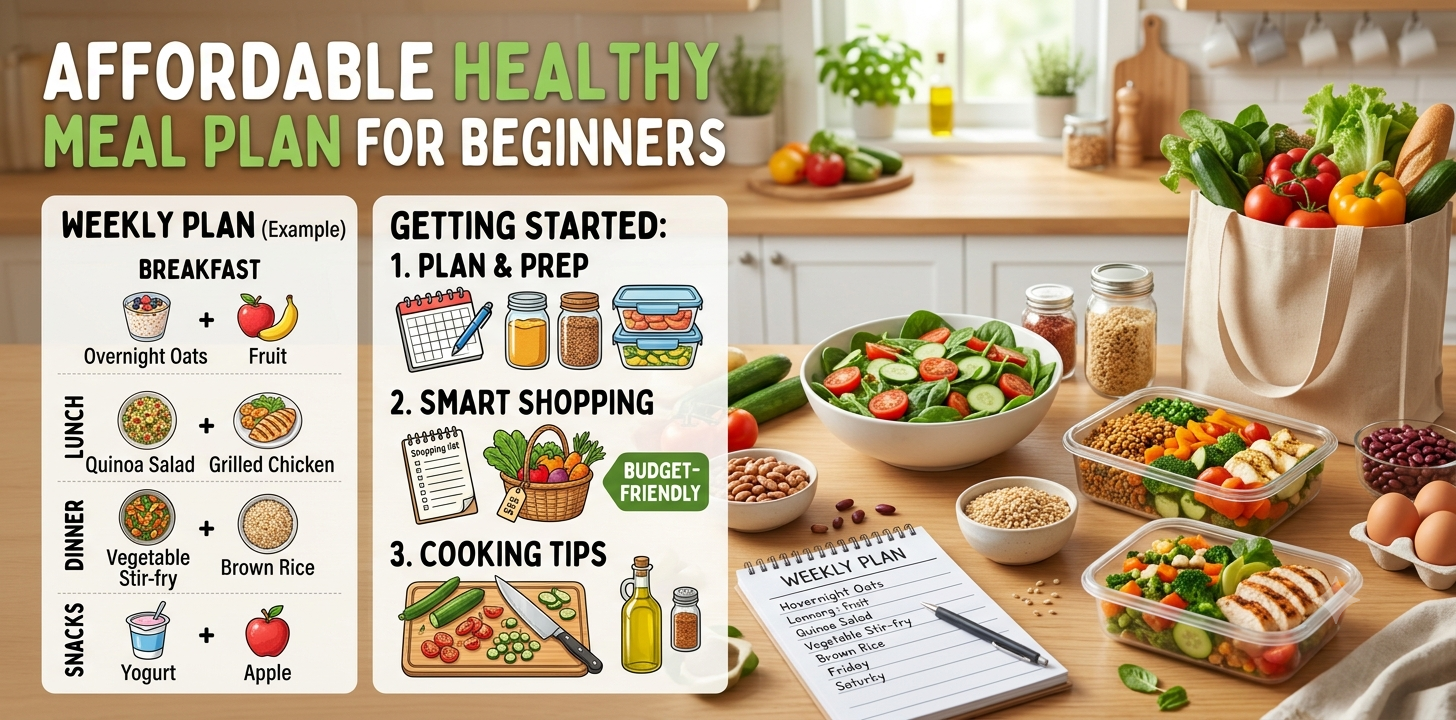
1. Plan Your Meals Before Shopping
Meal planning is one of the easiest ways to save money and eat healthier. Before buying groceries, decide what meals you will prepare during the week.
Simple planning steps:
- Choose affordable recipes
- Make a grocery list
- Buy only what you need
- Prepare ingredients in advance
- Use leftovers creatively
Planning prevents unnecessary purchases and helps maintain a balanced diet.
2. Choose Affordable Natural Foods
Many nutritious foods are budget-friendly and easy to find.
Affordable Vegetables
Vegetables provide important nutrients and fiber. Choose seasonal vegetables because they are often cheaper and fresher.
Examples:
- Carrots
- Spinach
- Cabbage
- Broccoli
- Tomatoes
- Cucumbers
- Potatoes
Budget-Friendly Protein Sources
Protein is essential for maintaining muscles and supporting body functions.
Affordable protein options include:
- Eggs
- Lentils
- Beans
- Chickpeas
- Chicken
- Fish
- Yogurt
- Milk
Plant-based proteins like beans and lentils are especially affordable and nutritious.
Healthy Carbohydrate Sources
Carbohydrates provide energy for daily activities.
Good choices include:
- Oats
- Brown rice
- Whole wheat bread
- Whole grain pasta
- Sweet potatoes
These foods help keep you full and provide important nutrients.
Beginner-Friendly Affordable Breakfast Ideas
A healthy breakfast can provide energy and improve concentration throughout the day.
Oatmeal With Fruits
Oats are affordable, filling, and rich in fiber. Add bananas, apples, nuts, or seeds for extra nutrition.
Eggs With Whole-Grain Bread
Eggs provide high-quality protein and can be prepared in different ways. Pair them with vegetables and whole-grain bread for a balanced meal.
Homemade Smoothie
A simple smoothie made with milk, yogurt, bananas, and seasonal fruits can be a nutritious and affordable option.
Affordable Healthy Lunch Ideas
Lentil and Vegetable Bowl
Lentils are inexpensive and provide protein and fiber. Combine them with vegetables and whole grains for a complete meal.
Chicken and Rice Meal
A simple chicken, rice, and vegetable combination provides protein, energy, and important nutrients.
Healthy Homemade Wraps
Use whole wheat wraps filled with vegetables, eggs, chicken, or beans for a quick and affordable lunch.
Budget-Friendly Dinner Ideas
Vegetable Soup
Homemade vegetable soup is affordable, easy to prepare, and packed with nutrients.
Bean or Lentil Curry
Beans and lentils are excellent low-cost foods that provide protein and fiber.
Grilled Chicken With Vegetables
A balanced dinner can include grilled chicken, roasted vegetables, and a healthy carbohydrate source.
Healthy Snacks on a Budget
Snacks can be part of a healthy diet when you choose nutritious options.
Affordable snack ideas include:
- Fresh fruits
- Homemade popcorn
- Roasted chickpeas
- Yogurt
- Nuts and seeds
- Boiled eggs
These options provide energy without relying on processed snacks.
Sample 7-Day Affordable Healthy Meal Plan
Day 1
Breakfast: Oatmeal with banana
Lunch: Lentils with brown rice and vegetables
Dinner: Grilled chicken with salad
Day 2
Breakfast: Eggs with whole wheat toast
Lunch: Vegetable soup with bread
Dinner: Bean curry with rice
Day 3
Breakfast: Yogurt with fruits and nuts
Lunch: Chicken wrap with vegetables
Dinner: Homemade vegetable pasta
Day 4
Breakfast: Smoothie with fruits and yogurt
Lunch: Chickpea salad
Dinner: Fish with vegetables
Day 5
Breakfast: Oats with apples
Lunch: Lentil bowl with vegetables
Dinner: Chicken and sweet potatoes
Day 6
Breakfast: Boiled eggs and fruit
Lunch: Rice with beans
Dinner: Vegetable soup and whole-grain bread
Day 7
Breakfast: Homemade smoothie
Lunch: Healthy homemade sandwich
Dinner: Grilled vegetables with protein source
Money-Saving Tips for Healthy Eating
Buy Seasonal Foods
Seasonal fruits and vegetables are usually cheaper and contain better freshness.
Cook at Home
Preparing meals at home reduces costs and allows better control over ingredients.
Buy Basic Ingredients
Simple foods like grains, beans, vegetables, and eggs can create many healthy meals.
Reduce Food Waste
Store food properly and use leftovers for future meals.
Avoid Expensive Processed Foods
Packaged snacks, sugary drinks, and fast foods often cost more and provide fewer nutrients.
Foods to Limit for Better Health
While enjoying occasional treats is fine, limiting certain foods can improve overall health.
Try to reduce:
- Sugary beverages
- Fast food meals
- Processed meats
- Excess sweets
- Foods high in unhealthy fats
Replacing these foods with natural alternatives can improve nutrition quality.
Healthy Eating Habits for Beginners
Building healthy habits takes time. Beginners should focus on small, consistent changes.
Helpful habits include:
- Drink enough water daily
- Eat more vegetables and fruits
- Include protein in every meal
- Control portion sizes
- Avoid skipping meals
- Stay physically active
A balanced lifestyle is created through regular healthy choices rather than short-term diets.
Conclusion
An affordable healthy meal plan for beginners can help you eat better without spending too much money. By choosing natural foods, planning meals, and preparing simple recipes at home, you can create a balanced diet that supports long-term health.
Healthy eating is not about expensive ingredients or complicated rules. It is about making smart, affordable choices every day and building habits that improve your overall well-being.
READ MORE: Healthy Bedtime Routine for Better Sleep: Natural Ways to Improve Sleep Quality and Restful Nights.