

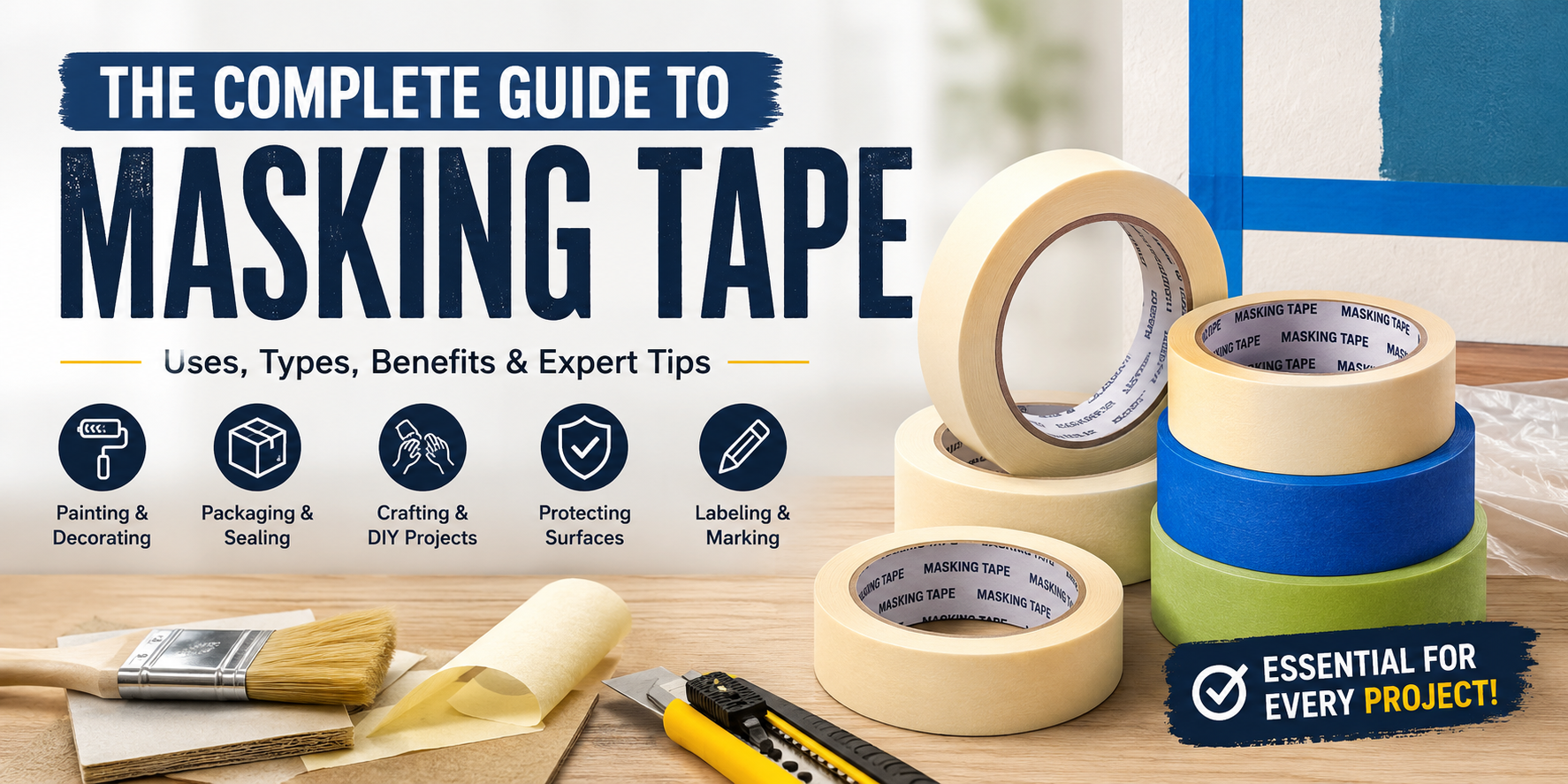
Masking tape is one of the most practical and widely used adhesive products for both professional and everyday applications. Whether you’re painting a room, repairing a vehicle, completing a craft project, or protecting delicate surfaces during construction, masking tape offers a simple yet highly effective solution. As you’ll discover throughout The Complete Guide to Masking Tape: Natural Uses, Types, Benefits, and Expert Tips, choosing the right tape for your project can help you achieve cleaner finishes, protect surfaces, and save time. Its combination of a pressure-sensitive adhesive and an easy-to-tear paper backing makes it ideal for temporary use, allowing it to stick securely while being removed cleanly without damaging most surfaces.
Originally developed to help automotive painters achieve cleaner paint jobs, masking tape has become an essential tool in homes, workshops, factories, schools, and construction sites around the world. Today, it is available in numerous grades, widths, colors, and adhesive strengths, each designed for specific tasks ranging from basic household repairs to high-temperature industrial manufacturing.
One of the biggest advantages of masking tape is its versatility. Professional painters rely on it to create crisp, straight paint lines and protect trim, windows, floors, and ceilings from accidental splashes. Automotive technicians use specialized masking tape during vehicle refinishing to shield body panels, glass, lights, and wheels from overspray while maintaining smooth paint transitions. Manufacturers depend on masking tape during powder coating, sandblasting, product assembly, labeling, and surface protection, while DIY enthusiasts use it for home improvement projects, furniture restoration, arts and crafts, temporary labeling, and creative wall designs.
Not all masking tapes are the same. Standard household masking tape is suitable for light-duty jobs such as packaging, labeling, and simple decorating, whereas professional painter’s tape provides superior edge sealing, cleaner removal, and minimal paint bleed. Delicate surface masking tape is specially designed for freshly painted walls, wallpaper, and decorative finishes, while high-temperature masking tapes can withstand the extreme heat generated during automotive spray painting, powder coating, and industrial finishing. Waterproof and UV-resistant masking tapes are also available for outdoor projects where exposure to sunlight and moisture would quickly degrade ordinary tape.
The performance of masking tape depends heavily on the adhesive used. Rubber-based adhesives offer strong initial tack for general-purpose applications, acrylic adhesives provide excellent weather resistance and a wider operating temperature range, and silicone-based adhesives deliver exceptional heat resistance for demanding industrial environments. Selecting the proper adhesive ensures reliable bonding while allowing the tape to be removed cleanly without leaving sticky residue behind.
Choosing the correct masking tape involves more than simply selecting a roll from the shelf. Surface material, temperature, project duration, tape width, indoor or outdoor use, and the quality of the finish all play important roles. Using a premium-quality masking tape often reduces paint seepage, minimizes cleanup, shortens project time, and helps produce professional-looking results that cheaper alternatives may struggle to achieve.
Proper application techniques are equally important. Cleaning and drying the surface before applying the tape, pressing the edges firmly to prevent paint bleeding, avoiding overstretching, removing the tape at the right time, and storing unused rolls in a cool, dry place all contribute to better performance and longer shelf life. Avoiding common mistakes—such as leaving tape on for too long or using the wrong grade for delicate surfaces—can save both time and money by preventing damaged finishes and costly rework.
For businesses that regularly consume adhesive products, purchasing masking tape in bulk offers additional advantages, including lower costs, consistent inventory, easier stock management, and access to professional-grade products. Reliable wholesale suppliers also provide a broader selection of tape types and sizes, making it easier to find the right solution for painting, automotive repair, construction, manufacturing, packaging, or commercial decorating.
In this comprehensive guide, you’ll learn everything you need to know about masking tape—from its history and construction to its many types, practical applications, expert usage techniques, buying tips, and maintenance advice. Whether you’re a homeowner tackling a weekend DIY project, a professional decorator striving for flawless paint lines, an automotive technician seeking precision during refinishing, or a manufacturer requiring dependable surface protection, understanding how masking tape works will help you choose the right product and achieve cleaner, more efficient, and longer-lasting results every time.
READ MORE: Mace Coronel Age: A Natural Look at His Early Life, Acting Career & Rise to Fame.