

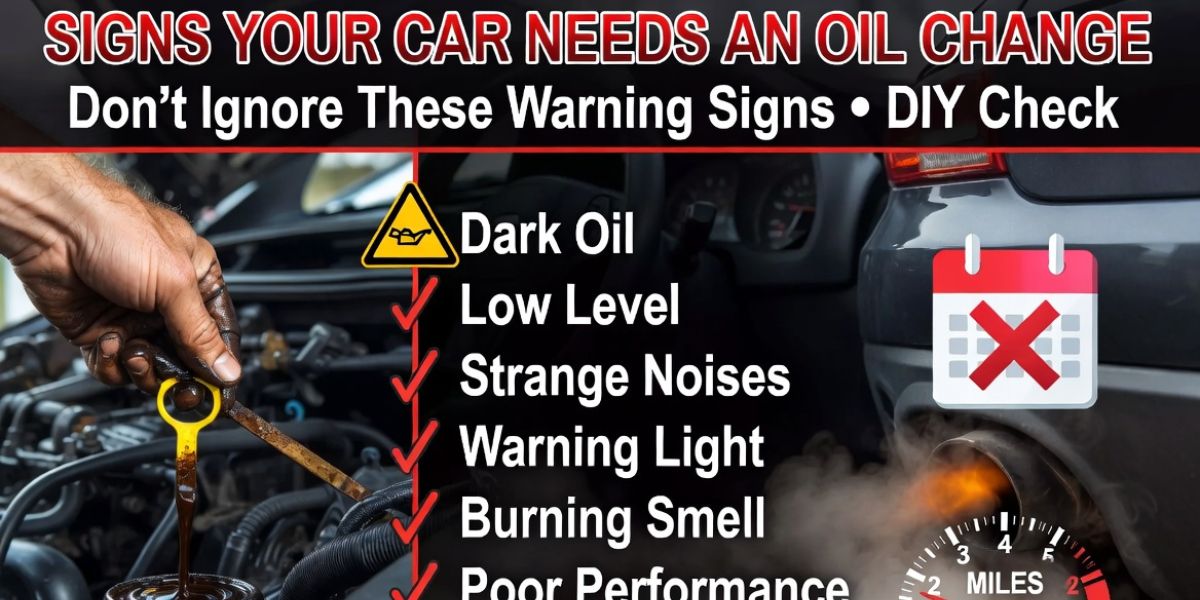
Engine oil is the lifeblood of your vehicle. It lubricates moving engine parts, reduces friction, prevents overheating, and helps remove dirt and contaminants that can damage your engine over time. However, engine oil doesn’t last forever. As it ages, it gradually breaks down and loses its ability to protect your engine effectively. Ignoring the signs that your car needs an oil change can lead to reduced performance, poor fuel economy, costly repairs, and even complete engine failure. To stay on top of routine servicing, follow our Affordable Car Maintenance Checklist, which covers essential maintenance tasks that help keep your engine in excellent condition.
Fortunately, your vehicle usually gives several warning signs before old or dirty oil becomes a serious problem. Learning to recognize these symptoms can help you schedule an oil change at the right time, extend your engine’s lifespan, and keep your car running smoothly.
In this complete guide, you’ll learn the most common signs your car needs an oil change, how to check your engine oil at home, recommended oil change intervals, and expert tips for maintaining a healthy engine.
Why Engine Oil Is So Important
Engine oil performs several essential functions that keep your vehicle operating efficiently.
It helps:
- Lubricate moving engine components
- Reduce friction and wear
- Keep engine temperatures under control
- Remove dirt and sludge
- Protect against corrosion
- Improve fuel efficiency
Without clean oil, your engine’s internal components wear out much faster.
How Often Should You Change Your Oil?
Oil change intervals vary depending on:
- Vehicle manufacturer recommendations
- Engine type
- Driving habits
- Climate
- Oil type (conventional or synthetic)
Modern vehicles typically require an oil change every 5,000 to 10,000 miles (8,000 to 16,000 km) when using synthetic oil, though some vehicles may recommend different intervals. Always follow your owner’s manual.
1. Dashboard Oil Warning Light Comes On
One of the clearest signs is the oil warning light appearing on your dashboard.
This may indicate:
- Low oil pressure
- Low oil level
- Oil circulation problems
Never ignore this warning. Check the oil level as soon as possible.
2. Dark, Dirty Engine Oil
Fresh oil is usually amber or light brown.
Old oil becomes:
- Dark brown
- Black
- Thick
- Dirty
Check your dipstick regularly. If the oil appears extremely dirty, it’s likely time for an oil change.
3. Engine Makes More Noise
Clean oil cushions moving engine parts.
When oil breaks down, you may notice:
- Ticking
- Knocking
- Rattling
- Louder engine operation
These sounds may indicate increased friction.
4. Burning Oil Smell
If you notice a burning oil smell inside or outside your vehicle, it could indicate:
- Old oil overheating
- Oil leaks
- Engine overheating
Have the vehicle inspected promptly if the smell persists.
5. Poor Engine Performance
Old oil increases internal engine resistance.
You may notice:
- Sluggish acceleration
- Reduced power
- Rough engine operation
Fresh oil helps restore smoother engine performance.
6. Reduced Fuel Economy
Dirty oil forces the engine to work harder.
This may lead to:
- Increased fuel consumption
- Lower mileage
- Reduced efficiency
Routine oil changes help maximize fuel economy.
7. Excessive Exhaust Smoke
While some condensation is normal, blue or gray smoke may indicate oil-related problems.
Possible causes include:
- Burning engine oil
- Internal engine wear
- Oil leaks
Professional inspection is recommended if heavy smoke appears.
8. Engine Vibrations
Old oil may reduce lubrication efficiency, causing the engine to idle less smoothly.
You may notice:
- Rough idling
- Increased vibration
- Less responsive engine performance
9. Low Oil Level
Even without a leak, engines naturally consume small amounts of oil over time.
Check the oil level monthly.
If it’s consistently low, investigate the cause before simply adding more oil.
10. You’ve Passed the Recommended Service Interval
Sometimes your car won’t show obvious symptoms.
Instead, follow:
- Mileage recommendations
- Time intervals
- Maintenance reminders
Preventive maintenance is always less expensive than engine repairs.
How to Check Your Engine Oil
Checking oil only takes a few minutes.
Step 1
Park on level ground.
Step 2
Turn off the engine.
Step 3
Wait several minutes.
Step 4
Remove the dipstick.
Step 5
Wipe it clean.
Step 6
Insert it fully.
Step 7
Remove it again and check:
- Oil level
- Oil color
- Oil consistency
Choosing the Right Engine Oil
Always use the oil grade recommended by your manufacturer.
Common viscosity ratings include:
- 0W-20
- 5W-20
- 5W-30
- 10W-30
Also choose between:
- Conventional oil
- Synthetic blend
- Full synthetic oil
Using the correct oil improves engine protection.
What Happens If You Delay an Oil Change?
Ignoring routine oil changes can cause:
- Sludge buildup
- Engine overheating
- Increased wear
- Reduced fuel economy
- Expensive repairs
- Complete engine failure
Oil changes are among the least expensive forms of preventive maintenance.
DIY Oil Change vs Professional Service
DIY
Pros:
- Lower cost
- Learn basic maintenance
- Convenient
Cons:
- Requires tools
- Proper oil disposal needed
Professional Service
Pros:
- Quick service
- Multi-point inspection
- Correct disposal
Cons:
- Higher cost
Both options are effective when performed correctly.
Common Oil Change Mistakes
Avoid:
- Using the wrong oil type
- Overfilling
- Underfilling
- Forgetting the oil filter
- Ignoring leaks
- Waiting too long between oil changes
Tips to Extend Engine Life
Frequently Asked Questions
Can I drive with dirty engine oil?
It’s possible for a short period, but continued driving with degraded oil increases engine wear and the risk of damage.
Does synthetic oil last longer?
Yes. Full synthetic oil generally lasts longer and offers better protection under extreme temperatures than conventional oil.
Should I change the oil filter every time?
Yes. Replacing the oil filter with every oil change helps keep fresh oil clean.
Can low oil damage the engine?
Yes. Low oil reduces lubrication, increasing friction, heat, and the likelihood of severe engine damage.
Final Thoughts
Recognizing the signs your car needs an oil change is one of the easiest ways to protect your engine and avoid costly repairs. Warning signs such as dark oil, unusual engine noises, poor fuel economy, low oil levels, or an illuminated oil warning light should never be ignored.
By checking your engine oil regularly, following your vehicle’s recommended maintenance schedule, and changing both the oil and filter on time, you can improve performance, extend engine life, and enjoy a smoother, more reliable driving experience for years to come.
READ MORE: Best Homemade Car Cleaning Solutions: Natural DIY Recipes for a Spotless and Shiny Car.
 alona queen