

Introduction
Fashion is an important part of everyday life, but the clothing choices we make can have a major impact on the environment. Traditional fashion often uses large amounts of water, chemicals, and energy, which can contribute to pollution and waste. Eco-Friendly Fashion Ideas: Natural Clothing Choices for a Sustainable Lifestyle offers a better approach by focusing on sustainable materials, responsible production, and long-lasting clothing choices. By choosing natural fabrics and mindful fashion practices, people can create a stylish wardrobe while supporting a healthier planet.
Choosing natural fabrics, organic textiles, and ethical fashion practices can help create a more sustainable lifestyle while still allowing you to enjoy comfortable and stylish outfits. This natural guide explores simple eco-friendly fashion ideas and clothing choices that are better for both people and the planet.
What Is Eco-Friendly Fashion?
Eco-friendly fashion refers to clothing designed and produced with environmental responsibility in mind. It focuses on reducing waste, using sustainable materials, and minimizing the harmful effects of clothing production.
Unlike fast fashion, which encourages buying and replacing clothes quickly, sustainable fashion promotes quality, durability, and mindful consumption. Eco-friendly clothing often includes organic fabrics, recycled materials, and natural dyes.
Choose Natural and Organic Fabrics
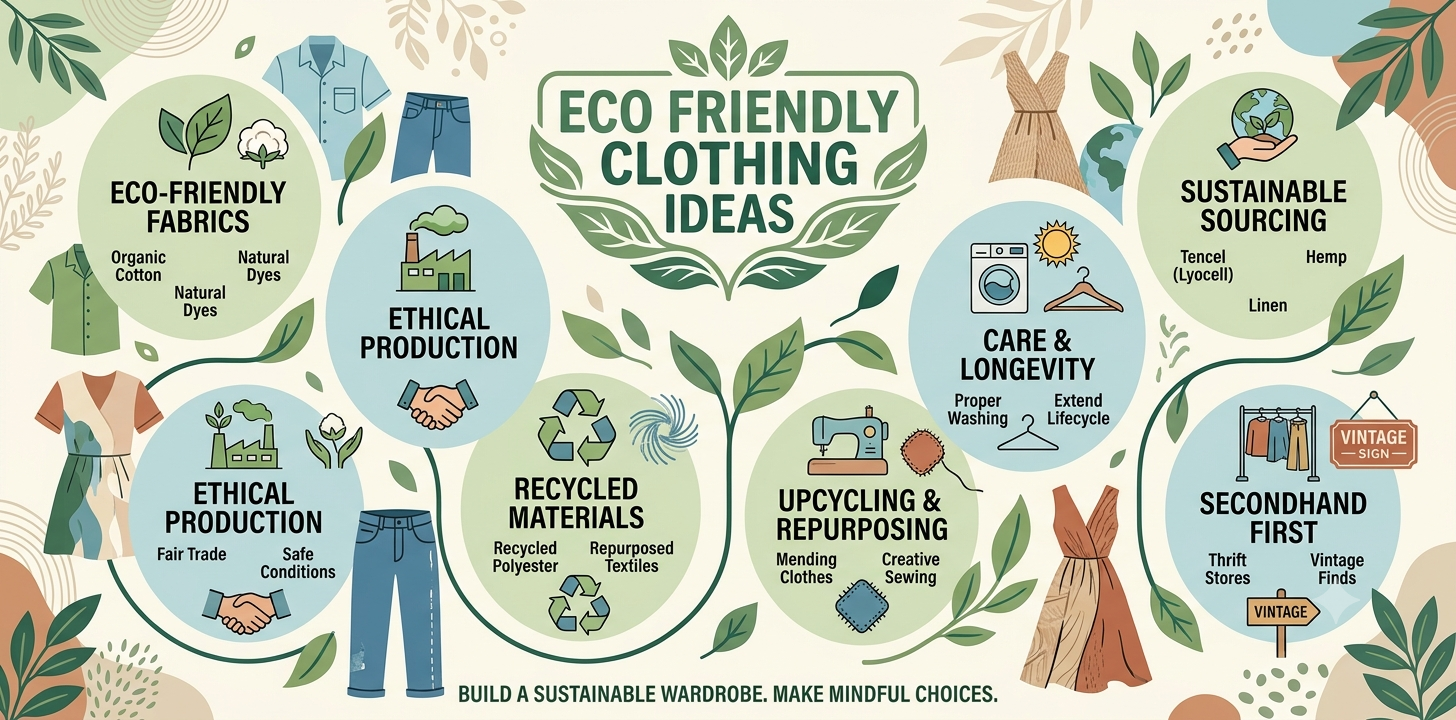
One of the easiest ways to adopt sustainable fashion is by choosing clothing made from natural materials. These fabrics are often biodegradable and can have a lower environmental impact when produced responsibly.
Popular eco-friendly fabrics include:
- Organic cotton: Grown without harmful synthetic pesticides and chemicals.
- Linen: Made from flax plants and known for being lightweight and durable.
- Hemp: A strong natural fiber that requires fewer resources to grow.
- Bamboo fabric: A soft material often used for comfortable clothing.
- Wool: A natural fiber that provides warmth and durability.
- Silk: A natural fabric known for its smooth texture and long-lasting quality.
Natural fabrics can help create a comfortable wardrobe while supporting more sustainable clothing practices.
Build a Minimalist Sustainable Wardrobe
A sustainable wardrobe does not require owning a large number of clothes. Instead, focus on choosing fewer but better-quality pieces that can be worn in different ways.
Some simple ideas include:
- Buying classic clothing styles that do not quickly go out of fashion.
- Choosing neutral colors that are easy to combine.
- Investing in durable basics such as shirts, jeans, jackets, and dresses.
- Avoiding unnecessary clothing purchases.
A minimalist wardrobe saves money, reduces waste, and encourages thoughtful fashion choices.
Support Ethical Clothing Brands
Eco-friendly fashion is not only about materials but also about how clothes are made. Ethical clothing brands focus on fair wages, safe working conditions, and responsible manufacturing processes.
Before purchasing clothing, consider:
- Where the product was made.
- What materials were used.
- Whether the company follows sustainable practices.
- How long the clothing is expected to last.
Supporting responsible brands encourages a healthier fashion industry.
Choose Second-Hand and Vintage Clothing
Buying second-hand clothing is another great way to practice sustainable fashion. Pre-owned clothing reduces demand for new production and helps prevent usable items from ending up in landfills.
Benefits of second-hand shopping include:
- Lower clothing costs.
- Unique fashion finds.
- Reduced environmental impact.
- Extended life of existing garments.
Vintage and thrift shopping can also help create a personal style that is different from common fashion trends.
Use Natural and Eco-Friendly Clothing Care Methods
Taking care of your clothes properly helps them last longer and reduces waste. Simple habits can make a big difference.
Eco-friendly clothing care tips:
- Wash clothes with cold water when possible.
- Use natural or environmentally friendly detergents.
- Avoid unnecessary washing.
- Air dry clothes instead of always using a dryer.
- Repair small damages instead of throwing clothes away.
Proper care protects fabrics and keeps clothing looking new for a longer time.
Choose Quality Over Fast Fashion
Fast fashion encourages frequent buying of cheap clothing that may not last long. Eco-friendly fashion focuses on quality pieces that provide long-term value.
When shopping, look for:
- Strong stitching.
- Durable fabrics.
- Comfortable designs.
- Timeless styles.
High-quality clothing reduces replacement costs and helps lower textile waste.
Try Clothing Upcycling and DIY Fashion
Upcycling is a creative way to transform old clothing into something new. Instead of discarding unwanted items, you can give them another purpose.
Creative upcycling ideas include:
- Turning old jeans into bags.
- Adding new designs to plain shirts.
- Repairing clothes with decorative patches.
- Creating accessories from leftover fabric.
DIY fashion encourages creativity while supporting a zero-waste lifestyle.
Benefits of Eco-Friendly Clothing Choices
Choosing sustainable clothing provides many benefits, including:
Environmental Benefits
- Less pollution from clothing production.
- Reduced textile waste.
- Lower use of harmful chemicals.
- Support for renewable materials.
Personal Benefits
- Comfortable and breathable fabrics.
- Long-lasting clothing.
- Unique personal style.
- Healthier choices for sensitive skin.
Social Benefits
- Support for fair labor practices.
- Encouragement of responsible businesses.
- Better awareness of sustainable living.
How Beginners Can Start Eco-Friendly Fashion
Starting a sustainable wardrobe does not need to be difficult or expensive. Beginners can follow simple steps:
- Check your current wardrobe before buying new clothes.
- Choose natural fabrics whenever possible.
- Buy fewer but higher-quality items.
- Repair and reuse clothing.
- Explore thrift and second-hand options.
- Support ethical fashion brands.
Small changes in clothing habits can create a positive impact over time.
Conclusion
Eco-friendly fashion is a simple way to make better clothing choices while protecting the environment. By choosing natural fabrics, supporting ethical brands, buying quality clothing, and reducing waste, anyone can create a sustainable wardrobe.
Natural clothing choices are not only good for the planet but also provide comfort, durability, and timeless style. A sustainable lifestyle begins with small decisions, and every eco-friendly fashion choice can help build a cleaner and healthier future.