

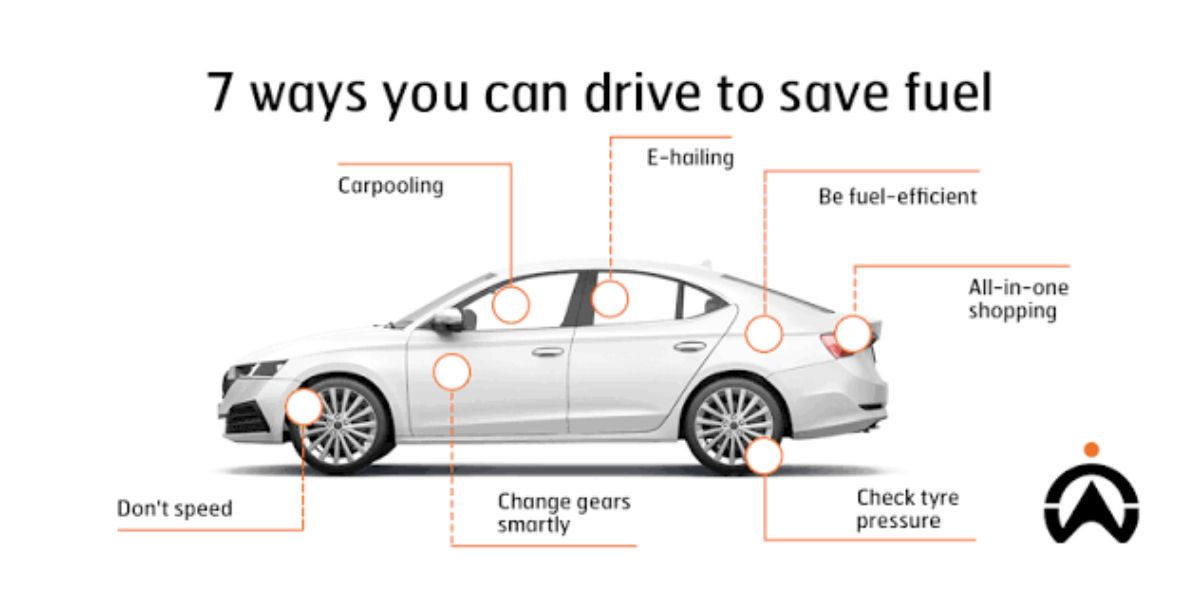
Fuel costs can add up quickly, especially if you drive every day. The good news is that you can reduce your car’s fuel consumption with simple driving habits and regular maintenance. You don’t always need expensive upgrades or special products. Small changes, such as keeping your tires properly inflated, avoiding unnecessary weight, and driving smoothly, can help your vehicle use fuel more efficiently.
1. Keep Your Tires Properly Inflated
Underinflated tires create more rolling resistance, which makes your engine work harder and can increase fuel consumption. Check your tire pressure regularly and keep it at the level recommended by your vehicle manufacturer.
Properly inflated tires can also improve handling, braking, and tire life, making this a simple habit with several benefits.
2. Remove Unnecessary Weight
Carrying heavy items in your trunk can make your engine work harder, particularly during city driving and acceleration. Take a few minutes to remove tools, boxes, sports equipment, or other items you do not regularly need.
Keeping your vehicle lighter can help improve fuel economy over time.
3. Use the Air Conditioner Wisely
Air conditioning requires energy from the engine, so using it unnecessarily can increase fuel consumption. However, at higher road speeds, driving with the windows fully open can also create additional aerodynamic drag.
For longer highway trips, keep the windows closed and use the air conditioner at a comfortable setting. In slower city driving, opening the windows when weather conditions allow can be a reasonable alternative.
4. Maintain a Moderate Speed
Driving at very high speeds generally uses more fuel because aerodynamic resistance increases as speed rises. Instead of constantly accelerating and slowing down, aim for a moderate, steady speed when road and traffic conditions permit.
Following posted speed limits and avoiding unnecessary speeding can help you save fuel while also making your journey safer.
5. Accelerate Smoothly
Hard acceleration can consume considerably more fuel than gentle, controlled acceleration. Press the accelerator gradually when moving away from a stop and avoid unnecessarily high engine RPM.
Smooth acceleration helps your engine operate more efficiently and makes driving more comfortable for everyone in the vehicle.
6. Avoid Unnecessary Hard Braking
Repeatedly accelerating hard and then braking suddenly wastes the energy you have already used to get the vehicle moving.
Instead, watch the road ahead and anticipate traffic lights, turns, traffic congestion, and slowing vehicles. Giving yourself more space allows you to slow down gradually rather than repeatedly using the accelerator and brakes.
7. Use the Highest Appropriate Gear
If you drive a manual vehicle, shift into a higher gear when appropriate instead of keeping the engine at unnecessarily high RPM. For automatic vehicles, allow the transmission to select the appropriate gear and use cruise control on suitable roads when conditions are steady.
The goal is to keep the engine operating efficiently without forcing it to work at excessively low or high RPM.
8. Practice Predictive Driving
Looking farther ahead can make a noticeable difference to your driving style. If you see a red traffic light or a line of slow-moving vehicles ahead, ease off the accelerator early instead of continuing to accelerate and then braking sharply.
Likewise, maintain a steady pace on hills and avoid unnecessary bursts of acceleration. Predictive driving reduces sudden changes in speed and can help improve fuel economy.
9. Plan Your Route Around Heavy Traffic
Stop-and-go traffic can increase fuel consumption because your car repeatedly accelerates, brakes, and idles. When possible, choose a route with smoother traffic flow.
Combining several errands into one trip can also reduce unnecessary driving. A little planning before leaving home can save both time and fuel.
10. Avoid Long Periods of Idling
A running engine consumes fuel even when the car is stationary. If you expect to remain stopped for an extended period and it is safe and appropriate to do so, consider switching the engine off rather than leaving it running unnecessarily.
Avoid unnecessary idling while waiting outside shops, homes, or other locations.
11. Keep Up With Regular Maintenance
A well-maintained vehicle is more likely to operate efficiently. Follow the manufacturer’s recommended service schedule and address problems such as worn spark plugs, dirty filters, poor wheel alignment, or engine issues promptly.
Regular oil changes with the correct oil specification can also help the engine operate smoothly. Always use the type and viscosity recommended for your particular vehicle.
12. Avoid Aggressive Driving
Rapid acceleration, high-speed driving, sudden braking, and frequent changes in speed can all increase fuel consumption. Try to maintain a calm, consistent driving style whenever traffic and road conditions allow.
Gentle driving is not only better for fuel economy but can also reduce wear on tires, brakes, and other vehicle components.
Final Thoughts
Reducing car fuel consumption does not have to be complicated. Start with the basics: maintain correct tire pressure, remove unnecessary weight, drive smoothly, avoid excessive speed, reduce unnecessary idling, and keep your vehicle properly maintained.
These natural and practical habits can gradually improve fuel efficiency and help you get more distance from every tank of fuel. The biggest savings often come from combining several small improvements rather than relying on one single trick.