

Introduction
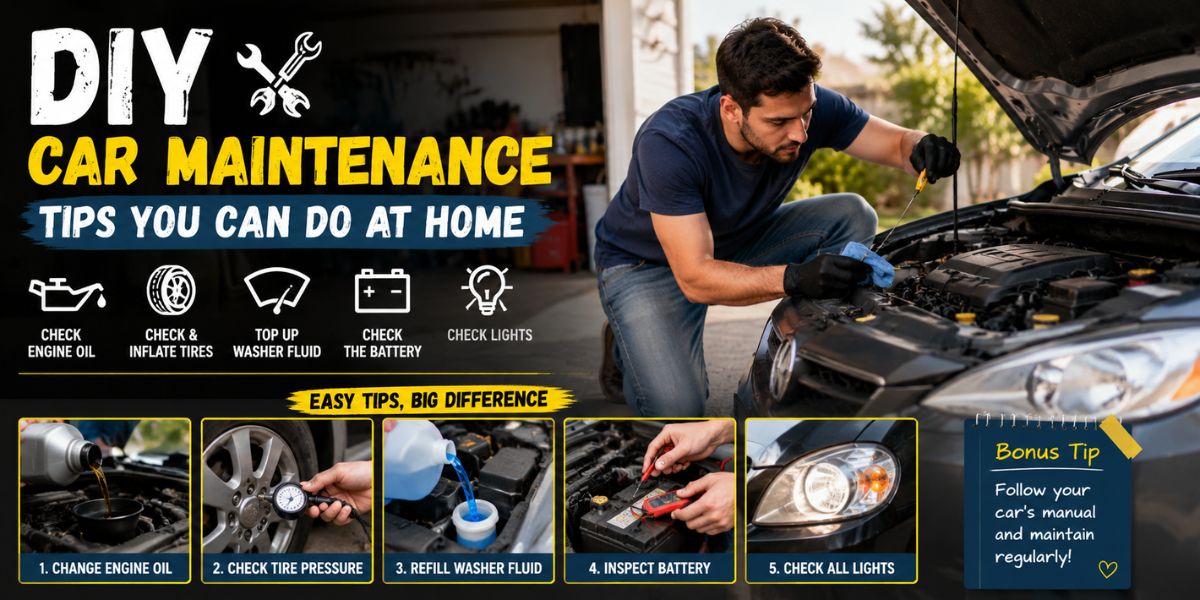
You do not need to be a professional mechanic to take care of your car. Many basic maintenance tasks can be safely handled at home with a few simple tools and natural cleaning methods. From checking tire pressure to cleaning headlights, these easy DIY car maintenance tips can help you save money, prevent common problems, and keep your vehicle looking and running well.
1. Check Your Tire Pressure
Check your tire pressure regularly using a reliable tire-pressure gauge. Proper inflation improves handling, tire life, and fuel efficiency. Always follow the pressure listed in your owner’s manual or on the vehicle’s door-jamb label.
2. Check the Engine Oil
Park on level ground and allow the engine to cool as recommended by your vehicle manufacturer. Use the dipstick to check the oil level and add the correct type of oil if necessary. Never overfill the engine.
3. Clean Your Headlights Naturally
Cloudy headlights can reduce visibility at night. For light surface dirt, start with water and a microfiber cloth. For more serious clouding, use a proper automotive headlight restoration product rather than relying on abrasive household mixtures that could damage the lens.
4. Clean the Battery Area
With the engine off, visually inspect the battery for dirt, corrosion, or loose connections. Do not touch damaged wiring or attempt repairs if you are unsure about electrical systems. A professional should handle serious corrosion or battery problems.
5. Replace Windshield Wipers
Worn wipers can leave streaks and make driving in rain difficult. Replacing them is usually a simple DIY task. Choose the correct size for your vehicle and follow the package instructions.
6. Check and Replace Air Filters
A dirty engine air filter can affect airflow to the engine. Check the filter according to your vehicle’s maintenance schedule. If it is visibly dirty or due for replacement, install the correct replacement filter.
7. Inspect Your Tires
Look for uneven wear, cracks, bulges, or objects stuck in the tread. Check the spare tire as well. If you notice serious damage, have the tire inspected by a qualified professional before driving.
8. Clean the Interior Naturally
For routine interior cleaning, use a microfiber cloth with a small amount of water. Vacuum carpets and seats regularly to remove dust and debris. Always check your vehicle’s material-care instructions before using any homemade cleaning solution.
9. Check Your Lights
Test your headlights, brake lights, turn signals, and parking lights. Replacing an accessible bulb can often be done at home, but follow your vehicle’s instructions and avoid touching certain bulb surfaces with bare fingers if the manufacturer advises against it.
10. Keep the Windshield Clean
A clean windshield improves visibility. Use clean water and a suitable automotive glass cleaner or microfiber cloth to remove dirt, insects, and residue. Avoid using rough materials that can scratch the glass.
11. Check Fluid Levels
Depending on your vehicle, you may be able to check coolant, brake fluid, windshield-washer fluid, and other reservoirs yourself. Only use the fluid specified by the vehicle manufacturer and never open a hot cooling system.
12. Wash Your Car Regularly
Regular washing removes dirt, road grime, and contaminants that can damage the finish over time. Use automotive-safe soap, clean water, and a soft microfiber wash mitt rather than harsh household detergents.
13. Listen for Unusual Sounds
Pay attention to new squeaks, grinding, rattling, clicking, or unusual engine noises. Early detection can help you address problems before they become more expensive. If a sound is severe or accompanied by a warning light, have the car inspected.
14. Know When to Call a Professional
DIY maintenance is useful for simple tasks, but some repairs require specialized equipment and experience. Leave jobs involving brakes, airbags, fuel systems, major electrical faults, suspension components, or other safety-critical systems to a qualified technician.
Final Thoughts
DIY car maintenance can be simple, affordable, and rewarding when you focus on basic tasks you can perform safely. Regular inspections, gentle natural cleaning methods, proper fluid checks, and following the manufacturer’s maintenance schedule can help keep your vehicle reliable. When a job involves safety-critical components or requires specialized knowledge, getting professional help is the safest choice.
READ MORE: Easy Car Maintenance Tips for New Drivers: Simple Natural Ways to Keep Your Car Running Smoothly.