

Introduction
Fashion is more than just following trends; it is a way to express personality, creativity, and lifestyle. However, the fashion industry has a significant impact on the environment through waste, pollution, and excessive resource use. Sustainable fashion offers a better approach by encouraging mindful choices, responsible production, and longer-lasting clothing.
For beginners, sustainable fashion does not mean completely changing your wardrobe overnight. It means making simple, natural, and practical choices such as buying fewer but better-quality clothes, choosing eco-friendly materials, reusing old outfits, and supporting ethical brands. This natural guide will help beginners understand sustainable fashion ideas and create a stylish wardrobe that benefits both people and the planet.
What Is Sustainable Fashion?
Sustainable fashion is an approach to clothing that focuses on reducing environmental harm, improving working conditions, and encouraging responsible consumption. It considers every stage of a garment’s life, from the materials used to production, transportation, usage, and recycling.
Unlike fast fashion, which promotes frequent buying and quick disposal, sustainable fashion encourages:
- Long-lasting clothing
- Eco-friendly materials
- Ethical manufacturing
- Reduced textile waste
- Responsible shopping habits
The goal is to create a balance between style, comfort, and environmental responsibility.
Why Sustainable Fashion Matters
The fashion industry uses large amounts of water, energy, and raw materials. Cheap, low-quality clothing often creates more waste because garments are quickly discarded.
Choosing sustainable fashion helps:
- Reduce clothing waste
- Save natural resources
- Lower pollution
- Support fair wages for workers
- Protect ecosystems
- Encourage better production methods
Even small changes in daily fashion choices can create a positive impact.
Start With a Sustainable Wardrobe
Beginners can start their sustainable fashion journey by building a wardrobe based on quality and simplicity.
1. Buy Fewer, Better Clothes
Instead of purchasing many inexpensive items, choose high-quality pieces that can be worn for years. A simple wardrobe with versatile clothing reduces waste and saves money over time.
Look for:
- Strong stitching
- Durable fabrics
- Classic designs
- Comfortable fits
Quality clothing usually lasts longer and reduces the need for frequent replacements.
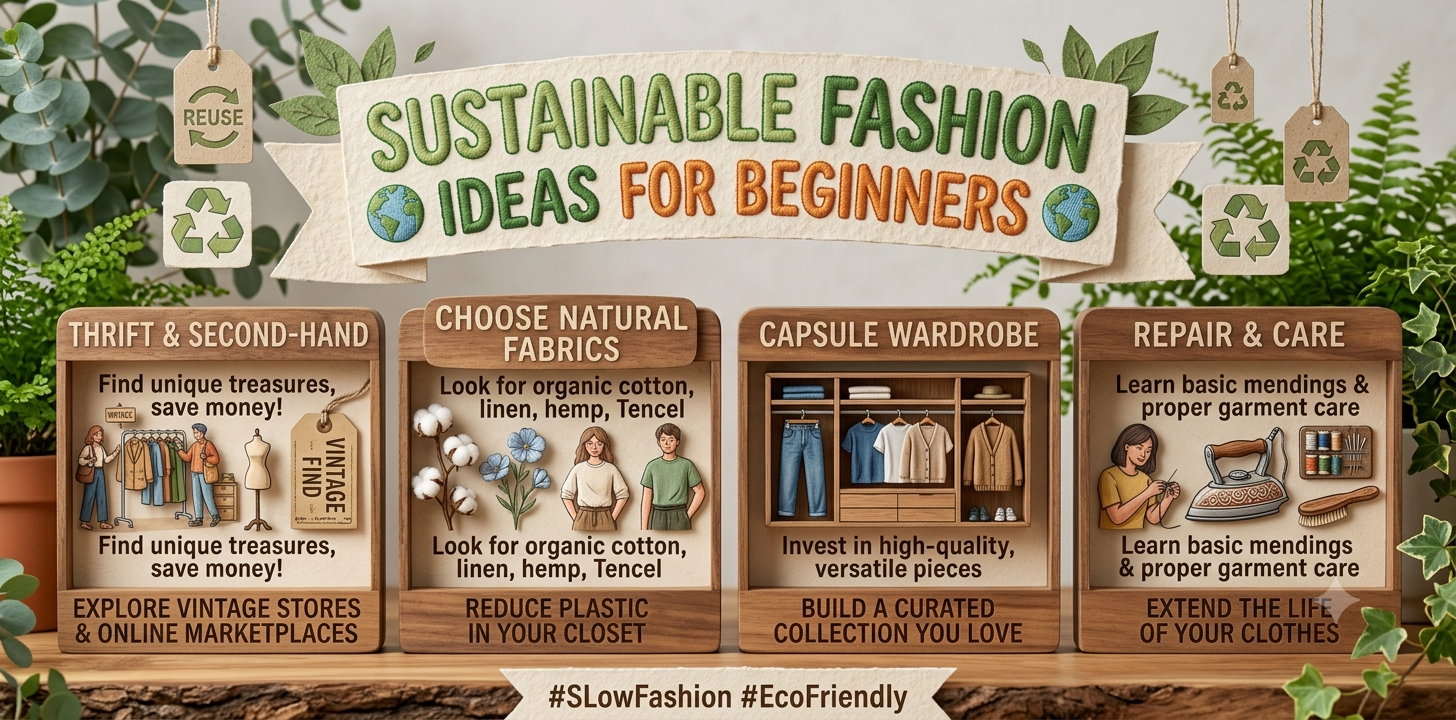
2. Choose Natural and Eco-Friendly Fabrics
The material of clothing plays an important role in sustainability. Natural fibers often have lower environmental impacts compared to many synthetic materials.
Popular sustainable fabric choices include:
Organic Cotton
Organic cotton is grown with fewer harmful chemicals and focuses on environmentally friendly farming methods. It is soft, breathable, and suitable for everyday clothing.
Linen
Linen is made from flax plants and is known for being lightweight, durable, and comfortable, especially in warm weather.
Hemp
Hemp is a strong natural fiber that requires less water and grows quickly. It is becoming popular for sustainable clothing because of its durability.
Bamboo Fabric
Bamboo-based fabrics are often used in eco-friendly clothing because bamboo is a fast-growing plant. However, it is important to choose responsibly produced bamboo textiles.
Recycled Materials
Some sustainable brands create clothing from recycled fabrics and materials such as recycled polyester made from plastic waste.
3. Shop Second-Hand Clothing
Buying second-hand clothes is one of the easiest sustainable fashion ideas for beginners. Thrift stores, clothing swaps, and online resale platforms help extend the life of garments.
Benefits of second-hand shopping include:
- Lower clothing costs
- Less textile waste
- Unique fashion choices
- Reduced demand for new production
Vintage and thrift fashion can also help create a personal and creative style.
4. Build a Minimalist Wardrobe
A minimalist wardrobe focuses on owning fewer items that work well together.
Beginner-friendly wardrobe essentials include:
- Neutral-colored shirts
- Comfortable jeans
- Classic jackets
- Simple dresses
- Everyday shoes
- Versatile accessories
A smaller wardrobe makes dressing easier and encourages thoughtful fashion decisions.
5. Repair and Reuse Old Clothes
One of the most sustainable fashion habits is extending the life of your existing clothes.
Simple repair ideas include:
- Fixing loose buttons
- Repairing small tears
- Adjusting clothing sizes
- Turning old clothes into new designs
Creative reuse, also called upcycling, can transform unused clothing into something fresh and stylish.
Examples:
- Old jeans into bags
- Oversized shirts into new outfits
- Fabric scraps into accessories
6. Support Ethical Fashion Brands
Ethical fashion brands focus on responsible production, fair worker treatment, and environmentally friendly practices.
Before buying, check whether a brand:
- Uses sustainable materials
- Provides safe working conditions
- Reduces waste
- Shares information about production
Supporting responsible companies encourages positive changes in the fashion industry.
7. Avoid Fast Fashion Habits
Fast fashion encourages buying large amounts of inexpensive clothing that may quickly become unwanted.
Beginners can avoid fast fashion by:
- Planning purchases carefully
- Avoiding impulse shopping
- Choosing timeless designs
- Wearing clothes multiple times
A thoughtful approach to shopping creates a more sustainable lifestyle.
8. Take Care of Your Clothes Naturally
Proper clothing care can increase the lifespan of garments.
Helpful tips include:
- Washing clothes only when needed
- Using cold water when possible
- Air drying instead of excessive machine drying
- Following care labels
- Storing clothes properly
Taking care of clothing reduces waste and saves resources.
9. Choose Sustainable Accessories
Sustainable fashion also includes accessories. Choose items made from responsible materials such as:
- Recycled metals
- Natural fibers
- Sustainable leather alternatives
- Handmade products
Simple accessories can improve your style without creating unnecessary waste.
10. Create Your Own Personal Style
Sustainable fashion is not about wearing only one type of clothing. It is about making choices that match your values and personality.
Develop your style by:
- Choosing colors you enjoy
- Wearing comfortable designs
- Mixing old and new pieces
- Creating unique outfits
A personal style reduces the pressure to follow every short-term trend.
Sustainable Fashion Mistakes Beginners Should Avoid
While starting a sustainable fashion journey, avoid these common mistakes:
Buying Too Much Eco-Friendly Clothing
Sustainable shopping does not mean buying more. The most sustainable clothing is often what you already own.
Believing Every Green Claim
Some companies use sustainability as a marketing strategy without making meaningful changes. Research brands before purchasing.
Ignoring Clothing Quality
A cheap item that wears out quickly may create more waste than a durable piece.
Forgetting Personal Needs
Sustainable fashion should fit your lifestyle, budget, and comfort.
Affordable Sustainable Fashion Tips
Sustainable fashion can be affordable with smart choices:
- Shop at thrift stores
- Exchange clothes with friends
- Repair damaged items
- Buy during sales
- Choose timeless designs
- Create capsule wardrobes
Being sustainable is about making better decisions, not spending more money.
The Future of Sustainable Fashion
The future of fashion is moving toward more responsible production methods, recycled materials, circular fashion systems, and conscious consumer choices.
New innovations include:
- Plant-based fabrics
- Clothing recycling technologies
- Digital fashion solutions
- Low-waste manufacturing
- Sustainable dyeing methods
As more people choose responsible fashion, the industry continues to develop better solutions for the environment.
Conclusion
Sustainable fashion ideas for beginners are simple, practical, and achievable. By choosing quality clothing, using natural materials, shopping responsibly, and caring for existing garments, anyone can create a stylish and eco-friendly wardrobe.
Sustainable fashion is not about perfection; it is about progress. Small natural choices made every day can help reduce waste, protect the environment, and create a more ethical future for fashion.