

Introduction
The jewelry industry business has remained one of the most valuable and creative industries in the world for thousands of years. From ancient gold ornaments and gemstone accessories to modern luxury brands and personalized jewelry designs, jewelry continues to represent beauty, culture, emotions, and personal identity.
Today, the jewelry market is expanding beyond traditional luxury products. Customers are looking for unique designs, ethical sourcing, sustainable materials, and personalized experiences. Businesses that understand changing consumer preferences, improve craftsmanship, and use modern marketing strategies can find significant opportunities in this competitive industry.
The jewelry industry combines art, technology, manufacturing, retail, and storytelling. Whether a company specializes in fine jewelry, handmade pieces, fashion accessories, or custom designs, understanding market trends and customer expectations is essential for long-term success.
Understanding the Jewelry Industry Business
The jewelry industry business includes the creation, production, distribution, and selling of decorative items such as rings, necklaces, bracelets, earrings, watches, and other personal accessories.
Jewelry businesses operate through different models, including:
- Luxury jewelry brands
- Independent jewelry designers
- Online jewelry stores
- Wholesale jewelry suppliers
- Handmade jewelry businesses
- Custom jewelry manufacturers
- Fashion jewelry retailers
Each segment serves different customers, from individuals buying affordable accessories to collectors purchasing rare gemstones and high-value luxury pieces.
The History and Evolution of the Jewelry Business
Jewelry has been part of human culture for thousands of years. Ancient civilizations used jewelry not only for decoration but also as symbols of wealth, social status, protection, and religious beliefs.
Early jewelry was created using natural materials such as:
- Shells
- Stones
- Animal bones
- Wood
- Beads
Over time, craftsmen developed advanced techniques using precious metals and gemstones. Gold, silver, diamonds, emeralds, rubies, and sapphires became popular materials in jewelry production.
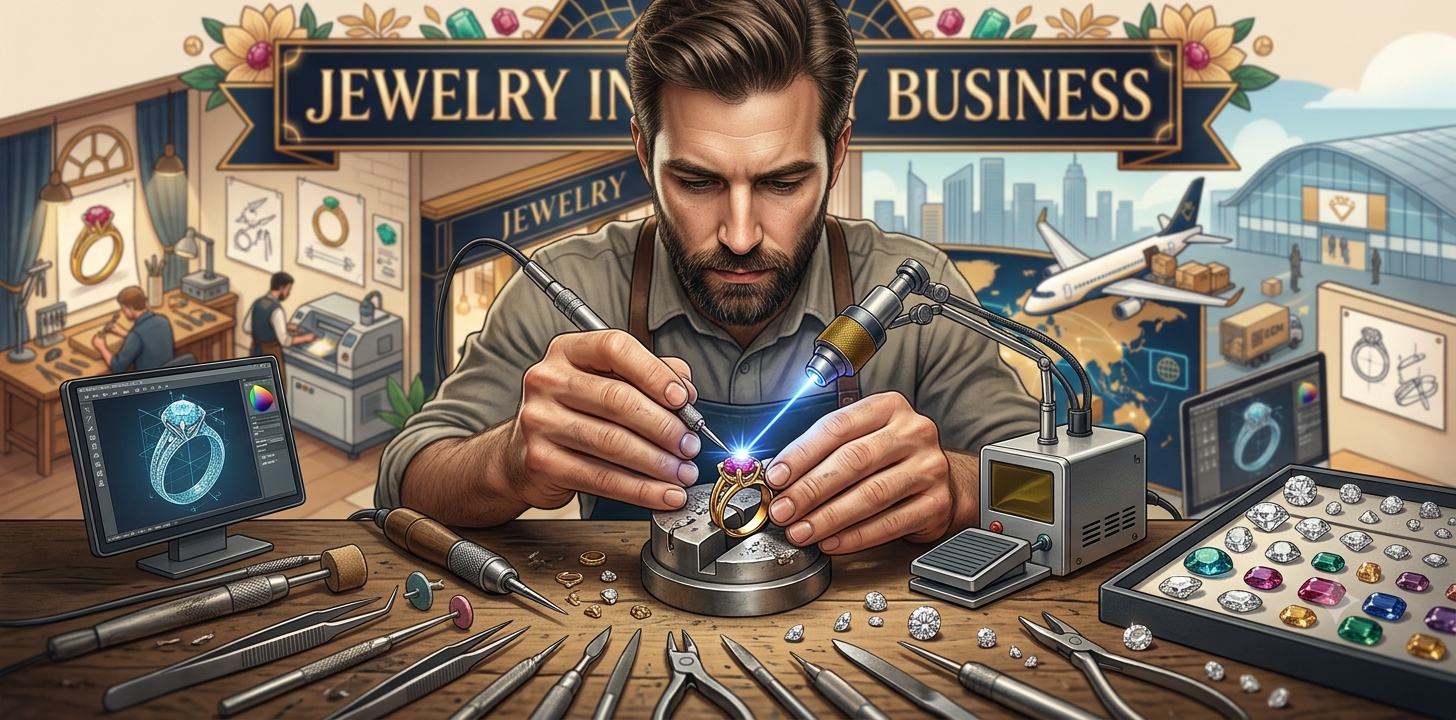
Today, the industry combines traditional craftsmanship with modern technology. Computer-aided design (CAD), 3D printing, and online retail platforms have transformed how jewelry is designed, manufactured, and sold.
Major Segments of the Jewelry Industry
1. Fine Jewelry Business
Fine jewelry focuses on high-quality materials such as:
- Gold
- Platinum
- Diamonds
- Precious gemstones
These products are often purchased for special occasions, investments, and lifelong celebrations.
Common examples include:
- Engagement rings
- Wedding jewelry
- Luxury necklaces
- Designer collections
2. Fashion Jewelry Business
Fashion jewelry offers affordable designs that follow changing trends.
It commonly uses:
- Artificial stones
- Stainless steel
- Glass
- Plated metals
- Synthetic materials
This segment attracts customers who want stylish accessories without the high cost of precious materials.
3. Handmade Jewelry Business
Handmade jewelry has gained popularity because customers value uniqueness and craftsmanship.
Small jewelry businesses often focus on:
- Custom designs
- Artistic styles
- Local materials
- Personalized products
Social media platforms and online marketplaces have made it easier for independent jewelry makers to reach global customers
Important Jewelry Industry Trends
1. Personalized Jewelry Growth
Personalization has become one of the strongest trends in the jewelry market.
Customers increasingly prefer:
- Name necklaces
- Birthstone jewelry
- Custom rings
- Engraved bracelets
- Family-inspired designs
Personalized pieces create emotional connections and increase customer loyalty.
2. Sustainable and Ethical Jewelry
Modern consumers are becoming more aware of environmental and ethical issues.
Many jewelry businesses are adopting:
- Recycled metals
- Lab-grown diamonds
- Responsible gemstone sourcing
- Eco-friendly packaging
Sustainability helps brands attract environmentally conscious customers.
3. Online Jewelry Shopping
E-commerce has changed how customers buy jewelry. Online platforms allow businesses to reach customers worldwide without relying only on physical stores.
Successful online jewelry businesses focus on:
- High-quality product images
- Detailed descriptions
- Customer reviews
- Secure payment systems
- Easy return policies
Virtual try-on technology and augmented reality are also improving online shopping experiences.
4. Custom Jewelry Design
Custom jewelry is becoming increasingly popular because customers want products that reflect their personality.
Businesses offering custom services can provide:
- Unique designs
- Personal consultations
- Made-to-order pieces
- Special occasion jewelry
Customization creates higher value and stronger customer relationships.
Jewelry Manufacturing and Craftsmanship
Craftsmanship remains the foundation of the jewelry industry business. Skilled artisans use various techniques to transform raw materials into finished products.
Common jewelry-making methods include:
Casting
Casting involves creating a mold and pouring melted metal into it to produce jewelry shapes.
Engraving
Engraving adds decorative patterns, names, or symbols to jewelry surfaces.
Stone Setting
Gemstones are carefully placed into metal settings to create attractive designs.
Polishing
Polishing improves the appearance and shine of jewelry pieces.
Handmade Techniques
Traditional handmade methods continue to be valued for their artistic quality and uniqueness.
Materials Used in Jewelry Production
Jewelry businesses use a wide range of materials, including:
Precious Metals
- Gold
- Silver
- Platinum
Gemstones
- Diamonds
- Rubies
- Emeralds
- Sapphires
- Amethyst
- Turquoise
Alternative Materials
- Wood
- Glass
- Ceramic
- Beads
- Recycled materials
The choice of materials influences product quality, pricing, and brand identity.
Business Opportunities in the Jewelry Industry
The jewelry market provides many opportunities for entrepreneurs and established brands.
Starting an Online Jewelry Store
Online jewelry businesses require:
- A professional website
- Strong branding
- Product photography
- Digital marketing strategies
A focused niche, such as handmade jewelry or personalized accessories, can help new businesses compete.
Jewelry Wholesale Business
Wholesale suppliers connect manufacturers with retailers.
Opportunities include:
- Importing jewelry products
- Supplying local stores
- Creating private-label collections
Strong supplier relationships and quality control are important for success.
Custom Jewelry Services
Custom jewelry businesses can attract customers looking for meaningful and unique products.
Services may include:
- Engagement ring customization
- Jewelry redesign
- Personalized gifts
- Repair services
Marketing Strategies for Jewelry Businesses
Effective marketing helps jewelry brands build recognition and attract customers.
Social Media Marketing
Platforms focused on visual content are ideal for jewelry promotion.
Businesses can share:
- Product photos
- Behind-the-scenes craftsmanship
- Customer stories
- New collections
Influencer Partnerships
Working with influencers can increase brand awareness and introduce products to new audiences.
Content Marketing
Jewelry businesses can create useful content about:
- Jewelry care tips
- Buying guides
- Gemstone education
- Fashion trends
Photography and Branding
Professional photography is essential because customers often judge jewelry quality through images before purchasing.
Challenges in the Jewelry Industry Business
Despite its opportunities, the jewelry industry faces several challenges.
Rising Material Costs
Prices of gold, gemstones, and precious metals can affect production costs and profit margins.
Competition
The market includes global luxury brands, local designers, and online sellers, making competition intense.
Changing Consumer Preferences
Businesses must continuously adapt to new styles, trends, and buying behaviors.
Ethical Concerns
Customers increasingly expect transparency regarding sourcing and production practices.
The Future of the Jewelry Industry Business
The future of the jewelry industry will be shaped by innovation, sustainability, and digital transformation.
Important future developments include:
- Increased use of recycled materials
- Growth of online jewelry shopping
- More personalized designs
- Advanced manufacturing technology
- Greater demand for ethical products
Brands that combine creativity, quality craftsmanship, and customer-focused experiences will have strong opportunities in the evolving jewelry market.
Conclusion
The jewelry industry business is a combination of tradition, creativity, and modern innovation. From ancient handcrafted ornaments to advanced digital jewelry design, the industry continues to evolve while maintaining its emotional and cultural importance.
Businesses that understand customer needs, embrace sustainable practices, invest in quality craftsmanship, and use effective digital strategies can build successful jewelry brands in today’s competitive marketplace.
With growing demand for personalized, ethical, and unique jewelry products, the future of the jewelry industry remains full of exciting opportunities for entrepreneurs, designers, and established companies.
READ MORE: Magnetic Packaging: Enhancing Customer Experience.