

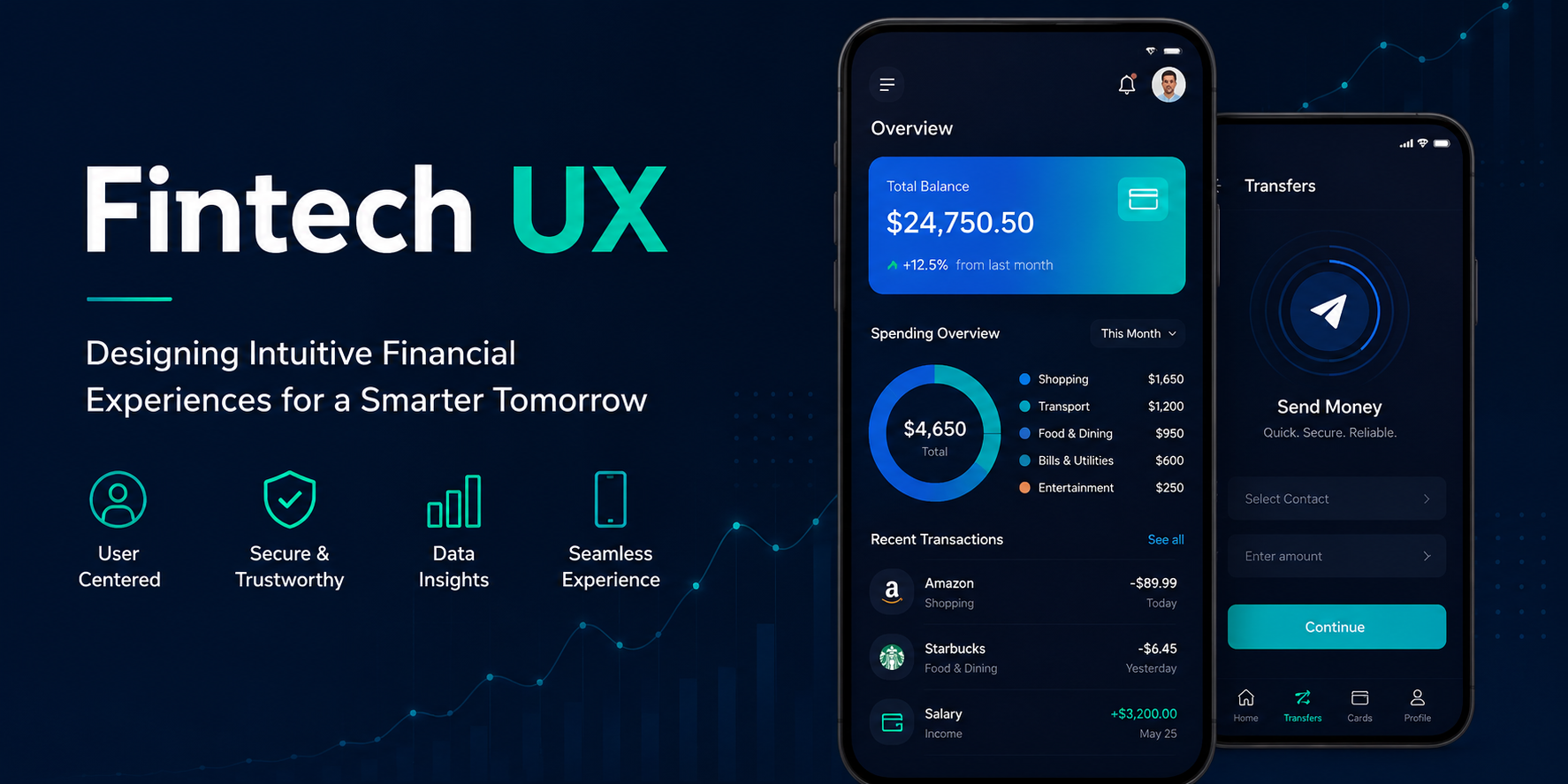
Financial technology has transformed the way people manage money, pay bills, invest, and access banking services. As digital finance continues to grow, Fintech UX (User Experience) has become one of the most important factors in determining whether a financial product succeeds or fails. While innovative features and competitive pricing matter, users ultimately judge a financial app by how easy, secure, and trustworthy it feels.
A confusing payment process, unclear account information, or a complicated verification step can quickly damage user confidence. On the other hand, a well-designed fintech experience builds trust, encourages customer loyalty, and helps businesses retain users over the long term.
In this guide, we’ll explore why fintech UX matters, the principles behind successful financial product design, and the best practices every fintech company should follow.
What Is Fintech UX?
Fintech UX refers to the design of digital financial products that are intuitive, secure, and easy to use. It focuses on creating smooth experiences for users while ensuring they can confidently manage their money.
Unlike traditional mobile apps, fintech applications deal with sensitive financial information and real money. This means every interaction—from logging in to completing a transfer—must feel reliable, transparent, and secure.
Common fintech products include:
- Mobile banking apps
- Digital wallets
- Payment platforms
- Investment applications
- Cryptocurrency exchanges
- Personal finance tools
- Online lending platforms
- Insurance technology (InsurTech)
Why User Experience Matters in Fintech
Money is personal. Every financial decision involves trust.
Users expect fintech products to help them complete important tasks quickly without confusion. If an app makes users uncertain about their balance, payment status, or transaction history, they are more likely to abandon it.
Excellent UX helps businesses by:
- Building customer trust
- Increasing customer retention
- Reducing support requests
- Improving transaction completion rates
- Encouraging long-term loyalty
- Strengthening brand reputation
In fintech, good design isn’t simply about aesthetics—it’s about creating confidence.
Building Trust Through Design
Trust begins the moment users open a financial application.
Professional typography, consistent layouts, readable content, and carefully selected colors all contribute to a sense of reliability.
Successful fintech products focus on:
- Clear account balances
- Transparent fees
- Simple navigation
- Easy-to-understand transaction history
- Secure authentication
- Visible confirmation messages
Every design element should reassure users that their money and personal information are safe.
Transparency Creates Better User Experiences
One of the biggest reasons users lose trust is hidden information.
Great fintech products clearly explain:
- Transaction fees
- Currency conversion rates
- Payment processing times
- Interest rates
- Subscription costs
- Investment risks
When users understand exactly what will happen before confirming a transaction, they feel more confident using the platform.
Transparency often leads to stronger customer relationships and higher retention rates.
Designing Compliance Without Hurting UX
Financial products must follow strict regulations, including identity verification and customer protection requirements.
These compliance processes can become frustrating if they interrupt the user journey.
The best fintech companies integrate compliance naturally into onboarding by:
- Explaining why verification is required
- Showing progress indicators
- Breaking long forms into smaller steps
- Providing instant feedback
- Offering clear instructions for uploading documents
Rather than feeling like an obstacle, compliance should become part of a seamless customer experience.
Dashboard Design Best Practice
The dashboard is often the first screen users see after logging in.
An effective fintech dashboard should immediately answer important questions:
- How much money do I have?
- What transactions happened recently?
- Are there any upcoming payments?
- How are my investments performing?
- What requires my attention today?
Good dashboards prioritize essential information while avoiding unnecessary clutter.
Effective dashboard design includes:
- Clear account balances
- Recent transactions
- Spending summaries
- Budget tracking
- Investment performance
- Alerts and notifications
- Search functionality
Information hierarchy helps users find what matters most within seconds.
Mobile-First Fintech UX
Today, most financial interactions happen on smartphones.
Whether checking balances, paying bills, or transferring funds, users expect fast and convenient mobile experiences.
A mobile-first approach includes:
- Large touch-friendly buttons
- Simple navigation
- One-handed usability
- Fast loading screens
- Biometric authentication
- Dark mode support
- Responsive layouts
Designers should optimize every important financial action for small screens before expanding to larger devices.
Security Features That Improve UX
Security and usability should work together rather than compete.
Modern fintech products improve security through features like:
- Fingerprint authentication
- Face recognition
- Two-factor authentication (2FA)
- Real-time fraud alerts
- Secure password management
- Device verification
When implemented correctly, these features protect users without creating unnecessary friction.
Accessibility in Fintech Design
Financial products should be usable by everyone, including people with disabilities.
Accessibility best practices include:
- High color contrast
- Readable font sizes
- Screen reader compatibility
- Keyboard navigation
- Simple language
- Clear form labels
- Accessible error messages
Inclusive design expands a product’s reach while improving usability for all users.
Common Fintech UX Mistakes
Many financial applications lose users because of avoidable design problems.
Common mistakes include:
- Hidden fees
- Overly complicated onboarding
- Poor navigation
- Confusing financial terminology
- Slow loading times
- Too many confirmation screens
- Inconsistent user interfaces
- Difficult account recovery processes
Removing these friction points leads to smoother customer journeys and greater satisfaction.
Future Trends in Fintech UX
As financial technology evolves, user expectations continue to rise.
Emerging trends include:
- AI-powered financial assistants
- Personalized dashboards
- Predictive budgeting tools
- Voice-enabled banking
- Open banking integrations
- Smarter fraud detection
- Personalized investment recommendations
- Hyper-personalized financial insights
The future of fintech UX will focus on making financial management more intelligent, personalized, and effortless.
Best Practices for Building Successful Fintech Products
Successful fintech companies share several design principles:
- Prioritize clarity over complexity.
- Make every transaction transparent.
- Reduce unnecessary user steps.
- Build trust through consistent design.
- Integrate security naturally.
- Design for mobile users first.
- Ensure accessibility for everyone.
- Continuously test and improve user experiences.
Following these principles helps create products that users rely on every day.
Conclusion
Fintech UX is far more than attractive interface design—it is the foundation of customer trust. Every interaction, from viewing an account balance to confirming a payment, influences how users perceive the safety and reliability of a financial product.
Companies that invest in intuitive navigation, transparent communication, strong security, and mobile-first experiences are more likely to earn long-term customer loyalty. As digital finance continues to evolve, businesses that prioritize exceptional user experience will stand out in an increasingly competitive market.
Creating a trustworthy fintech experience means designing with clarity, confidence, and the user’s financial well-being at the center of every decision.
READ MORE: Emily Ratajkowski Net Worth: A Complete Guide to Her Career, Income Sources, Family, and Lifestyle.
 molyatkinsan