

Introduction
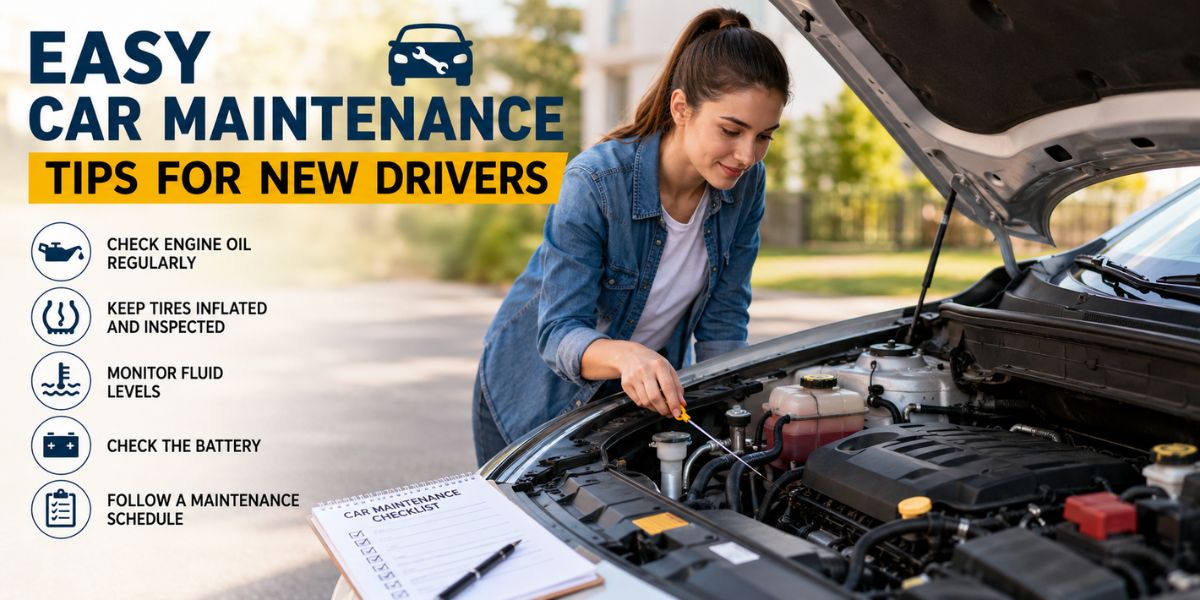
Owning your first car can feel exciting, but regular maintenance is essential for keeping it safe, reliable, and efficient. The good news is that new drivers do not need to be expert mechanics. A few simple habits, including natural and eco-friendly cleaning and care methods, can help prevent common problems and extend the life of your vehicle.
1. Check Your Tire Pressure Regularly
Properly inflated tires improve handling, fuel efficiency, and safety. Check your tire pressure regularly, especially before long trips, and follow the pressure recommended in your vehicle’s owner’s manual or door-jamb label.
2. Keep the Engine Oil at the Right Level
Engine oil helps lubricate important moving parts and reduces friction. Check the oil level according to your owner’s manual and have it changed at the recommended interval.
3. Clean Your Car Naturally
You can keep the interior and exterior fresh with simple cleaning methods. For example, a microfiber cloth and plain water can remove light dust from dashboards and surfaces. For tougher cleaning jobs, use a vehicle-safe cleaner rather than household chemicals that may damage automotive materials.
4. Check Your Coolant
Coolant helps control engine temperature. Check the coolant reservoir when the engine is cool and make sure the level is within the recommended range. Never open a hot cooling system.
5. Pay Attention to Warning Lights
Do not ignore dashboard warning lights. Some indicate routine maintenance, while others may signal a serious problem. Check your owner’s manual or have the vehicle inspected if you are unsure what a warning means.
6. Keep the Battery Clean
Inspect the battery area occasionally for visible corrosion, loose connections, or other problems. If you are not comfortable working around the battery, ask a qualified technician to inspect it.
7. Replace Windshield Wipers When Needed
Clear visibility is essential for safe driving. If your wipers leave streaks, skip across the glass, or make unusual noises, it may be time to replace them.
8. Check Your Lights
Test your headlights, brake lights, turn signals, and parking lights regularly. Replace faulty bulbs promptly so other drivers can see you clearly.
9. Keep the Car Clean and Dry
Regular washing can help remove dirt, road salt, and other substances that may contribute to corrosion. Drying the vehicle after washing can also help prevent water spots and moisture buildup.
10. Follow the Maintenance Schedule
Your owner’s manual is one of the most useful resources for a new driver. Follow its recommended schedule for oil changes, tire rotation, inspections, filters, and other maintenance.
11. Learn a Few Basic Checks
Every new driver should know how to check tire pressure, inspect fluid levels, identify dashboard warning lights, and recognize unusual noises or smells. These simple skills can help you spot problems early.
12. Avoid Ignoring Small Problems
A strange vibration, squealing sound, fluid leak, or change in handling can be an early warning sign. Getting a small problem checked early may prevent a more expensive repair later.
Final Thoughts
Easy car maintenance does not have to be complicated. By checking your tires and fluids, keeping your car clean, watching warning lights, and following the manufacturer’s maintenance schedule, you can build good driving habits from the beginning. Simple natural cleaning methods can also help you care for your vehicle without unnecessarily harsh products.
READ MORE: How to Improve Car Fuel Efficiency Naturally: Simple Tips to Save Fuel.