

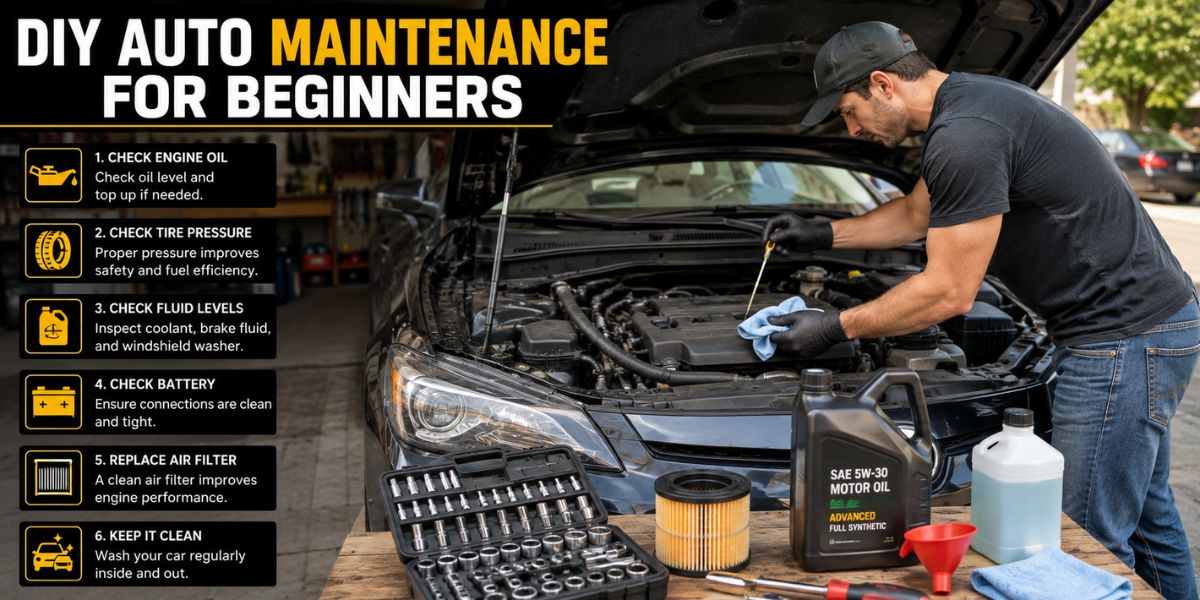
Maintaining a car does not always mean visiting a professional auto mechanic. Many basic maintenance tasks can be done at home with simple tools, a little patience, and the right knowledge. Regular care can help your vehicle run smoothly, improve safety, and potentially prevent expensive repairs.
An auto mechanic is trained to inspect, repair, and maintain vehicles, including their engines, brakes, electrical systems, and other components. However, beginners can handle several routine tasks themselves, such as checking fluids, inspecting tires, replacing windshield wipers, and keeping the battery clean.
Why DIY Auto Maintenance Matters
Regular car maintenance helps you notice small problems before they become major ones. Simple checks can also help your vehicle perform better and may extend the life of important parts.
DIY maintenance can be especially useful for drivers who want to save money while learning more about how their vehicle works.
Check Your Engine Oil
Engine oil keeps the moving parts inside the engine lubricated. Check the oil level regularly by parking on a level surface, turning off the engine, and using the dipstick according to your vehicle manufacturer’s instructions.
If the oil is low, add the correct type recommended in your owner’s manual. If the oil looks unusually dirty or you are unsure when it was last changed, consider having it serviced.
Inspect Your Tires
Tires are essential for safe driving. Check the tire pressure regularly and compare it with the pressure recommended by the vehicle manufacturer.
Look for uneven wear, cracks, bulges, or objects stuck in the tread. Keeping tires properly inflated can also help improve fuel efficiency and handling.
Keep the Battery Clean
A car battery can collect dirt and corrosion around its terminals. Before cleaning a battery, turn the vehicle off and follow the safety instructions in your owner’s manual.
Keeping the battery and surrounding area clean and dry can help you spot corrosion or other visible problems early.
Replace Windshield Wipers
Worn windshield wipers can make driving difficult during rain. If the blades leave streaks, skip across the glass, or make unusual noises, they may need replacing.
Replacing wiper blades is usually a simple DIY task and requires very few tools.
Check Essential Fluids
Beginners should learn how to locate and check important vehicle fluids. Depending on the vehicle, these may include coolant, brake fluid, windshield washer fluid, and transmission fluid.
Always use the correct fluid specified by the manufacturer, and never open a hot cooling system because pressurized coolant can cause serious burns.
Replace the Air Filter When Needed
A dirty engine air filter can restrict airflow to the engine. Many vehicles allow relatively easy access to the air filter housing, making replacement a manageable beginner task.
Check the maintenance schedule in your owner’s manual to determine when inspection or replacement is recommended.
Know When to Call a Mechanic
DIY maintenance is useful, but it has limits. Problems involving brakes, steering, suspension, engine failure, airbags, or complex electrical systems may require professional diagnosis and repair.
If you are unsure about a repair, it is safer to stop and consult a qualified mechanic rather than risk damaging the vehicle or creating a safety problem.
Final Thoughts
DIY auto maintenance for beginners is mainly about learning simple checks and developing good car-care habits. Checking oil, inspecting tires, maintaining wipers, monitoring fluids, and watching for unusual sounds or warning lights can help you stay aware of your vehicle’s condition.
With regular attention and the manufacturer’s maintenance schedule as your guide, you can take better care of your car while knowing when professional help is needed.
READ MORE: Affordable Car Maintenance Ideas: Natural Ways to Keep Your Car Running Smoothly.