

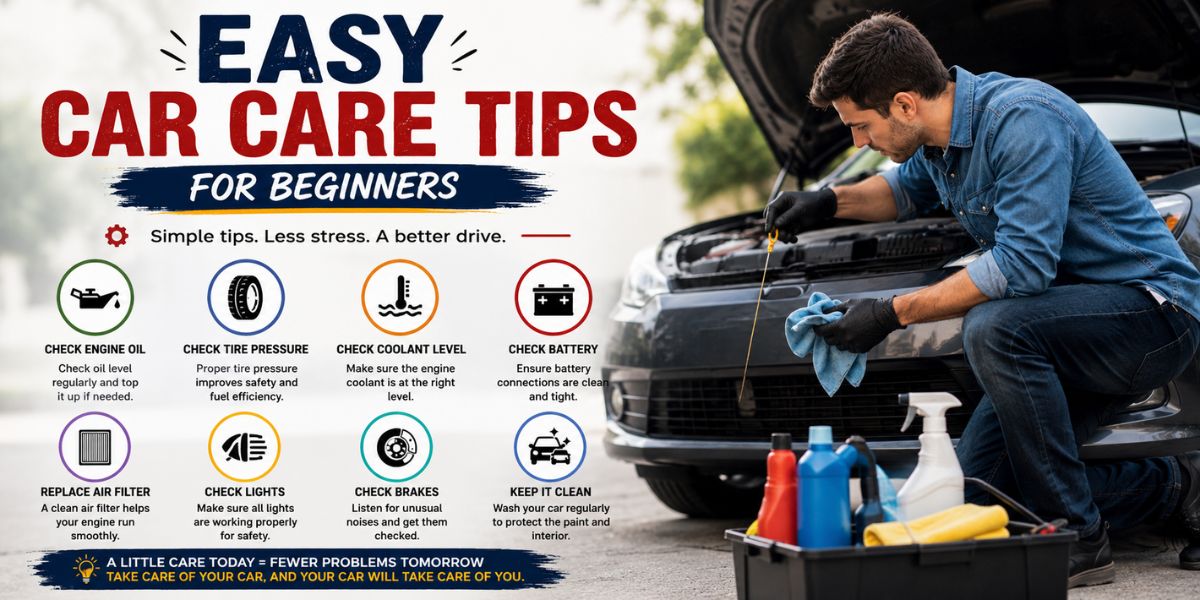
Taking care of a car does not always require advanced mechanical skills or expensive equipment. Beginners can handle many simple maintenance tasks at home by following a regular routine and learning a few basic checks. Good car care can help you notice problems early and keep your vehicle safe, clean, and dependable.
Basic vehicle maintenance is an important part of keeping a car in good working condition. Professional mechanics commonly inspect vehicles to identify their condition and determine whether preventive maintenance or repairs are needed.
1. Check Your Engine Oil Regularly
Engine oil helps the engine’s moving parts work smoothly. Beginners should learn how to check the oil level using the dipstick, following the vehicle manufacturer’s instructions.
Park the car on a level surface, turn off the engine, and allow it to cool if necessary. Check the oil level and look for anything unusual, such as very low oil or an unexpected change in appearance. If the oil needs changing, use the type and grade recommended for your vehicle.
2. Keep Your Tires Properly Inflated
Tires are one of the most important parts of a car because they provide contact with the road. Check tire pressure regularly and keep it within the manufacturer’s recommended range.
Also look for visible damage, unusual wear, or objects stuck in the tread. Proper tire maintenance can contribute to safer driving and more even tire wear.
3. Keep the Car Clean Naturally
Regular cleaning is a simple way to protect your car’s exterior and interior. Remove dirt, dust, leaves, and other debris before they build up.
For routine cleaning, use clean water, a soft microfiber cloth, and a gentle car-safe cleaning product. Avoid harsh household chemicals that may damage paint, plastic, rubber, or interior surfaces.
4. Check Coolant and Other Fluids
Your car depends on several fluids to operate properly. Beginners can learn where the coolant, brake fluid, windshield-washer fluid, and other reservoirs are located by checking the owner’s manual.
Never open a hot cooling system. If you notice a fluid level dropping repeatedly, a leak, or an unusual smell, have the vehicle inspected by a qualified professional.
5. Pay Attention to Warning Lights
Dashboard warning lights should never be ignored. They can provide an early indication that a vehicle needs attention.
If a warning light appears, check the owner’s manual to understand what it means. Some problems require professional diagnosis because modern vehicles contain complex electronic and computer systems.
6. Check Your Lights
Walk around your car occasionally and make sure the headlights, brake lights, turn signals, and other exterior lights are working.
Clean dirty light covers gently and replace faulty bulbs according to the vehicle manufacturer’s instructions. Good lighting improves visibility and helps other drivers see your vehicle.
7. Replace Worn Wiper Blades
Windshield wipers can become hard, cracked, or ineffective over time. If they leave streaks or fail to clear water properly, they may need replacement.
Keep the windshield clean and make sure the washer-fluid reservoir is filled with an appropriate windshield-washer fluid.
8. Keep the Battery Area Clean
A car battery needs regular attention, especially if the vehicle is older. Check for obvious corrosion, damaged cables, or other visible problems.
Do not attempt complicated electrical repairs if you are inexperienced. Modern vehicles use increasingly sophisticated electrical systems, so some problems are better handled by a trained technician.
9. Listen for Unusual Sounds
Learning your car’s normal sounds can help you notice changes early. Pay attention to new squeaks, grinding, knocking, rattling, or unusual noises.
A new sound does not always mean there is a serious problem, but it is worth investigating. Early professional inspection can prevent a small issue from becoming a larger repair.
10. Check Belts and Hoses
When the engine is off and cool, look for obvious signs of cracked, damaged, loose, or worn belts and hoses.
Do not reach into a running engine or attempt repairs unless you understand the procedure and have the proper equipment. Simple visual checks are appropriate for beginners, while complicated replacement work should be left to a qualified mechanic.
11. Follow the Maintenance Schedule
One of the easiest ways to care for a car is to follow its maintenance schedule. Keep track of oil changes, tire checks, fluid inspections, filter replacement, and other recommended services.
Professional repair shops often use inspections to identify preventive maintenance needs before assigning approved work to a mechanic.
12. Learn When to Call a Mechanic
DIY car care is useful, but beginners should know their limits. Tasks involving brakes, airbags, major engine repairs, transmissions, complicated electrical systems, or air-conditioning systems may require professional knowledge and equipment.
Modern mechanics often use diagnostic computers and scan tools because today’s vehicles contain increasingly complex technology.
Simple Natural Car Care Routine
A simple routine can make car maintenance easier:
- Weekly: Check tires, lights, windshield, and visible leaks.
- Monthly: Check important fluid levels and inspect the battery area.
- Regularly: Clean the exterior and interior and check the wiper blades.
- As recommended: Follow the manufacturer’s service schedule.
- Whenever something changes: Investigate unusual noises, smells, warning lights, or driving behavior.
Final Thoughts
Easy car care for beginners is mainly about consistency. You do not need to become a professional mechanic to look after your vehicle. Simple habits such as checking fluids, maintaining tire pressure, keeping the car clean, observing warning lights, and following the recommended maintenance schedule can help you stay aware of your car’s condition.
Natural, gentle cleaning methods are also useful for routine care, while mechanical or electrical problems should be handled by qualified professionals when they go beyond basic maintenance. With a little practice and a regular routine, beginners can become more confident in caring for their cars.
READ MORE: How to Maintain a Car at Home Naturally: Simple DIY Car Care Tips.