

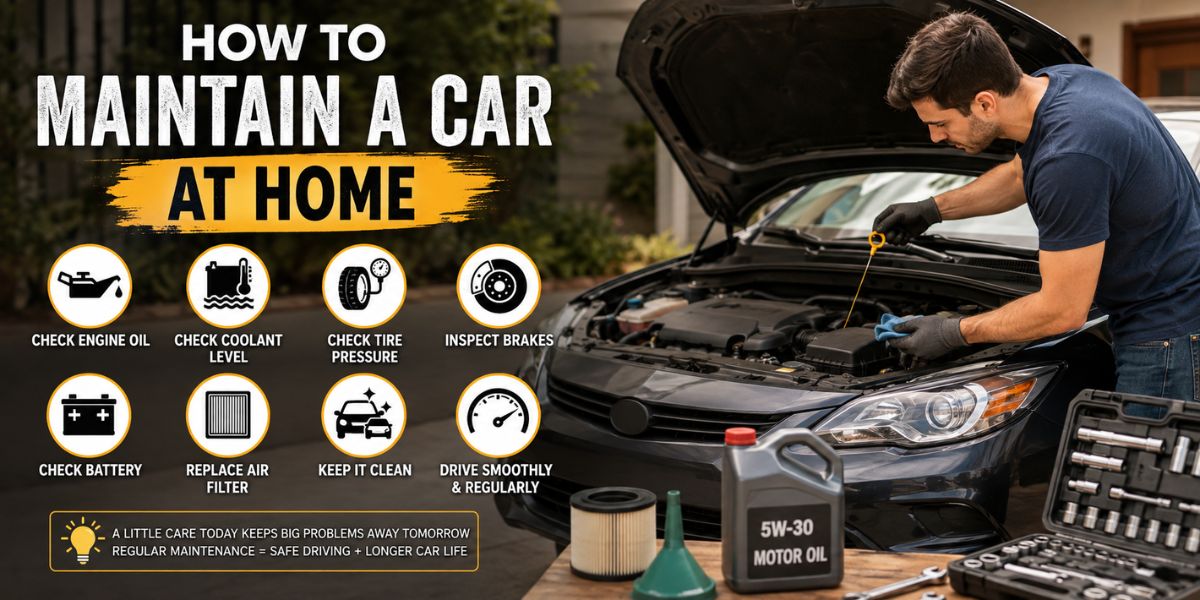
Maintaining your car at home can help keep it reliable, safe, and looking its best without always visiting a mechanic. Regular care includes checking fluids, inspecting tires, cleaning important parts, and watching for signs of wear. While some maintenance tasks require professional equipment or expertise, many basic checks can be done at home using simple tools and natural cleaning methods.
1. Check the Engine Oil Regularly
Engine oil keeps the moving parts of the engine lubricated and helps reduce friction and heat. Check the oil level when the engine is cool and the car is parked on level ground. If the oil is low, add the type recommended by your vehicle manufacturer.
Oil should also be changed according to the manufacturer’s service schedule rather than relying on a single mileage rule for every vehicle.
2. Keep the Battery Clean
A clean battery can help prevent corrosion around the terminals. Regularly inspect the battery for dirt, loose connections, or visible corrosion.
For light external cleaning, a damp cloth can remove dirt. If you notice significant corrosion or a battery problem, use the vehicle manufacturer’s recommended procedure or have a professional inspect it.
3. Check Tire Pressure
Tires are among the most important parts of your car because they affect safety, handling, fuel economy, and braking.
Check tire pressure regularly with a reliable pressure gauge and inflate the tires to the pressure recommended by the vehicle manufacturer. Also inspect the tread for uneven wear, cracks, bulges, or objects stuck in the tire.
4. Clean the Car Naturally
You can keep your car clean without using harsh cleaning products for every task. A soft microfiber cloth, clean water, and a mild automotive-safe cleaner can be useful for routine cleaning.
Avoid household products that may damage paint, leather, plastic, rubber, or electronic surfaces. Always test a cleaning product on a small area first.
5. Check the Coolant Level
Coolant helps regulate engine temperature. Check the coolant reservoir when the engine is cool and make sure the level is within the manufacturer’s recommended range.
Never open a hot cooling system because pressurized coolant can cause serious burns. If you notice repeated coolant loss, overheating, or a leak, have the vehicle inspected.
6. Inspect the Windshield Wipers
Poor wipers can make driving difficult during rain. Check the blades for cracks, splitting, or hardened rubber. Clean the windshield and wiper blades regularly with water and a suitable cloth.
Replace worn blades when they begin leaving streaks or failing to clear the windshield properly.
7. Keep the Air Filter Clean
The engine air filter prevents dirt and debris from entering the engine. A dirty filter can restrict airflow.
Check the filter according to the maintenance schedule. Depending on the vehicle and filter type, it may need cleaning or replacement. Follow the manufacturer’s instructions rather than washing a filter that is designed to be replaced.
8. Check Brake Components
Listen for unusual sounds and pay attention to changes in braking performance. If the brake pedal feels unusually soft, the vehicle pulls when braking, or you hear persistent grinding or scraping, professional inspection is important.
Brake components are safety-critical, so avoid attempting repairs unless you have the appropriate knowledge and equipment.
9. Check All Lights
Walk around the vehicle and check the headlights, brake lights, turn signals, reverse lights, and hazard lights.
Replacing a failed bulb or addressing a simple electrical issue early can improve visibility and safety on the road.
10. Inspect Belts and Hoses
Look under the hood for obvious signs of cracking, fraying, swelling, or leaks around belts and hoses. Do not touch moving engine components while the engine is running.
If a belt or hose looks damaged, have it replaced before it fails and potentially leaves you stranded.
11. Check Windshield Washer Fluid
Keep the windshield washer reservoir filled with an appropriate washer fluid. Clean glass improves visibility, especially when driving in dusty or rainy conditions.
Avoid using substances that could damage the washer system or freeze in cold conditions.
12. Pay Attention to Warning Signs
Your car often gives you clues when something needs attention. Warning lights, unusual smells, strange noises, fluid spots underneath the vehicle, vibrations, or changes in handling should not be ignored.
A diagnostic scan may be necessary when an electronic warning light appears. A professional mechanic can identify problems that cannot be safely diagnosed at home.
13. Follow the Manufacturer’s Maintenance Schedule
Home maintenance should complement, not replace, scheduled servicing. Maintenance intervals vary according to the vehicle’s make, model, age, mileage, driving conditions, and manufacturer’s recommendations.
Keep records of oil changes, filter replacements, tire rotations, inspections, and professional repairs. A complete maintenance history can also make the vehicle easier to sell later.
Simple Home Car Maintenance Routine
A practical routine can include:
- Check tire pressure regularly.
- Inspect tires for visible damage.
- Check engine oil and other accessible fluid levels.
- Inspect the battery and visible connections.
- Test exterior lights.
- Clean the windshield and wipers.
- Look for obvious fluid leaks.
- Keep the interior and exterior clean.
- Pay attention to warning lights and unusual sounds.
- Follow the manufacturer’s recommended service schedule.
Final Thoughts
Learning how to maintain a car at home can save time, prevent small problems from becoming expensive repairs, and help your vehicle stay in good condition. Simple tasks such as checking tire pressure, inspecting fluids, cleaning the car, and monitoring warning signs are useful parts of routine car care.
However, natural or DIY maintenance should never replace professional attention for brakes, steering, suspension, major engine problems, electrical faults, or other safety-critical repairs. When in doubt, consult your vehicle’s owner’s manual or a qualified mechanic.
READ MORE: Simple Engine Maintenance Tips: The Complete Guide to Keeping Your Engine Running Smoothly.